Trillium, Genus, luteum, Species,
- Genus & species
yellow trillium
Southeastern United States — Appalachian region from North Carolina south to Georgia and west to Kentucky
Overview
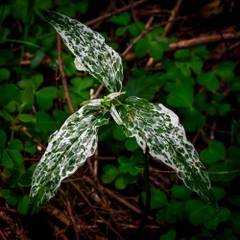
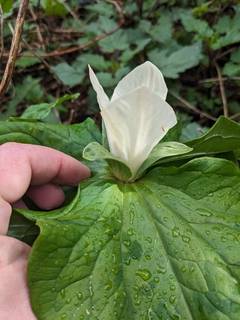
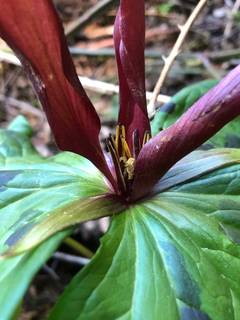
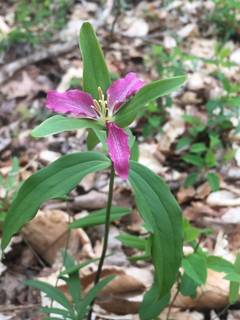
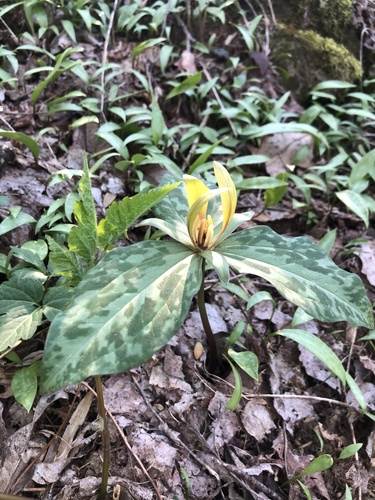
Trillium luteum is yellow trillium — a spring ephemeral woodland wildflower of the Appalachian forests, growing 10-14 inches (25-35 cm) tall and 8-12 inches (20-30 cm) wide. The genus name Trillium means 'three' — every part comes in threes: three leaves, three petals, three sepals. The species name 'luteum' means 'yellow'. Soft lemon-yellow upright petals sit sessile (without a stalk) directly on the whorl of three dark green leaves heavily mottled with silver-green. The sessile flower form — sitting directly on the leaf whorl rather than on a stalk above it — places this in the 'toadshade' group of trilliums. A sweet lemon fragrance. The silver-green leaf mottling is ornamental even without the flowers. The spring ephemeral lifecycle means the entire plant emerges, flowers, sets seed, and goes dormant by midsummer — companion plants fill the summer gap. Trilliums are slow to establish from seed (5-7 years to first bloom) and digging from the wild damages native populations. Nursery-propagated plants are the only sustainable source. Moist, humus-rich, acidic deciduous woodland soil. Mildly toxic. Deer eat trilliums — protection may be needed.
Native Range
Trillium luteum is native to the southeastern United States — the Appalachian region from North Carolina south to Georgia and west to Kentucky.Suggested Uses
Used in woodland gardens, shade gardens, and naturalized under deciduous trees. A collector's native woodland wildflower. Plant with summer-emerging companions (ferns, hostas) to fill the dormancy gap. The yellow color is uncommon among trilliums — most are white, red, or purple.How to Identify
Appearance
Size & Dimensions
Height10" - 1'2"
Width/Spread8" - 1'
Colors
Bloom Information
Flowering in April and May, approximately 3 weeks. Soft lemon-yellow sessile flowers. The plant goes dormant by midsummer.
Detailed Descriptions
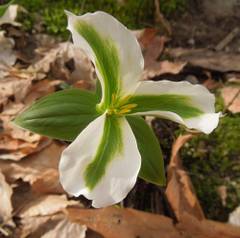
Flower Description
Soft lemon-yellow, sessile (sitting directly on the leaf whorl), uprightFoliage Description
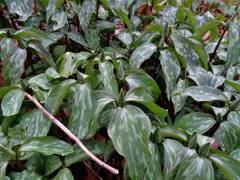
Dark green, heavily mottled with silver-green, in a whorl of threeGrowing Conditions
Sun Requirements
Requires 2-4 hours of direct sunlight daily
• Full Sun: 6+ hours of direct sunlight
• Partial Shade: 3-6 hours of direct sunlight
• Full Shade: Less than 3 hours of direct sunlight