Lagerstroemia, Genus, indica, Species, 'Tonto', Cultivar,
- Genus & species
- Cultivar
tonto crape myrtle tree
Overview
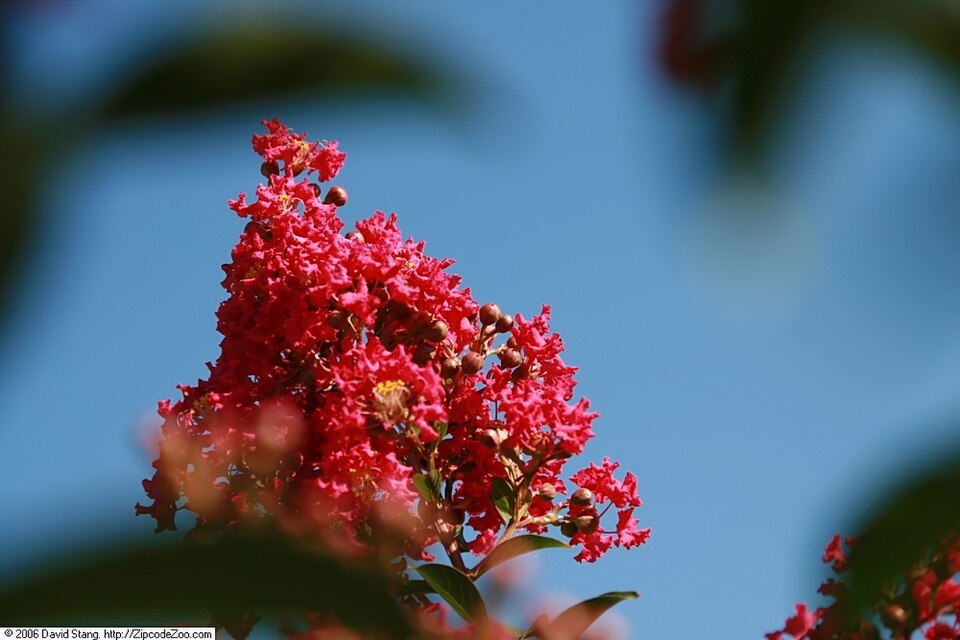
Lagerstroemia indica 'Tonto' is a deciduous large shrub or small multi-stem tree with a rounded upright habit, reaching 8-12 feet (2.4-3.7 m) tall and 8-10 feet (2.4-3 m) wide at maturity in 6-8 years. The cultivar is a hybrid of L. indica and L. fauriei bred at the U.S. National Arboretum, with multi-stem trunks displaying smooth tan-gray bark that exfoliates in thin sheets. Lance-shaped leaves measure 1.5-2.5 inches (4-6 cm) long, emerging bronze-red and maturing to medium green; foliage turns deep maroon-red in October-November. Vivid fuchsia-red flower panicles, 4-6 inches (10-15 cm) long, appear from late June through September, with individual panicles lasting 4-6 weeks and successive flushes extending total bloom to 90-100 days. Flowers are followed by clusters of small brown seed capsules persisting through winter. Growth rate is moderate, 12-24 inches (30-60 cm) per year. Powdery mildew resistance is high, inherited from the L. fauriei parent. Crape myrtle bark scale has spread through the southeastern United States since 2004 and produces sticky residue and sooty mold. Cold-tender below 0 degrees F (-18 C); top dieback occurs at the northern edge of zone 7.
Native Range
L. indica is native to China, Korea, Japan, and the Indian subcontinent, and L. fauriei is endemic to Yakushima, Japan. 'Tonto' is a hybrid cultivar developed by Donald Egolf at the U.S. National Arboretum in Washington, D.C., released in 1995; it does not occur in the wild.Suggested Uses
Used as a specimen or accent in residential landscapes across zones 7-9, planted at 8-10 feet (2.4-3 m) from buildings or paths. Planted in groups of three to five as a mid-height screening row at 6-8 foot (1.8-2.4 m) spacing. Container grown in 25-gallon (95 L) or larger pots, with reduced lifespan of 8-10 years compared to in-ground plantings.How to Identify
Appearance
Size & Dimensions
Height8' - 12'
Width/Spread8' - 10'
Bloom Information
Late June through September in zones 7-9, peaking in July-August; bloom may extend into October in zone 9. Individual panicles last 4-6 weeks, with successive bloom flushes producing total bloom of 90-100 days. Flowers open from cone-shaped buds at branch tips after new shoot extension is complete. Removing spent panicles before seed capsules form extends bloom by 2-4 weeks.
Detailed Descriptions
Foliage Description
medium green, bronze-red when emerging, deep maroon-red in fallGrowing Conditions
Sun Requirements
Requires 6-10 hours of direct sunlight daily
• Full Sun: 6+ hours of direct sunlight
• Partial Shade: 3-6 hours of direct sunlight
• Full Shade: Less than 3 hours of direct sunlight
Care & Maintenance
Care Guide
Water deeply once per week during the first two growing seasons; established trees tolerate 3-4 weeks without rain in zones 7-9. Mulch with 2-3 inches (5-8 cm) of bark or wood chips kept clear of the trunk. Crape myrtle bark scale has spread through the Gulf Coast and Southeast since 2004 and produces sticky residue and sooty mold; horticultural oil applied during dormancy reduces populations. Powdery mildew is rare due to L. fauriei parentage. Cold dieback occurs at the northern edge of zone 7 during severe winters; top growth resprouts from the base in spring. Lifespan averages 30-50 years in zones 7-9.Pruning
Prune in late winter while dormant, removing crossing, rubbing, and inward-growing branches and trimming wayward stems back to a side branch. Heavy heading cuts that stub stems at the same point each year (so-called crape murder) produce knuckled scars and weak watersprout regrowth, weakening the natural rounded form. Removing seed capsules in late winter encourages stronger first-flush bloom on new wood. Suckers from the base are removed annually to maintain the multi-stem tree form.Pruning Schedule
Prune: February–March
winterearly spring
Container Growing
Suitable for container growing
Minimum container size: 25 gallons
Toxicity
Non-toxicRelated Lagerstroemia species
 Zuni crape myrtleLagerstroemia indica 'Zuni'
 Tuscarora crape myrtleLagerstroemia indica 'Tuscarora'
 Catawba crape myrtleLagerstroemia indica 'Catawba'
 Bellini grape crape myrtleLagerstroemia indica 'Bellini Grape'
 Natchez crape myrtleLagerstroemia indica 'Natchez'
 Pocomoke crape myrtleLagerstroemia indica 'Pocomoke'