Image 1 of 26
1 / 26
Plant Reference
Lagerstroemia, Genus, spp., Multiple species,
- Genus
- Multiple species
crape myrtle
Eastern and southern Asia — China, India, Japan, Korea, Southeast Asia; cultivated worldwide in warm temperate and subtropical climates
Overview
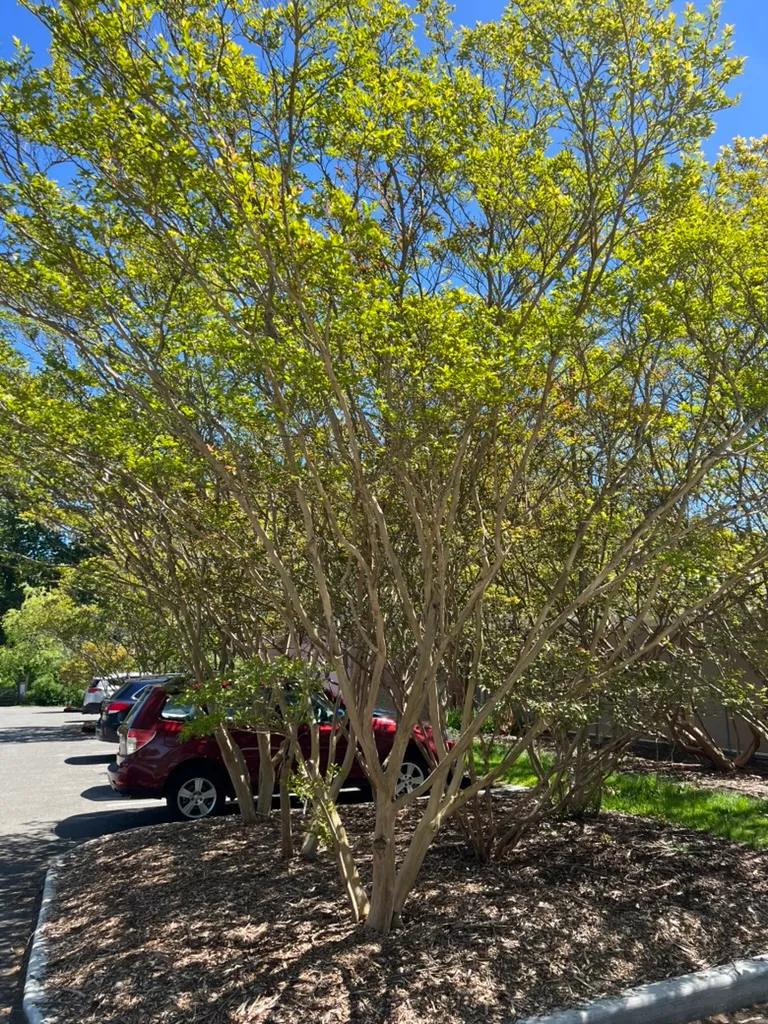
Lagerstroemia spp. is crape myrtle (crepe myrtle), a deciduous tree or large shrub ranging from 3-30 feet (0.9-9 m) tall and 3-25 feet (0.9-7.5 m) wide depending on cultivar. Crinkled (crepe-like) flowers in terminal panicles 6-18 inches (15-45 cm) — white, pink, lavender, red, or purple depending on cultivar — July through September (10 weeks). Dark green leaves 1-3 inches (2.5-7 cm) emerging bronze to reddish-purple. Turns yellow, orange, and red in fall. Smooth peeling bark in cinnamon, gray, and cream on multi-trunk forms. In Lythraceae. This is a genus-level record covering L. indica, L. fauriei, and their hybrids. Powdery mildew is the primary disease — choose mildew-resistant cultivars. 'Crape murder' (severe annual topping) creates weak regrowth and knobby stubs — select the correct mature-size cultivar for the site. Requires full sun for flowering. Deer-resistant. Drought-tolerant once established. Non-toxic. Zones 6-9. Full sun. Growth rate is moderate to fast.
Native Range
Native to eastern and southern Asia — China, India, Japan, Korea, Southeast Asia. Cultivated worldwide in warm temperate and subtropical climates.Suggested Uses
Grown as a specimen tree, street tree, patio tree, hedge, and in containers of at least 15 gallons (57 L), spaced 3-25 feet (0.9-7.5 m) depending on cultivar size. Long summer bloom. Peeling bark. Select cultivar by mature size: dwarf (3-5 feet / 0.9-1.5 m), semi-dwarf (5-12 feet / 1.5-3.6 m), tree form (15-30 feet / 4.5-9 m). Non-toxic. Zones 6-9.How to Identify
Appearance
Size & Dimensions
Height3' - 30'
Width/Spread3' - 25'
Colors
Bloom Information
Mid to late summer (July-September). Crinkled (crepe-like) flowers in terminal panicles 6-18 inches (15-45 cm). White, pink, lavender, red, or purple. 10 weeks of bloom on new wood. Deadheading can encourage a secondary flush. Bee- and butterfly-visited.
Detailed Descriptions
Flower Description
White, pink, lavender, red, or purple depending on cultivar; crinkled (crepe-like) petals 1-1.5 inches (2.5-4 cm) in terminal panicles 6-18 inches (15-45 cm)Foliage Description
Dark green, simple, opposite, 1-3 inches (2.5-7 cm); emerging bronze to reddish-purple in spring; turns yellow, orange, and red in fallGrowing Conditions
Sun Requirements
Requires 6-10 hours of direct sunlight daily
• Full Sun: 6+ hours of direct sunlight
• Partial Shade: 3-6 hours of direct sunlight
• Full Shade: Less than 3 hours of direct sunlight
Care & Maintenance
Care Guide
Full sun (6+ hours — required for flowering). Well-drained soil pH 5.5-7.5. Drought-tolerant once established. Choose mildew-resistant cultivars. Blooms on new wood — prune in late winter (February-March). Do not top ('crape murder'). Select correct mature-size cultivar for the site. Deer-resistant. Non-toxic. Zones 6-9.Pruning
Prune in late winter (February-March) — blooms on current season's new wood. Remove dead, crossing, and inward-growing branches. Thin interior to improve air circulation (reduces powdery mildew). Remove suckers at the base. Do not top ('crape murder') — select the correct cultivar size instead.Pruning Schedule
Prune: February–March
early spring
Container Growing
Suitable for container growing
Minimum container size: 15 gallons
Toxicity
Non-toxicRelated Lagerstroemia species
 Zuni crape myrtleLagerstroemia indica 'Zuni'
 Tuscarora crape myrtleLagerstroemia indica 'Tuscarora'
 Catawba crape myrtleLagerstroemia indica 'Catawba'
 Bellini grape crape myrtleLagerstroemia indica 'Bellini Grape'
 Natchez crape myrtleLagerstroemia indica 'Natchez'
 Pocomoke crape myrtleLagerstroemia indica 'Pocomoke'