Lagerstroemia, Genus, indica, Species, 'Natchez', Cultivar,
- Genus & species
- Cultivar
natchez crape myrtle
Hybrid (L. indica × L. fauriei); bred at USDA National Arboretum
Overview
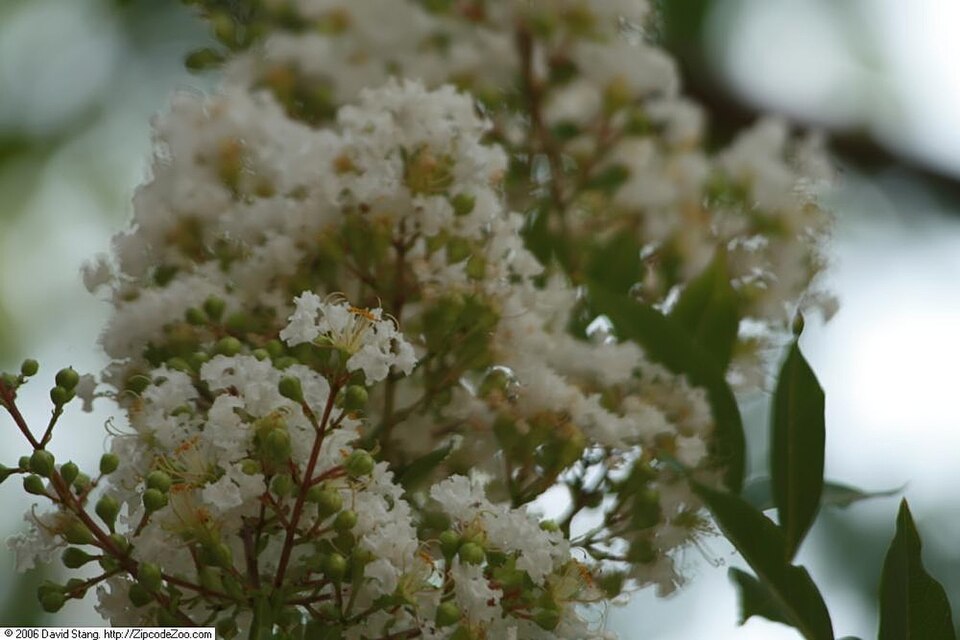
Lagerstroemia indica 'Natchez' is a white-flowered crape myrtle, growing 120–300 inches (300–750 cm) tall and 120–240 inches (300–600 cm) wide as a multi-stemmed small tree. White crinkled crepe-paper-textured flower panicles 6–12 inches (15–30 cm) from mid-summer through fall — approximately 12 weeks of bloom. A hybrid of L. indica × L. fauriei from the USDA National Arboretum breeding program. The L. fauriei parentage contributes cinnamon-tan exfoliating bark that is visible on mature trunks in winter after leaf drop, and greater resistance to powdery mildew compared to pure L. indica cultivars. Named after the Natchez people. Orange-red fall foliage. Blooms on new (current-season) wood. The largest crape myrtle in the National Arboretum series, reaching 300 inches (750 cm) — compared to dwarf cultivars such as 'Bellini Grape' at 24–36 inches (60–90 cm). Topping (cutting the main trunks flat) destroys the natural vase form and the exfoliating bark — thin interior branches and remove crossing limbs instead. Deer-resistant. Drought-tolerant once established. Non-toxic. Zones 6–9. Full sun (6+ hours). Aphids secrete honeydew that supports sooty mold on foliage and surfaces below. Japanese beetle feeds on flowers. Growth rate is fast — 24–36 inches (60–90 cm) per year.
Native Range
Hybrid origin — L. indica (native to China, Korea, Japan) × L. fauriei (native to Japan). Bred at the USDA National Arboretum, Washington, DC.Suggested Uses
Grown as a specimen, street tree, or screen in zones 6–9, spaced 120–180 inches (300–450 cm) apart. Full sun. The exfoliating bark and the vase form provide winter structure after leaf drop. Non-toxic. Deer-resistant.How to Identify
Appearance
Size & Dimensions
Height10' - 25'
Width/Spread10' - 20'
Bloom Information
Detailed Descriptions
Flower Description
White, crinkled crepe textureFoliage Description
Dark green, glossyGrowing Conditions
Sun Requirements
Requires 6-10 hours of direct sunlight daily
• Full Sun: 6+ hours of direct sunlight
• Partial Shade: 3-6 hours of direct sunlight
• Full Shade: Less than 3 hours of direct sunlight
Care & Maintenance
Care Guide
Full sun (6+ hours). Blooms on new wood. Do not top — thin interior branches and remove crossing limbs. Indica × fauriei hybrid with improved powdery mildew resistance. Drought-tolerant once established. Aphids and sooty mold. Japanese beetle. Deer-resistant. Non-toxic. Zones 6–9.Pruning
Thin interior branches and remove crossing limbs — maintain the natural multi-stemmed vase form. Do not top or hat-rack. Prune in late winter before new growth. The exfoliating bark develops on mature trunks and is destroyed by topping.Pruning Schedule
Prune: February–March
winter
Toxicity
Non-toxicRelated Lagerstroemia species
 Zuni crape myrtleLagerstroemia indica 'Zuni'
 Tuscarora crape myrtleLagerstroemia indica 'Tuscarora'
 Catawba crape myrtleLagerstroemia indica 'Catawba'
 Bellini grape crape myrtleLagerstroemia indica 'Bellini Grape'
 Pocomoke crape myrtleLagerstroemia indica 'Pocomoke'
 Pink Velour crape myrtleLagerstroemia indica 'Pink Velour'