Taxus, Genus, chinensis, Species,
- Genus & species
Chinese yew
Overview
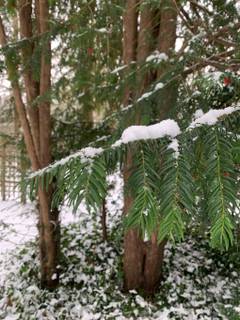
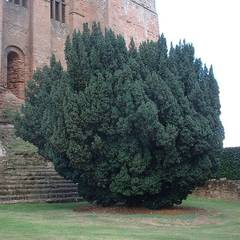
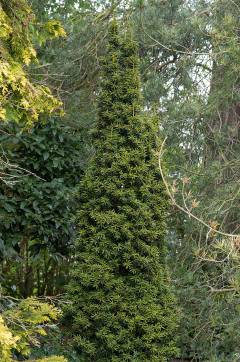
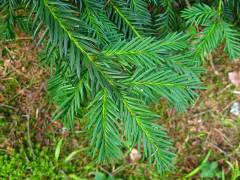
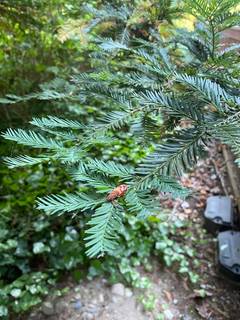
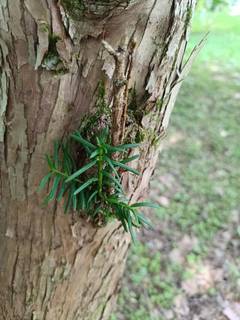
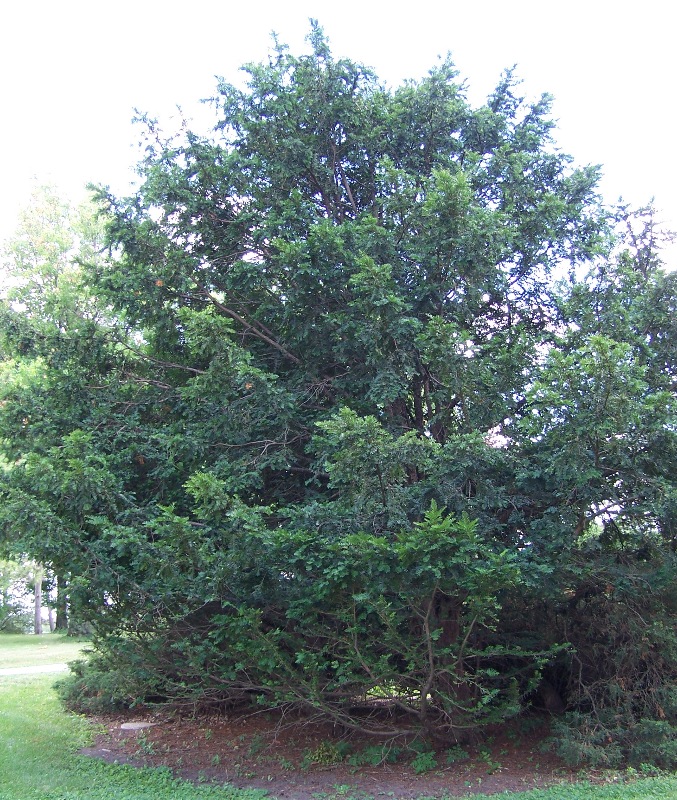
Taxus chinensis is an evergreen conifer reaching 15–60 feet (4.5–18 m) tall in cultivation and up to 65 feet (20 m) in native forest, with a spreading, conical to rounded crown and reddish-brown bark that peels in thin scales. Needles are linear, slightly curved, 0.4–1.6 inches (1–4 cm) long and 0.1–0.15 inch (2.5–4 mm) wide, arranged in two flat rows on lateral shoots, dark green above with two pale yellow-green bands below. Plants are dioecious. Pollen cones about 0.1 inch (3 mm) across release pollen in March–April. Female plants bear a single seed 0.2–0.3 inch (5–8 mm) long, enclosed at the base by a red, fleshy aril about 0.3 inch (8 mm) across that ripens September–November. Growth is slow, at 6–12 inches (15–30 cm) per year. Plants tolerate shade and clipping, and decline in poorly drained soil and in hot, humid summers. Foliage, bark, and seeds contain taxine alkaloids and are poisonous. Wild populations are legally protected in China.
Native Range
Native to central and southern China, from Gansu and Shaanxi south to Sichuan, Hubei, Hunan, Guizhou, and Yunnan. Grows in mixed and broadleaf forests on mountain slopes at 3,300–9,800 feet (1,000–3,000 m) elevation.Suggested Uses
Grown as a specimen or screening tree in large gardens and arboreta at 8–12 foot (2.4–3.6 m) spacing. Foliage and bark are a source of taxane compounds used in cancer drug production. Slow growth and hot-summer decline limit use in warm, humid regions.How to Identify
Appearance
Size & Dimensions
Height15' - 60'
Width/Spread10' - 30'
Bloom Information
Pollen cones open in March–April in zones 6–9, with pollen release lasting 2–3 weeks. Male and female cones are borne on separate plants. Seeds mature in September–November, 6–8 months after pollination.
Detailed Descriptions
Foliage Description
Dark green above, pale yellow-green beneathGrowing Conditions
Sun Requirements
Requires 2-6 hours of direct sunlight daily
• Full Sun: 6+ hours of direct sunlight
• Partial Shade: 3-6 hours of direct sunlight
• Full Shade: Less than 3 hours of direct sunlight
Care & Maintenance
Care Guide
Plants grow in part shade to shade in moist, well-drained loam at pH 6.0–7.5, and tolerate chalk and sandy soils. Water weekly during the first 2 growing seasons; established plants tolerate dry spells of 2–3 weeks. Root rot develops in waterlogged soil, and needle browning occurs in hot, dry winds. Black vine weevil and scale insects feed on foliage in some regions. Mature plants in average soil need no routine feeding. All parts except the red aril contain taxine alkaloids that are poisonous if ingested.Pruning
Light shaping is done in late winter to early spring before new growth emerges. Plants resprout from old wood after hard pruning, which restores density within 2–3 growing seasons. Dead and crossing branches are removed at any time of year.Pruning Schedule
Prune: February–March
winterearly spring