Symphyotrichum, Genus, subspicatum, Species,
- Genus & species
Douglas' aster
British Columbia south through Washington, Oregon, and California, east to Idaho and western Montana; moist forest edges, stream banks, wet meadows, roadsides, and disturbed moist ground; sea level to 5,000 ft (1,500 m)
Overview
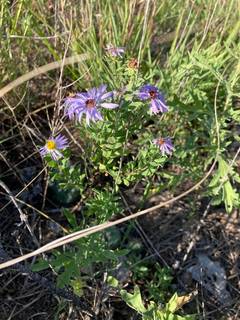
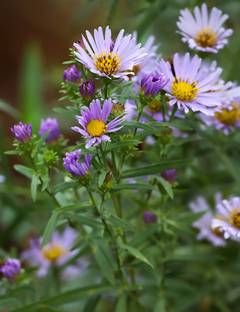
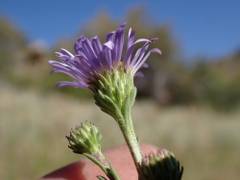
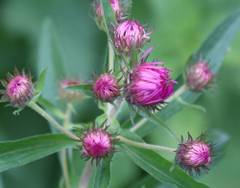
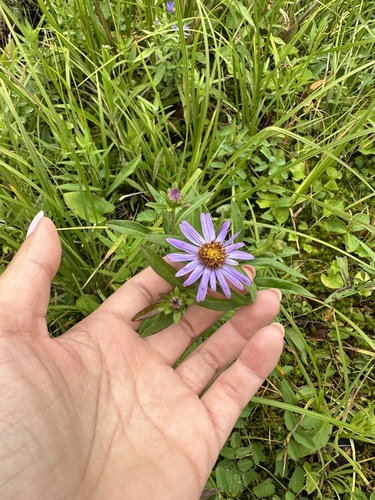
Symphyotrichum subspicatum is a rhizomatous upright perennial native to moist open ground in the Pacific Northwest, growing 16-48 inches (40-120 cm) tall and 18-36 inches (45-90 cm) wide in a clump that expands to form colonies over several years. Stems are unbranched to sparsely branched, topped with loose leafy panicles of composite flower heads 1-1.5 inches (2.5-4 cm) across in late summer through October. Leaves are alternate, lance-shaped, 2-4 inches (5-10 cm) long, medium green, entire to slightly toothed, with clasping auriculate (ear-like) bases that wrap around the stem — this leaf-base character is the main way to identify the species. Ray florets are violet to blue-violet; the central disc is yellow and ages to reddish-bronze as pollination proceeds. Bloom runs August through October for 8 weeks, continuing into late fall after most other Pacific Northwest native perennials have finished flowering and providing late-season pollinator resources. The specific epithet subspicatum means 'somewhat spike-like' and the species was named in honor of Scottish botanist David Douglas. Hardy zones 4-9. In Asteraceae.
Native Range
Native to British Columbia south through Washington, Oregon, and California, east to Idaho and western Montana. Grows on moist forest edges, stream banks, wet meadows, roadsides, and disturbed moist ground from sea level to 5,000 feet (1,500 m) elevation.Suggested Uses
Grown in pollinator gardens, mixed perennial borders, naturalistic plantings, rain gardens, moist meadow restorations, and containers of 5 gallons (19 L) or more, spaced 18-24 inches (45-60 cm). The late August-through-October bloom period extends pollinator forage into the fall when most other native perennials have finished. Hardy zones 4-9.How to Identify
Appearance
Size & Dimensions
Height1'4" - 4'
Width/Spread1'6" - 3'
Bloom Information
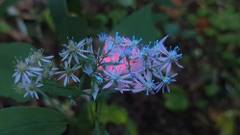
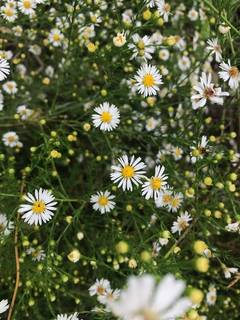
Late summer through mid-fall (August-October). Composite flower heads 1-1.5 inches (2.5-4 cm) across with violet to blue-violet ray florets surrounding a yellow central disc that ages to reddish-bronze, borne in loose leafy panicles at the stem tops. 8 weeks. Bloom continues into October after most other Pacific Northwest native perennials have finished, making the species a late-season nectar and pollen resource for native bees, honeybees, and butterflies.
Detailed Descriptions
Flower Description
Composite flower heads 1-1.5 inches (2.5-4 cm) across with violet to blue-violet ray florets surrounding a yellow central disc that ages to reddish-bronze, borne in loose leafy panicles at the stem tops from August through OctoberFoliage Description
Medium green; alternate lance-shaped leaves 2-4 inches (5-10 cm) long with clasping auriculate (ear-like) bases that wrap around the stem — a diagnostic character; entire to slightly toothed margins; fall foliage yellows before stem diebackGrowing Conditions
Sun Requirements
Requires 3-10 hours of direct sunlight daily
• Full Sun: 6+ hours of direct sunlight
• Partial Shade: 3-6 hours of direct sunlight
• Full Shade: Less than 3 hours of direct sunlight
Care & Maintenance
Care Guide
Plant in moist loam, clay, silt, or sand pH 5.5-7.5 in 3-10 hours of sun. Water weekly during the first growing season; established clumps tolerate short dry periods but flowering decreases in sustained drought. Rhizomes spread slowly to form expanded colonies over 3-5 years. Powdery mildew develops on the foliage in humid conditions with poor air circulation. Cut stems to the ground after bloom ends in November or leave standing seed heads for winter interest and bird forage. Hardy zones 4-9.Pruning
Cut stems to the ground in November after bloom ends, or leave standing seed heads through winter for bird forage and cut back in February before new growth emerges. Pinch stems back by half in early June to reduce ultimate height and encourage denser branching on the blooming panicles.Pruning Schedule
Prune: February & November
fallearly spring
Container Growing
Suitable for container growing
Minimum container size: 5 gallons