Symphyotrichum, Genus, chilense, Species,
- Genus & species
Pacific aster
Overview
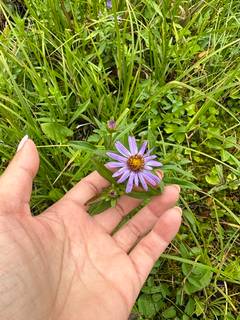
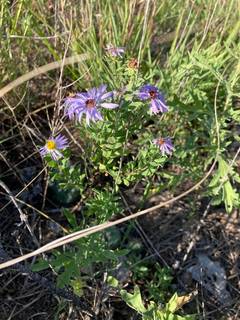
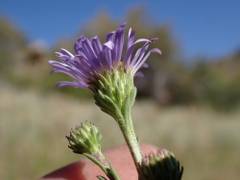
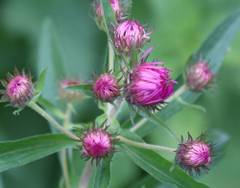
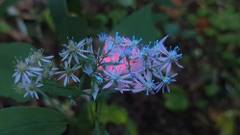
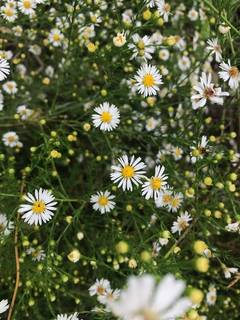
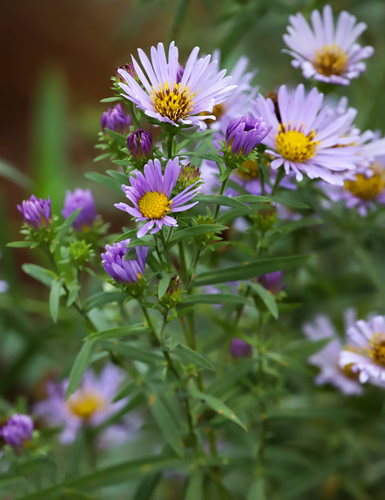
Symphyotrichum chilense is a herbaceous perennial reaching 1-3 feet (30-90 cm) tall and 1-3 feet (30-90 cm) wide, forming colonies from spreading rhizomes. Stems are slender, slightly hairy, and often branched in the upper half. Leaves are linear to lance-shaped, 1-4 inches (2.5-10 cm) long and 0.25-0.5 inch (6-12 mm) wide, with smooth or sparsely toothed margins; basal leaves wither by bloom time. Composite flower heads 1-1.5 inches (2.5-4 cm) across appear in loose, branched panicles from July through October, with peak bloom from August through September. Each head has 15-30 pale violet to blue-violet ray florets surrounding a yellow disc that ages to reddish-purple. Each flower head lasts 5-10 days; total bloom on a single plant extends 6-10 weeks. Achenes 0.1 inch (2.5 mm) long with whitish pappus mature October through November and disperse by wind. Foliage dies back to the rhizome after the first hard frost in zones 7-9. Spreads by rhizomes 6-12 inches (15-30 cm) per year, forming colonies 3-6 feet (90-180 cm) wide over 3-5 years. Lifespan 8-15 years for individual stems; rhizome systems persist longer. Tolerates salt spray and brackish soils, suiting the species to coastal sites.
Native Range
Native to coastal grasslands, dune meadows, salt marsh edges, and bluff openings from southern British Columbia south through coastal Washington and Oregon to central California. Restricted to sites within 5 miles (8 km) of the Pacific coast at elevations from sea level to 500 feet (150 m), with salt-spray and saline-soil tolerance throughout the range.Suggested Uses
Used in coastal native plant gardens, late-season pollinator borders, dune restoration plantings, and bioswales. Spaced 18-24 inches (45-60 cm) apart in groupings of 5-9 plants. Functions as a nectar source for migrating monarch butterflies in coastal corridors and as a host plant for larvae of the pearl crescent and several other checkerspot butterflies.How to Identify
Appearance
Size & Dimensions
Height1' - 3'
Width/Spread1' - 3'
Bloom Information
Flowers from July through October across the range, with peak bloom from August through September in zones 7-9. Cool maritime conditions can extend bloom into early November. Each flower head lasts 5-10 days; total bloom on a single plant extends 6-10 weeks.
Detailed Descriptions
Flower Description
pale violet to blue-violet with yellow centerFoliage Description
medium greenGrowing Conditions
Sun Requirements
Requires 6-10 hours of direct sunlight daily
• Full Sun: 6+ hours of direct sunlight
• Partial Shade: 3-6 hours of direct sunlight
• Full Shade: Less than 3 hours of direct sunlight
Care & Maintenance
Care Guide
Plant container-grown stock or sow seed in fall in well-drained sandy or loamy soils with full sun to light shade. Water during the first growing season; established plants tolerate seasonal drought of 4-6 weeks. Tolerates salt spray, brackish soils, and sandy substrates, suiting coastal exposure. Powdery mildew may develop on lower foliage in humid summers; pruning the lower one-third of stems in midsummer reduces incidence. Spreading rhizomes can extend beyond intended planting areas and may need root barriers in confined garden beds. Crowns benefit from division every 3-4 years in early spring as new shoots emerge.Pruning
Cut spent flowering stems to the base in late fall after seed has dispersed, or leave in place through winter for songbird forage. Pinch growing tips at 6-8 inches (15-20 cm) tall in late spring to encourage branching and reduce stem flop in fertile soils. Divide every 3-4 years in early spring.Pruning Schedule
Prune: June & November
summerfall