Symphyotrichum, Genus, oblongifolium, Species,
- Genus & species
aromatic aster
Native to central and eastern North America from Pennsylvania and New York south to North Carolina and west to Nebraska and Texas in dry prairies, limestone glades, dry rocky woodland edges, and disturbed dry-soil sites
Overview
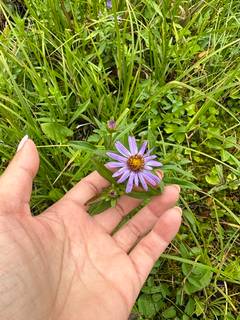
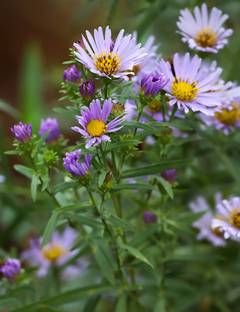
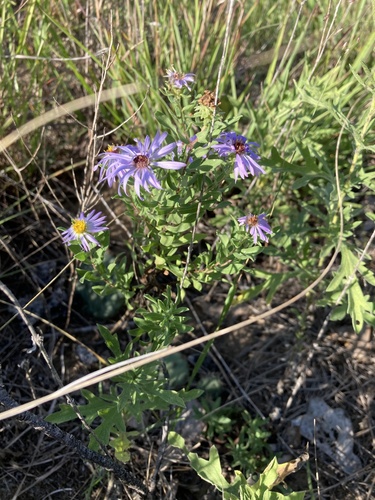
Symphyotrichum oblongifolium is aromatic aster — a native fall-blooming aster in the daisy family (Asteraceae) reaching 12–24 inches (30–60 cm) tall and 24–36 inches (60–90 cm) wide in a compact mound-forming habit. The species name 'oblongifolium' translates as 'oblong-leaved', referencing the small oblong leaves that release a pleasant balsam-like scent when crushed — the aromatic foliage trait that gives the species its common name and that runs separately from the typical odorless foliage of most Symphyotrichum species. Lavender-blue to sky-blue daisy-like flowers with yellow centers cover the entire plant in September through November in such profusion that the foliage runs almost completely hidden beneath the floral mass; the visual effect creates a continuous blue dome 6+ weeks across the late-fall garden. The compact mound-forming habit produces the rounded dome shape without the staking, pinching, or summer-cutback management that taller aster species require. The species runs mildew-free; where many asters (particularly S. novae-angliae New England aster) suffer powdery mildew defoliation in humid summer conditions, aromatic aster carries clean foliage through the season as a breeding-line trait inherited from the species's native dry-prairie habitat. Drought-tolerant — the species runs adapted to dry prairies and limestone glades and tolerates lean dry soil where moisture-loving asters fail. Hardy to USDA zone 3. The cultivar 'October Skies' runs as the principal nursery-trade selection of the species and reaches the typical nursery channels across temperate North America. The species runs as the native alternative to non-native chrysanthemums for fall blue color in pollinator-conscious garden design. Deer avoid the foliage. Not known to be toxic to pets or humans.
Native Range
Symphyotrichum oblongifolium is native to central and eastern North America, from Pennsylvania and New York south to North Carolina and west to Nebraska and Texas, in dry prairies, limestone glades, dry rocky woodland edges, and disturbed dry-soil sites.Suggested Uses
Used in native pollinator gardens, fall-peak perennial borders, dry-soil meadow plantings, prairie restorations, naturalistic landscape installations, and as the native alternative to non-native chrysanthemums for fall blue color. The cultivar 'October Skies' runs as the principal nursery-trade selection and reaches the typical nursery channels across temperate North America. The aromatic foliage trait runs as a secondary garden feature — visitors crushing a leaf release the balsam scent as a sensory garden experience. The mildew-free trait separates the species from S. novae-angliae for humid summer climates where the New England aster cultivars defoliate. The late-season bloom timing supports monarch butterfly fall migration with critical late-season nectar; pairs with goldenrods (Solidago) and prairie grasses (Schizachyrium, Sorghastrum) in fall-peak prairie compositions where the blue aster dome contrasts the warm golden goldenrod plumes and bronze-toned grass plumes.How to Identify
Appearance
Size & Dimensions
Height1' - 2'
Width/Spread2' - 3'
Bloom Information
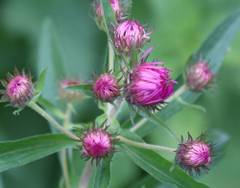
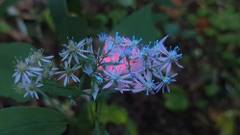
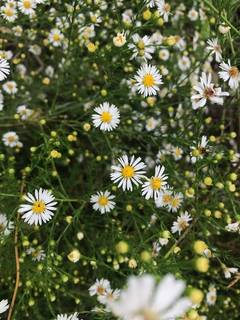
Flowering from September through November across approximately 6 weeks. Lavender-blue to sky-blue daisy-like flowers with yellow centers cover the entire plant in dense profusion; the floral mass hides the foliage almost completely and creates a continuous blue dome across the late-fall garden. Plants run insect-pollinated and attract native bees, butterflies (monarchs during fall migration, painted ladies, sulfurs, skippers), beneficial wasps, and specialist aster-associated pollinators during the bloom window. The bloom timing covers a critical late-season pollinator resource gap — most native pollinator plants finish blooming by August or September, leaving the fall pollinator community dependent on asters and goldenrods through the migration and pre-overwintering window.
Detailed Descriptions
Flower Description
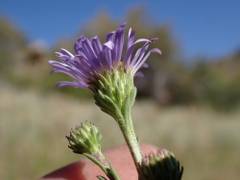
Lavender-blue to sky-blue with yellow centers; daisy-like flowers in profuse clusters covering the entire plantFoliage Description
Dark green; small oblong leaves releasing a balsam-like scent when crushedGrowing Conditions
Sun Requirements
Requires 6-12 hours of direct sunlight daily
• Full Sun: 6+ hours of direct sunlight
• Partial Shade: 3-6 hours of direct sunlight
• Full Shade: Less than 3 hours of direct sunlight
Care & Maintenance
Care Guide
Plant in full sun with at least 6 hours of direct light. Lean well-drained soil including alkaline limestone-influenced soil at pH 6.0–8.0 suits the species; the species runs adapted to dry-prairie and limestone-glade habitat and tolerates lean dry conditions where moisture-loving asters fail. Strongly drought-tolerant once established. Mildew-free as a breeding-line trait — the species does not require the wet-foliage management or air-circulation interventions that S. novae-angliae cultivars need. The compact mound habit needs no staking and no pinching or cutback management — the plant builds the rounded dome form on its own through the growing season. Cut all stems to ground level after frost browns the foliage or in early spring before new growth emerges. Hardy to USDA zone 3. No fertilization — the lean-soil prairie adaptation runs disrupted by added fertility.Pruning
Cut all stems to ground level after frost browns the foliage in late November or in early spring before new growth emerges. No deadheading — the species blooms continuously through the September-November window without the deadheading management that less-floriferous aster species require.Pruning Schedule
Prune: March & November
springfall
Container Growing
Suitable for container growing
Minimum container size: 3 gallons