Symphyotrichum, Genus, puniceum, Species,
- Genus & species
swamp aster
Overview
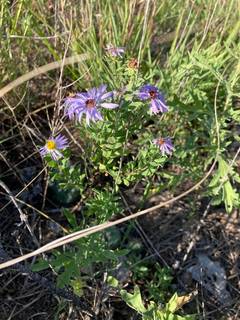
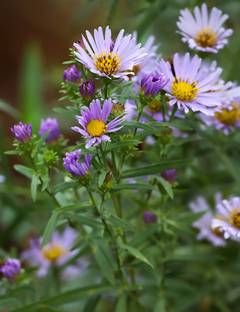
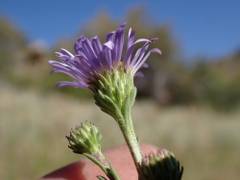
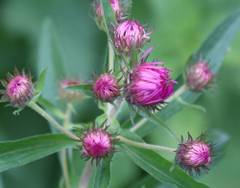
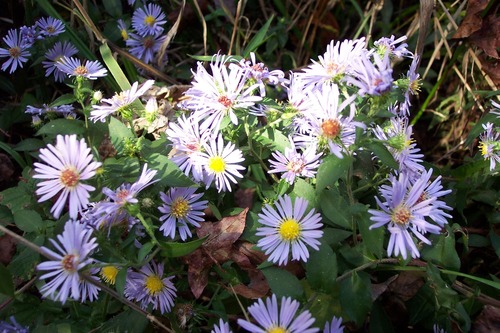
Symphyotrichum puniceum is a tall herbaceous perennial in the aster family, reaching 3-7 feet (0.9-2.1 m) tall and 2-3 feet (60-90 cm) wide, with stout, bristly-hairy stems that are usually flushed deep purple-red. The clasping, lance-shaped leaves are 3-6 inches (7.5-15 cm) long, rough to the touch, and toothed or nearly smooth-edged. Daisy-like flower heads about 1-1.5 inches (2.5-4 cm) across carry 30 to 60 narrow blue-violet to lavender rays around a yellow disk that ages to reddish-purple. Flowering runs from late summer into fall. The plant grows in marshes, wet meadows, swamp edges, ditches, and streambanks across eastern and central North America, where it forms colonies by short rhizomes. It needs consistently moist to wet soil and declines on dry ground. The tall stems can flop in rich soil or wind without support. The late flowers are a major nectar source for migrating monarchs and many native bees as the season ends.
Native Range
Native to eastern and central North America, from Newfoundland and Manitoba south to Georgia and Alabama. It grows in marshes, wet meadows, swamp margins, ditches, and along streams and ponds.Suggested Uses
Grown in rain gardens, pond and stream edges, wet meadows, and native pollinator plantings. The late flowers supply nectar for monarchs, other butterflies, and bees during fall migration.How to Identify
Appearance
Size & Dimensions
Height3' - 7'
Width/Spread2' - 3'
Bloom Information
Blue-violet flower heads open from August into October, peaking in early fall. The many narrow rays surround a yellow disk that turns reddish-purple with age. Dry seeds with white bristles follow and disperse on the wind.
Detailed Descriptions
Foliage Description
greenGrowing Conditions
Sun Requirements
Requires 4-10 hours of direct sunlight daily
• Full Sun: 6+ hours of direct sunlight
• Partial Shade: 3-6 hours of direct sunlight
• Full Shade: Less than 3 hours of direct sunlight
Care & Maintenance
Care Guide
Grows in full sun to part shade in consistently moist to wet, fertile soil and tolerates standing water at the margins of ponds and streams. It declines in dry soil and needs reliable moisture through the season. In rich soil the tall stems flop, so cutting back in early summer or staking keeps them upright. It spreads by rhizome into colonies and self-sows in open wet ground. Division every few years renews vigor and limits spread. Powdery mildew can affect crowded plants with poor air flow.Pruning
Cutting stems back by about one-third in early summer reduces height and flopping and increases branching. Spent stems can be left over winter for wildlife and cut to the ground in early spring.Pruning Schedule
summerearly spring