Symphyotrichum, Genus, cordifolium, Species,
- Genus & species
common blue wood aster
Overview
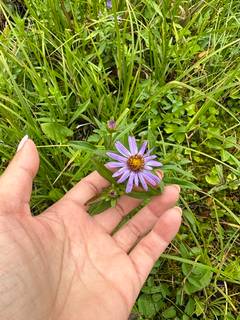
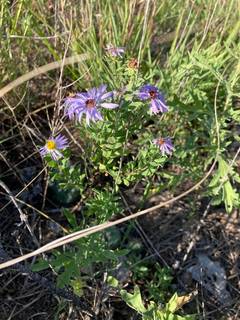
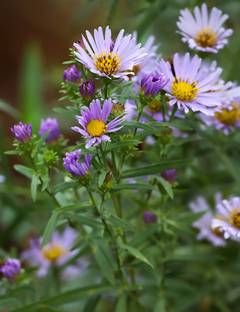
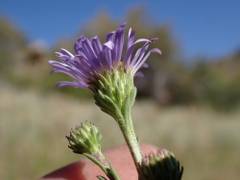
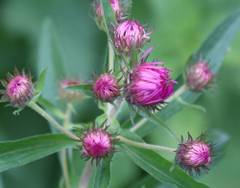
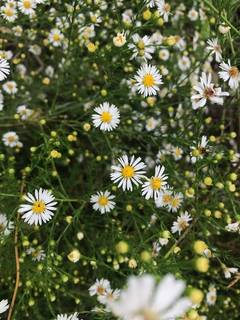
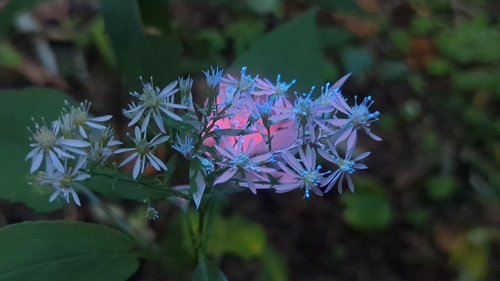
Symphyotrichum cordifolium is a clump-forming herbaceous perennial in the daisy family, growing 24–48 inches (60–120 cm) tall with wiry, often arching branched stems. The lower leaves are heart-shaped with a winged stalk and toothed margins, 2–6 inches (5–15 cm) long, becoming smaller and stalkless up the stem. From September to October it produces airy sprays of many small daisy flowers, each 0.5–0.75 inch (12–20 mm) across with 8–20 pale blue to lavender ray florets around a yellow center that ages to reddish-purple. The plant grows from a short rhizome and slowly forms loose colonies, also self-seeding freely. It grows in dry to moist woodland, clearings, and shaded edges, tolerating dry shade once established. It dies back to the base in winter. The thin stems can flop in rich soil or heavy shade, and plants may need support or pinching. Bloom comes late, extending color into autumn.
Native Range
Native to eastern and central North America, from Quebec and Ontario south to Georgia and west to the Great Plains. It grows in deciduous woodlands, woodland edges, clearings, and shaded roadsides.Suggested Uses
Used in woodland gardens, shaded borders, and native plant meadows. Suited to dry shade under trees where many perennials fail, and to naturalized drifts. Grown as a late-season nectar source for bees and migrating butterflies.How to Identify
Appearance
Size & Dimensions
Height2' - 4'
Width/Spread1'6" - 2'6"
Bloom Information
Blooms from September to October, among the later asters to flower. The many small heads open over three to four weeks. Yellow disk florets turn reddish-purple as they age and are pollinated.
Detailed Descriptions
Flower Description
pale blue to lavender with yellow centerFoliage Description
dark greenGrowing Conditions
Sun Requirements
Requires 3-8 hours of direct sunlight daily
• Full Sun: 6+ hours of direct sunlight
• Partial Shade: 3-6 hours of direct sunlight
• Full Shade: Less than 3 hours of direct sunlight
Care & Maintenance
Care Guide
Grows in part shade to full sun on moist, well-drained soils with a pH of 5.5–7.0, and tolerates dry shade once established. It accepts a range of soils but flops in overly rich ground or deep shade. Cutting the stems back by half in early summer produces a shorter, sturdier, denser plant. Division every two to three years in spring renews the clump and limits self-seeding. Hardy in USDA zones 3 to 8. It needs little water once settled but flowers more freely with summer moisture.Pruning
Stems are cut back by one-third to one-half in late spring or early summer to reduce height and flopping. After flowering, the plant is cut to the ground in late autumn or left to stand for winter interest. Division in spring controls the clump and renews growth.Pruning Schedule
Prune: May–June & November
late springsummerfall
Container Growing
Suitable for container growing
Minimum container size: 2 gallons