Symphyotrichum, Genus, spp., Multiple species,
- Genus
- Multiple species
American asters
Overview
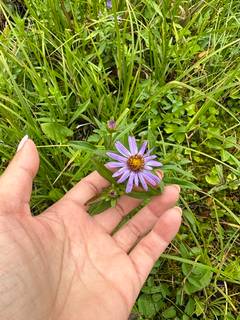
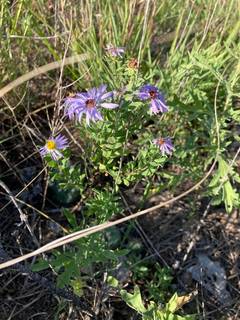
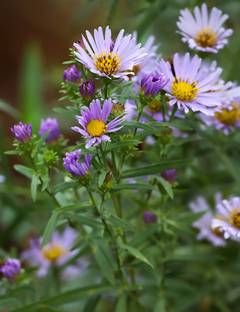
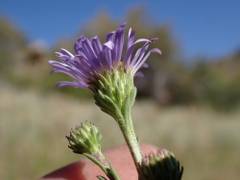
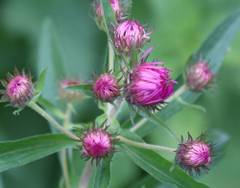
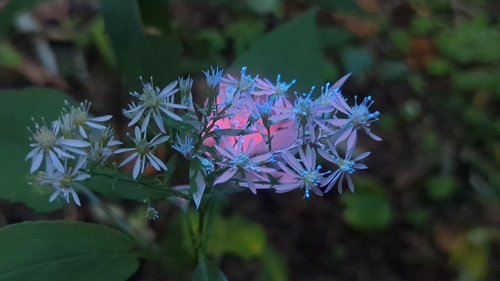
Symphyotrichum is a genus of about 90 species of mostly North American asters in the daisy family, separated from the Old World genus Aster and including familiar plants such as the New England aster S. novae-angliae. Most are herbaceous perennials growing upright from rhizomes or a crown, ranging across the genus from about 1 to 6 feet (30 to 180 cm) tall. Stems are leafy and often branched in the upper half, with narrow to lance-shaped leaves that may clasp the stem. The flower heads have a central disc of yellow florets ringed by slender ray florets in purple, blue, pink, or white, opening from late summer into autumn. Many species are visited by bees and butterflies and are among the last nectar sources before winter. Plants spread by rhizomes and by wind-borne seed, and some species self-sow freely. Foliage dies back to the ground in winter. The lower leaves of taller species often drop or develop mildew by bloom time, and species differ in height, ray color, and flower size.
Native Range
The genus is centered in North America, where its species grow in meadows, prairies, woodland edges, marshes, and roadsides from Canada to Mexico, with a few species in South America and eastern Asia. Across the genus, American asters occupy open to lightly shaded sites in a wide range of soil moisture, from dry banks to wet meadows.Suggested Uses
American asters are grown in borders, meadow and prairie plantings, and pollinator gardens, spaced from about 12 to 36 inches (30 to 90 cm) apart by species. Compact species suit the front of a border and containers, while tall, spreading ones suit naturalized areas. The late flowers extend color and nectar into autumn.How to Identify
Appearance
Size & Dimensions
Height1' - 6'
Width/Spread1' - 3'
Bloom Information
Across the genus, bloom runs from late summer into mid autumn, roughly August through October, with some species opening in July and others holding into November in mild areas. A stand stays in color for 4-8 weeks as side branches open in turn. Flowering begins earlier in northern species and later in many southern and coastal ones.
Detailed Descriptions
Flower Description
purple, blue, pink, or whiteFoliage Description
greenGrowing Conditions
Sun Requirements
Requires 5-8 hours of direct sunlight daily
• Full Sun: 6+ hours of direct sunlight
• Partial Shade: 3-6 hours of direct sunlight
• Full Shade: Less than 3 hours of direct sunlight
Care & Maintenance
Care Guide
Most American asters grow in full sun to light shade in average, evenly moist, well-drained soil. Across the genus they tolerate a range of conditions, though dry soil and crowding lead to lower-leaf drop and powdery mildew on susceptible species. Tall species are pinched or cut back by half in early summer to limit flopping and reduce the need for staking. Clumps are divided every 2-3 years to keep them vigorous and to control rhizomatous spread. Aphids and mildew are the main problems and are reduced by good air movement. Most species are left standing through winter to feed birds and shelter insects.Pruning
Cut stems to the ground in late winter or early spring before new growth begins. Across the genus, pinching or shearing tall species by one-third to one-half in early summer produces shorter, denser plants with more flowers. Removing spent heads before seed sets limits self-sowing in vigorous species.Pruning Schedule
early springsummer
Container Growing
Suitable for container growing
Minimum container size: 2 gallons