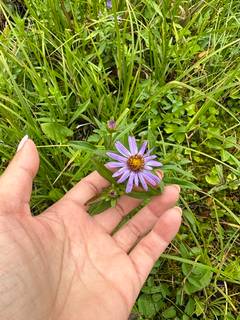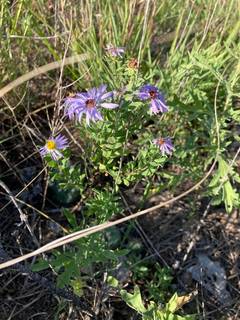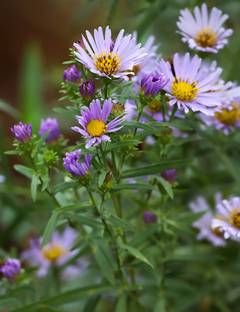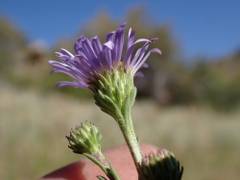
Symphyotrichum, Genus, drummondii, Species,
- Genus & species
Drummond's aster
Overview
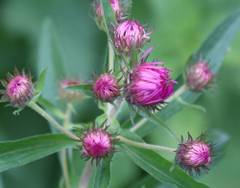
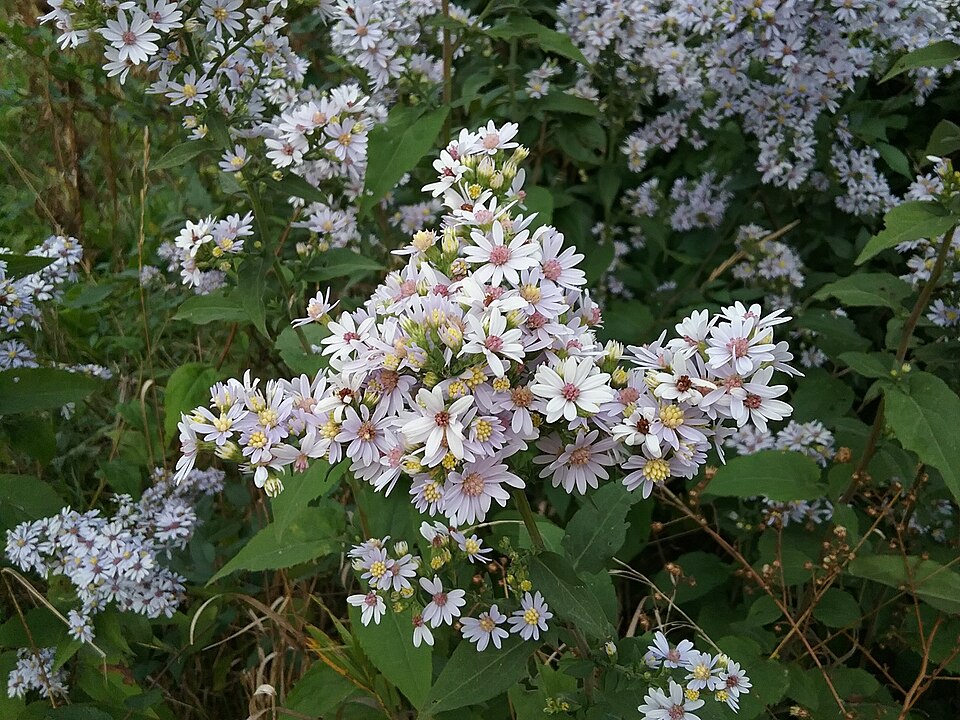
Symphyotrichum drummondii is a clump-forming perennial in the aster family, native to woodland edges and clearings of the central and eastern United States. Stems rise 24-48 inches (60-120 cm) from a short rhizome, branching into open, arching sprays in late summer. The lower leaves are heart-shaped with toothed margins and rough upper surfaces, 2-4 inches (5-10 cm) long, on winged stalks; upper leaves are smaller and stalkless. From September to October, the branches carry many flower heads 0.5-0.75 inch (1.2-2 cm) across, each with 8-15 pale blue to lavender ray florets around a yellow disk that ages reddish. The species grows in partial shade and tolerates dry soils once established, though plants in deep shade flower less and may flop without support. It self-seeds and spreads by short rhizomes into loose colonies. Foliage dies back after frost. The late bloom supplies nectar and pollen to bees and migrating butterflies when few other woodland plants flower. Drummond's aster grows in loam, clay, and rocky soils at woodland margins.
Native Range
Native to the central and eastern United States, from Minnesota and Ontario south to Texas and Alabama. It grows at the edges of woods, in thickets, clearings, and along shaded roadsides.Suggested Uses
Grown at woodland edges, in shade and native plant gardens, and in pollinator borders for late-season bloom. Spaced 18-24 inches (45-60 cm) apart, plants form loose drifts. Used to extend nectar supply into autumn alongside goldenrods and other asters.How to Identify
Appearance
Size & Dimensions
Height2' - 4'
Width/Spread1'6" - 2'6"
Bloom Information
Flowers open from September to October, lasting about six weeks. Bloom comes later than most summer perennials, extending the woodland-edge flowering season into mid-autumn. Heads open from the branch tips inward over several weeks.
Detailed Descriptions
Flower Description
Pale blue to lavender rays with a yellow disk aging reddishFoliage Description
Green, heart-shaped, rough-texturedGrowing Conditions
Sun Requirements
Requires 3-6 hours of direct sunlight daily
• Full Sun: 6+ hours of direct sunlight
• Partial Shade: 3-6 hours of direct sunlight
• Full Shade: Less than 3 hours of direct sunlight
Care & Maintenance
Care Guide
Grows in partial shade in average, well-drained soil, tolerating clay, loam, and dry rocky ground once established. Water through the first season; mature plants withstand short summer droughts. Plants in deep shade or rich soil grow tall and may need support or an early-summer pinch to stay compact. Cut stems to the ground after frost, or leave them standing through winter for seed-eating birds. Self-seeding can be heavy, so remove spent heads before seed set where volunteers are unwanted. Divide clumps every three to four years in spring to renew vigor.Pruning
Pinch stems by one-third in early summer to reduce height and flopping, if a compact form is wanted. Cut spent stems to the ground after frost, or leave seed heads standing for winter interest and birds. Remove faded heads before seed drops to limit self-seeding.Pruning Schedule
Prune: June & November
summerfall
Container Growing
Suitable for container growing
Minimum container size: 3 gallons