Stelis, Genus, spp., Multiple species,
- Genus
- Multiple species
leach orchids
Neotropics (Mexico, Caribbean, Central and South America, especially the Andes)
Overview
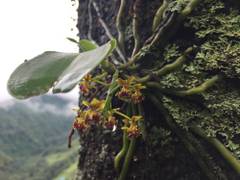
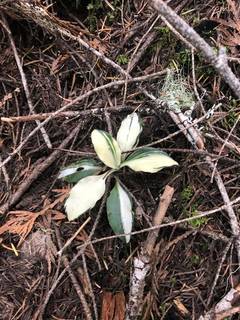
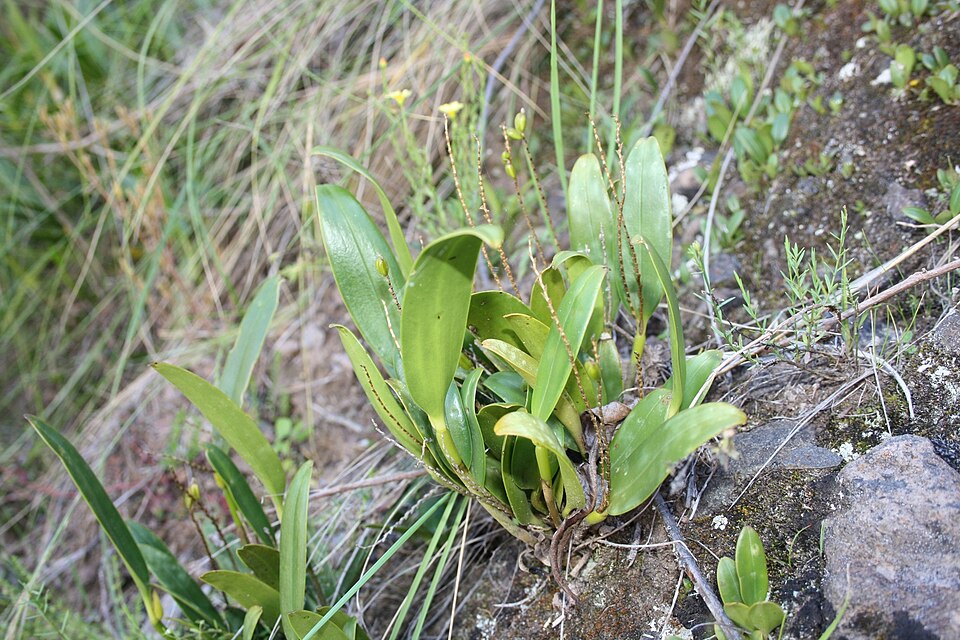
Stelis is a large genus of more than 500 small epiphytic orchids in the family Orchidaceae, native to the Neotropics and most diverse in the cool, humid montane forests of the Andes. Plants grow as tufts of thin stems, each 1 to 8 in (2.5 to 20 cm) tall and topped by a single leathery, paddle-shaped leaf. From the leaf base rises a wiry spike carrying many tiny flowers along its length. The flowers are dominated by three triangular sepals, often translucent, while the petals and lip stay minute; sepal color spans green, yellow, white, red, and purple, sometimes with darker spotting. Many species hold their sepals partly closed, so the flowers read as small three-pointed cups. Plants attach to tree bark and mossy branches by fleshy roots and draw moisture from rain and cloud rather than from soil. The genus is grown by orchid specialists mounted on bark or in small pots of open mix. Limitations include the very small flower size, a need for steady humidity and cool to intermediate temperatures, and intolerance of drying out or heat.
Native Range
Stelis ranges through the Neotropics from Mexico and the Caribbean south through Central America to Bolivia and Brazil. The genus reaches its greatest diversity in the Andean cloud forests of Colombia, Ecuador, and Peru. Plants grow as epiphytes on trees and, less often, on mossy rocks at mid to high elevations.Suggested Uses
Stelis is grown by orchid hobbyists and in botanical collections, mounted on bark or cork or potted in small containers in a humid, shaded case or greenhouse. The compact tufts suit terrariums and orchidariums. Plants are kept as windowsill orchids where humidity can be held high.How to Identify
Appearance
Size & Dimensions
Height1" - 8"
Width/Spread2" - 8"
Bloom Information
Stelis species flower mainly in autumn and winter, though some bloom more than once a year and a few flower over many months. Each spike opens its many small flowers in succession over several weeks. The flowers are pollinated by small flies and gnats drawn to the close-set sepals.
Detailed Descriptions
Flower Description
green, yellow, white, red, or purpleFoliage Description
green to dark greenGrowing Conditions
Sun Requirements
Requires 2-6 hours of direct sunlight daily
• Full Sun: 6+ hours of direct sunlight
• Partial Shade: 3-6 hours of direct sunlight
• Full Shade: Less than 3 hours of direct sunlight
Care & Maintenance
Care Guide
Stelis grows in bright shade with steady humidity above 60 percent and cool to intermediate temperatures, reflecting its montane cloud-forest origins. Plants are mounted on bark or grown in small pots of free-draining fir bark or sphagnum, and roots are watered often enough that they never dry out fully between waterings. Most species decline in heat above 85 F (29 C) and in dry air, which shrivels the leaves and stems. They are frost tender and grown indoors or under glass outside the tropics. Light feeding at quarter strength during active growth suits the small root systems. Steady air movement reduces rot in the dense tufts.Pruning
Stelis needs no routine pruning. Spent flower spikes are removed once the last flowers drop, and dead leaves and stems are trimmed from the tuft to keep it open. Plants are divided only when a clump outgrows its mount or pot.Container Growing
Suitable for container growing