Goodyera, Genus, oblongifolia, Species,
- Genus & species
rattlesnake plantain
Overview
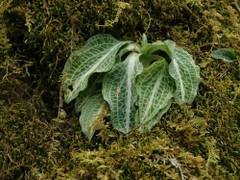
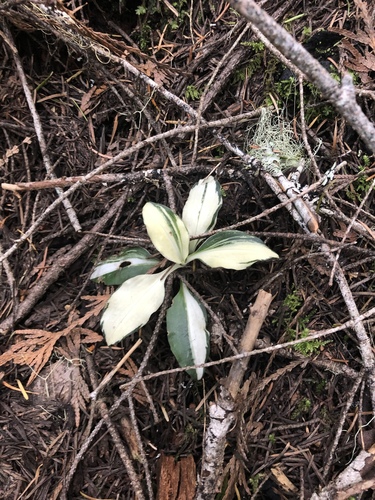
Goodyera oblongifolia is an evergreen terrestrial orchid forming small basal rosettes 2-3 inches (5-7.5 cm) tall and 4-8 inches (10-20 cm) wide. Each rosette consists of 4-7 oblong to elliptic leaves 1-3.5 inches (2.5-9 cm) long, dark green with a network of white reticulate veins along the midrib and lateral veins. Plants spread slowly via stoloniferous rhizomes, with daughter rosettes forming 2-6 inches (5-15 cm) from the parent. A single leafless flowering stalk 6-15 inches (15-40 cm) tall emerges from the center of the rosette in summer, bearing 10-30 small whitish-green flowers in a one-sided spiral spike. Individual flowers are 0.2-0.3 inch (5-8 mm) long with a hooded upper sepal. Bloom occurs from July through September; flowers are pollinated by bumblebees. Plants persist 8-15 years in stable forest understories. Like most terrestrial orchids, the species depends on mycorrhizal fungal partners and rarely survives transplant from wild populations. The white venation pattern varies among populations from a dense network to faint stripes.
Native Range
Native to North America from southern Alaska south through British Columbia, Washington, Oregon, and the Sierra Nevada and Rocky Mountains, with disjunct populations in the Great Lakes region and northeastern North America. Found in moist coniferous and mixed forest understory, in deep duff under Douglas-fir, hemlock, spruce, and pine canopies, at 0-7,000 feet (0-2,150 m) elevation.Suggested Uses
Used in shaded native plant gardens, woodland slopes, and moss gardens at 6-12 inch (15-30 cm) spacing in undisturbed organic substrate. Suited to native orchid enthusiasts and naturalized conifer woodland plantings rather than typical mixed garden borders. Performs poorly in most cultivated soils, in containers, in sunny sites, and in disturbed gardens lacking established mycorrhizal communities.How to Identify
Appearance
Size & Dimensions
Height2" - 1'3"
Width/Spread4" - 8"
Bloom Information
Flower stalks emerge in late June, with peak bloom from late July through August. Individual spikes remain in bloom 3-4 weeks; the spiral spike opens from the bottom upward over 2-3 weeks. Bloom timing shifts later by 2-3 weeks at higher elevations and in cool coastal forests. Bloom is reduced in dry summers; rosettes that bloom heavily skip flowering for 1-2 years afterward.
Detailed Descriptions
Foliage Description
dark green with white reticulate veinsGrowing Conditions
Sun Requirements
Tolerates up to 4 hours of direct sunlight daily
• Full Sun: 6+ hours of direct sunlight
• Partial Shade: 3-6 hours of direct sunlight
• Full Shade: Less than 3 hours of direct sunlight
Care & Maintenance
Care Guide
Plants require deep coniferous duff or organically rich, moist, slightly acidic soil with mycorrhizal partners present; transplanted divisions rarely establish without intact substrate from the source site. Slugs feed on emerging flower stalks and damaged leaves in cool wet seasons. Voles occasionally consume rhizomes in winter under heavy mulch. No fertilizer is needed; supplemental nutrients can disrupt the mycorrhizal balance. Plants take 5-8 years to flower from seed, and germination requires fungal partners. Established colonies expand at 2-4 inches (5-10 cm) per year via stolons.Pruning
Cut spent flowering stalks at the base in fall after seed dispersal. The evergreen rosette is left intact year-round; old leaves yellow and drop naturally as new leaves emerge. No other pruning is required.Pruning Schedule
Prune: October
fall