Image 1 of 8
1 / 8
Plant Reference
Cypripedium, Genus, spp., Multiple species,
- Genus
- Multiple species
lady's slipper
North America ({C. parviflorum}, {C. acaule}, {C. reginae}), Europe ({C. calceolus}), and Asia ({C. japonicum}, {C. formosanum}); moist deciduous forests, bogs, and calcareous fens
Overview
Cypripedium spp. is lady's slipper orchid (moccasin flower), a genus of clumping deciduous terrestrial orchids growing 8-24 inches (20-60 cm) tall and 8-18 inches (20-45 cm) wide. A modified petal forms an inflated sac (the slipper or labellum) 1-2 inches (2.5-5 cm) in yellow, white, pink, or maroon with spreading or twisted lateral petals and sepals in May-July (4 weeks). Medium green broadly ovate pleated (plicate) leaves 3-8 inches (7-20 cm). In Orchidaceae. Cypripedium = Venus's slipper. Over 50 species from North America, Europe, and Asia. Hardy terrestrial orchids that grow in garden soil — not epiphytic like tropical orchids. The obligate mycorrhizal fungal relationship is the primary cultural limitation — the specific soil fungi must be present for the plant to survive. Without the mycorrhiza, transplanted or bare-root plants fail. Purchase only nursery-propagated plants (not wild-collected — many species are endangered). Not drought-tolerant — consistent moisture required. Slow to establish (3-5 years to first bloom from division). Deer browse. Toxicity unknown. Zones 3-8. Part shade to full shade. Growth rate is very slow.
Native Range
North America (C. parviflorum, C. acaule, C. reginae), Europe (C. calceolus), and Asia (C. japonicum, C. formosanum). Found in moist deciduous forests, bogs, and calcareous fens.Suggested Uses
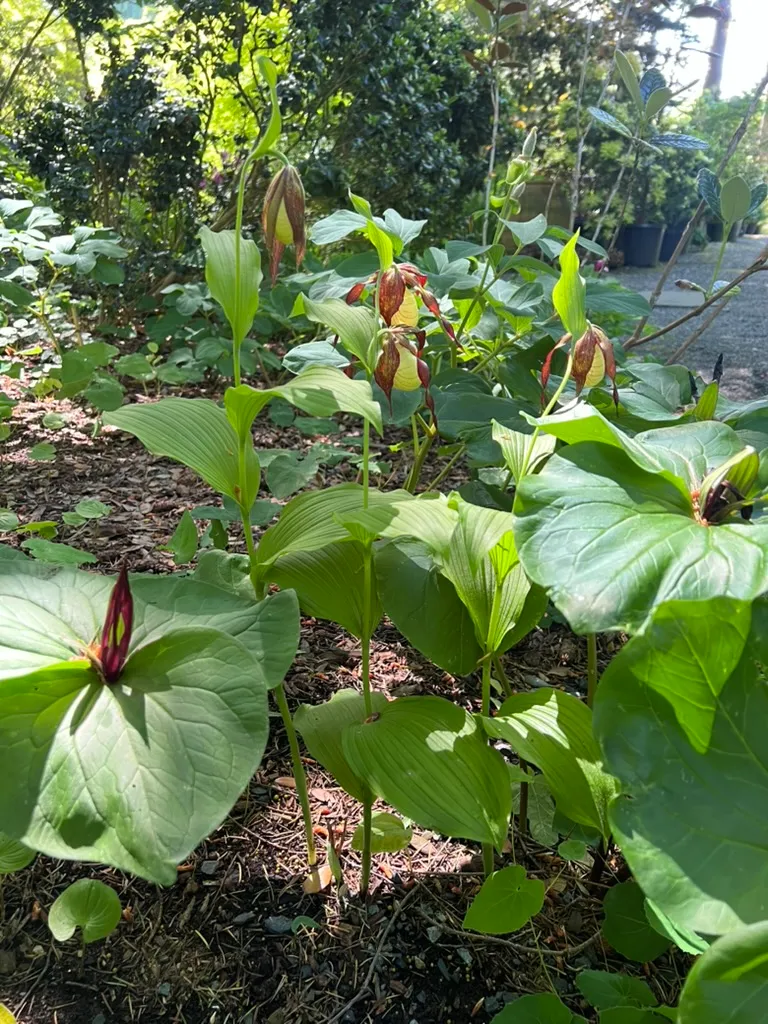
Grown in woodland gardens, shade borders, and native plant gardens spaced 8-18 inches (20-45 cm). Hardy terrestrial orchid. Requires mycorrhizal fungi in soil. Purchase nursery-propagated (not wild-collected). Slow-growing. Native to North America, Europe, and Asia. Zones 3-8.How to Identify
Appearance
Size & Dimensions
Height8" - 2'
Width/Spread8" - 1'6"
Bloom Information
Detailed Descriptions
Flower Description
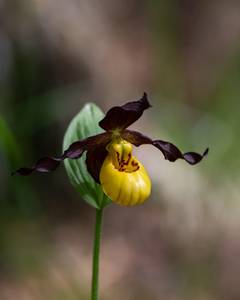
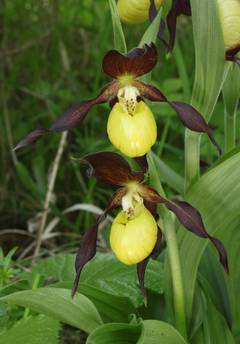
Yellow (C. parviflorum), white (C. candidum), pink (C. acaule), or maroon-and-yellow (C. calceolus); a modified petal forms an inflated sac or pouch (the 'slipper' or labellum) 1-2 inches (2.5-5 cm) with lateral petals and sepals that may be twisted or spreadingFoliage Description
Medium green, broadly ovate to elliptic, 3-8 inches (7-20 cm), with prominent parallel veins and a pleated (plicate) texture; 2-5 leaves per stem depending on speciesGrowing Conditions
Sun Requirements
Requires 1-4 hours of direct sunlight daily
• Full Sun: 6+ hours of direct sunlight
• Partial Shade: 3-6 hours of direct sunlight
• Full Shade: Less than 3 hours of direct sunlight
Care & Maintenance
Care Guide
Part shade to full shade (1-4 hours). Moist humus-rich soil pH 6.0-7.0 — some species prefer calcareous (alkaline) conditions. Not drought-tolerant. Obligate mycorrhizal — the specific soil fungi must be present. Purchase nursery-propagated plants only (never wild-collected). Slow to establish. Cut dead foliage in fall (October). Deer browse. Toxicity unknown. Zones 3-8.Pruning
Cut dead foliage to the ground in fall (October) after it withers. Do not disturb the root zone — the mycorrhizal relationship is easily disrupted. Do not divide unless the clump is well-established (5+ years).Pruning Schedule
Prune: October
fall