Stachys, Genus, rigida, Species,
- Genus & species
rough hedgenettle
Overview
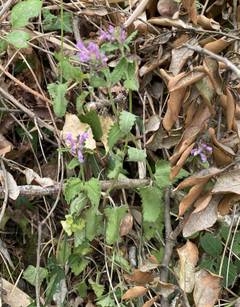
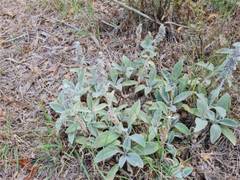
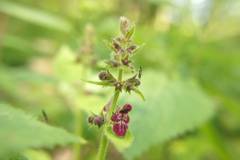
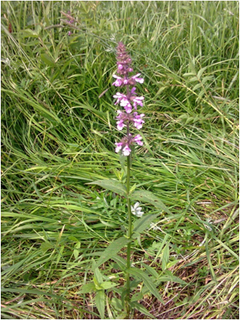
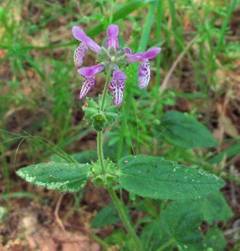
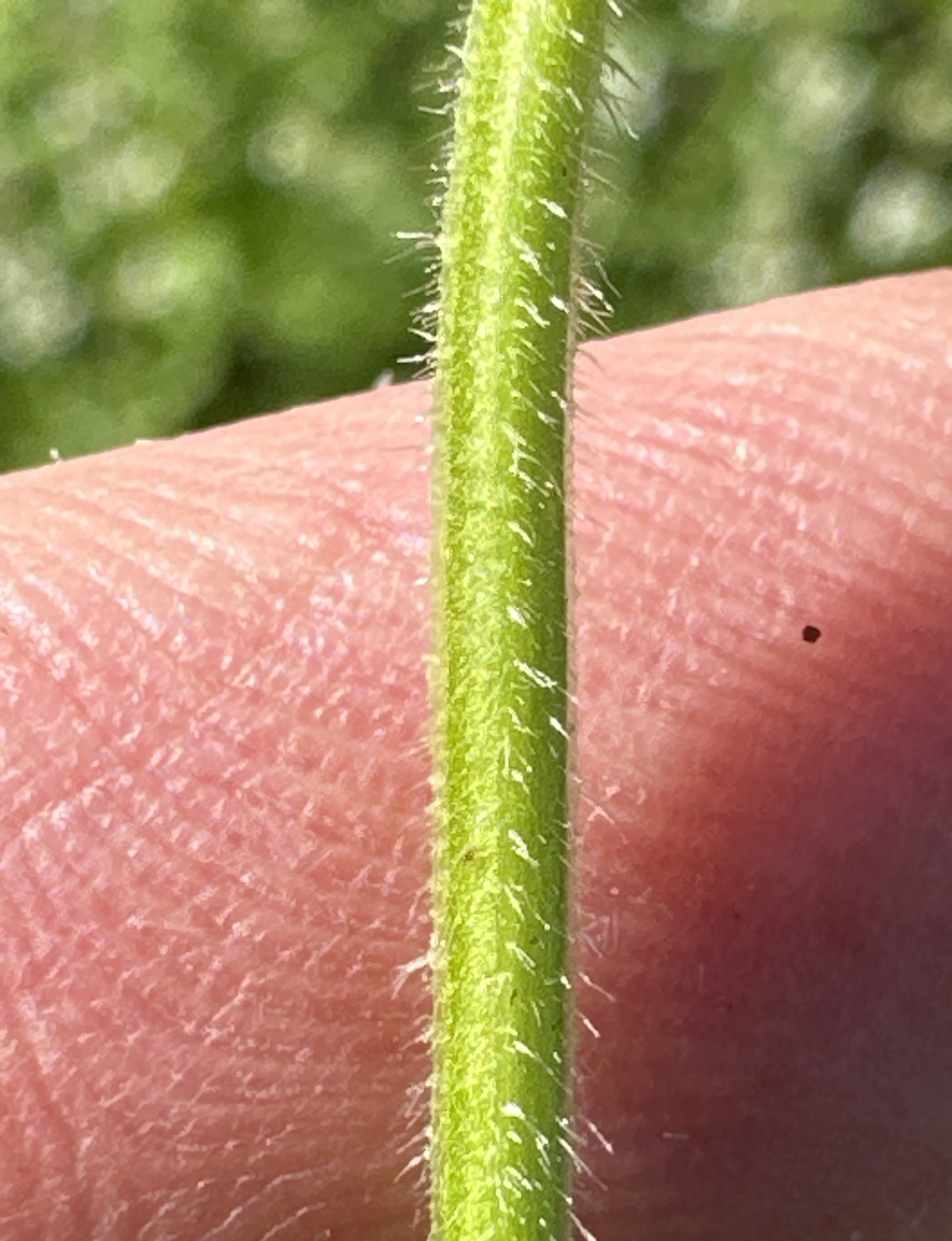
Stachys rigida is a herbaceous perennial reaching 12-36 inches (30-90 cm) tall, with square stems that are usually rough with stiff hairs. Leaves are opposite, oblong to lance-shaped, 1.5-4 inches (4-10 cm) long, with scalloped margins and a wrinkled, hairy surface. Small two-lipped flowers are pink to pale purple, often marked with darker spots, about 0.5 inch (1.3 cm) long, arranged in interrupted whorls along an upright spike. Bloom occurs from late spring through summer. The plant spreads by rhizomes to form loose clumps and dies back to the ground in winter. It grows on a wide range of soils across varied habitats, and its appearance varies considerably between populations, which has led to several named varieties. The hairy foliage has a faint scent when crushed. In dry sites the lower leaves wilt and flowering is shorter.
Native Range
Native to western North America, from British Columbia south through Oregon and California into Baja California. Grows in moist meadows, streambanks, woodland edges, and disturbed ground from coastal areas to mid elevations.Suggested Uses
Planted in informal borders, meadow plantings, and along pond and stream edges at 12-18 inch (30-45 cm) spacing. Its spreading habit suits naturalized settings more than formal beds, where it can outgrow its space. Supports bees and other pollinators in summer.How to Identify
Appearance
Size & Dimensions
Height1' - 3'
Width/Spread1' - 2'
Bloom Information
Detailed Descriptions
Flower Description
pink to pale purpleFoliage Description
greenGrowing Conditions
Sun Requirements
Requires 4-8 hours of direct sunlight daily
• Full Sun: 6+ hours of direct sunlight
• Partial Shade: 3-6 hours of direct sunlight
• Full Shade: Less than 3 hours of direct sunlight
Care & Maintenance
Care Guide
Grows in full sun to part shade in average to moist soil. Water during dry spells to extend bloom; foliage wilts and flowering ends early in drought. The plant spreads by rhizomes and can form wide patches in moist, fertile ground. It needs little feeding and few inputs. There are no serious pests or diseases, though leaves may show powdery mildew late in the season in crowded plantings. Cut back stems after flowering or in late winter.Pruning
Cut spent flower spikes after bloom to limit self-seeding and tidy the clump. Cut stems to the ground in late winter before new growth begins. Lift and divide spreading clumps in spring to control their size.Pruning Schedule
Prune: February & August
summerwinter
Container Growing
Suitable for container growing
Minimum container size: 2 gallons