Image 1 of 15
1 / 15
Plant Reference
Stachys, Genus, byzantina, Species,
- Genus & species
lamb's ears
Turkey, Armenia, Iran, and adjacent Middle East and Caucasus; rocky hillsides, dry scrub, and open grasslands.
Overview
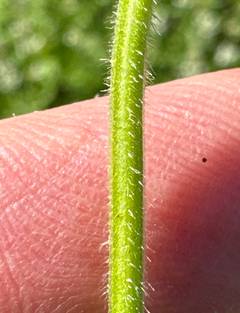
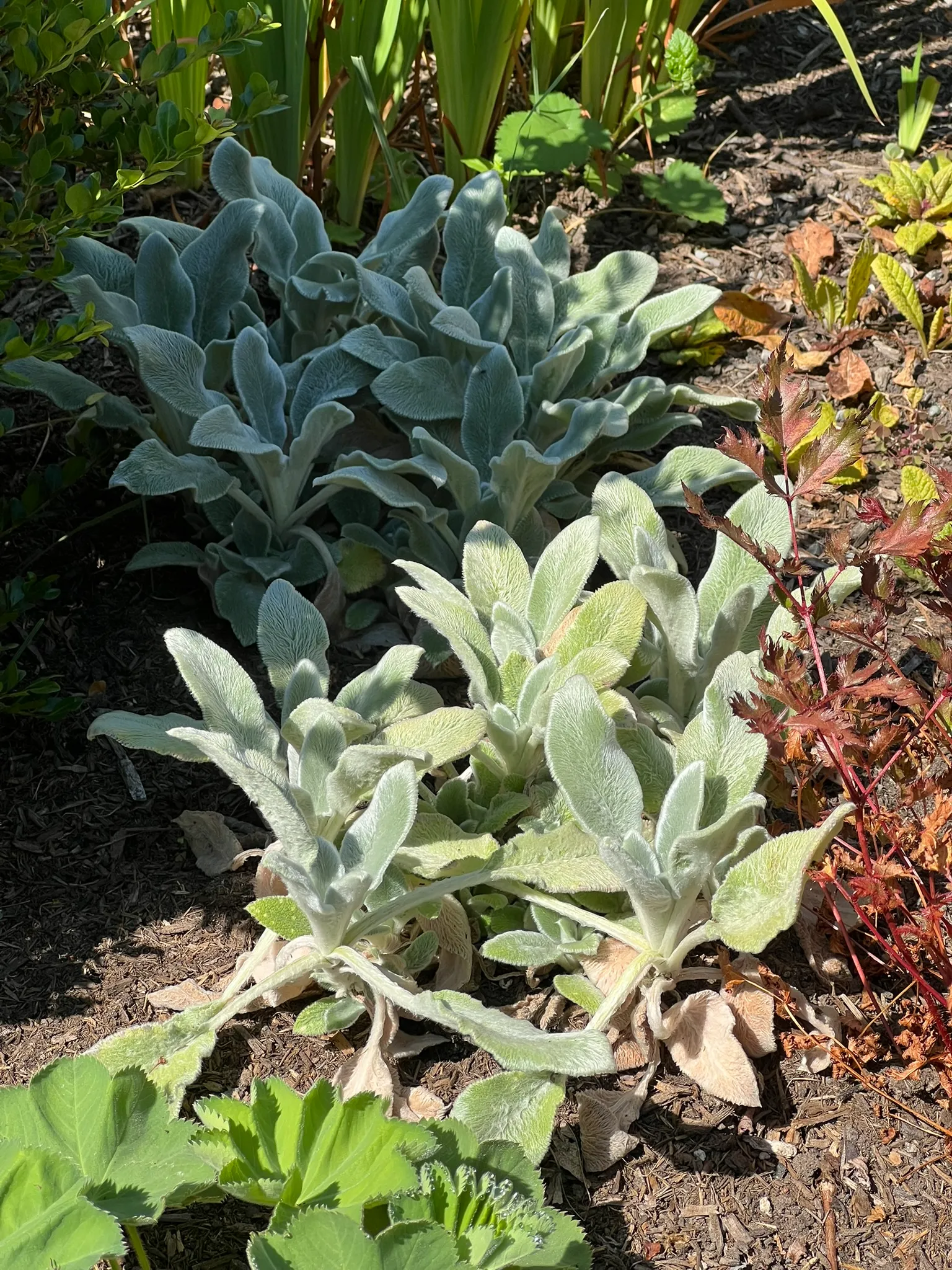
Stachys byzantina is a low, mat-forming, semi-evergreen perennial reaching 6-12 inches (15-30 cm) tall in foliage and 12-18 inches (30-45 cm) in flower, spreading 18-24 inches (45-60 cm) wide. Leaves are thick, oblong-ovate, 3-5 inches (8-13 cm) long, and densely covered on both surfaces with soft woolly hairs 0.04-0.08 inch (1-2 mm) long that give the foliage a silver-white, velvety texture; this felted-silver surface is the diagnostic feature and the source of the common name 'lamb's ears'. Erect woolly square stems 12-18 inches (30-45 cm) tall bear dense whorled spikes of small rose-purple to magenta two-lipped tubular flowers in June and July; the calyces and stems are also coated in silver wool. Hardy in USDA zones 4-8 (-30°F / -34°C). Foliage mats develop dead, rotted patches through wet winters, particularly in regions with heavy rainfall and poor drainage; pulling out damaged sections and dividing every 2-3 years renews the planting. The cultivar 'Silver Carpet' produces no flower stems and maintains a continuous low foliage mat. All plant parts are listed as toxic to pets if ingested in quantity.
Native Range
Stachys byzantina is native to Turkey, Armenia, Iran, and adjacent areas of the Middle East and Caucasus. It grows on rocky hillsides, dry scrub, and open grasslands on well-drained, often calcareous soils.Suggested Uses
Planted as ground cover, border edging, and textural contrast in dry gardens, Mediterranean-style plantings, gravel gardens, and planting seams in paving at 12-18 inch (30-45 cm) spacing. The silver-white foliage contrasts with purple-flowered Salvia and Lavandula, pink roses, and deep-red Heuchera. The non-flowering cultivar 'Silver Carpet' suits sites where a clean foliage mat without flower stem management is wanted. All plant parts are listed as toxic to pets if ingested in quantity. Not grown in wet soils, heavy clay, or shaded sites, where crown rot and reduced silver intensity limit lifespan to 1-2 seasons.How to Identify
Appearance
Size & Dimensions
Height6" - 1'6"
Width/Spread1'6" - 2'
Bloom Information
Dense whorled flower spikes on erect square stems 12-18 inches (30-45 cm) tall carry small rose-purple to magenta two-lipped tubular flowers from June through July, for a total bloom period of 5-6 weeks. Flower stems, calyces, and bracts are all coated in white wool. Wool carder bees (Anthidium manicatum) scrape hairs from the leaves for nest construction; plants in gardens with these bees show bare-leaf patches through the summer.
Detailed Descriptions
Flower Description
Rose-purple to magenta; small two-lipped tubular flowers in whorled spikes on woolly erect square stems in June-July; calyces and stems also white-woollyFoliage Description
Silvery-white; thick oblong-ovate leaves 3-5 inches (8-13 cm) long densely covered on both surfaces in soft woolly hairs approximately 0.04-0.08 inch (1-2 mm) long; velvety textureGrowing Conditions
Sun Requirements
Requires 6-8 hours of direct sunlight daily
• Full Sun: 6+ hours of direct sunlight
• Partial Shade: 3-6 hours of direct sunlight
• Full Shade: Less than 3 hours of direct sunlight
Care & Maintenance
Care Guide
Plants grow in full sun in lean, sharply drained, neutral to slightly alkaline soil with a pH of 6.0-8.0, including sandy, rocky, and chalky ground. Hardy in USDA zones 4-8 (-30°F / -34°C). In consistently wet or heavy soils, crown rot develops within one or two wet winters; in Pacific Northwest winters, a gravel-topped planting bed or a raised site with free drainage extends longevity. Rich or moist soils reduce foliage silver intensity and produce soft, sprawling growth. Drought tolerant once established. Dividing every 2-3 years in early spring or early fall renews the planting; discard the oldest central portions and replant vigorous edge rosettes at 12-18 inch (30-45 cm) spacing.Pruning
Pull out brown, matted, or rotted sections of foliage in early spring, particularly after wet winters. Cut flower stems to the base at any point during development to maintain a clean foliage mat, or leave them in place as a wool source for wool carder bees; the non-flowering cultivar 'Silver Carpet' produces no stems. Divide every 2-3 years in early spring or early fall by lifting sections, discarding the oldest central portions, and replanting edge rosettes at 12-18 inch (30-45 cm) spacing.Pruning Schedule
Prune: March & June
early springsummer
Container Growing
Suitable for container growing
Minimum container size: 3 gallons