Solidago, Genus, ulmifolia, Species,
- Genus & species
elm-leaved goldenrod
Overview
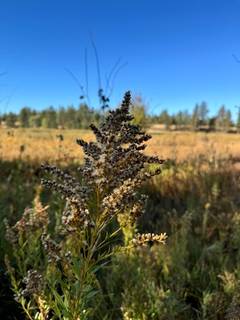
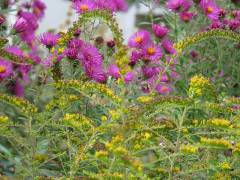
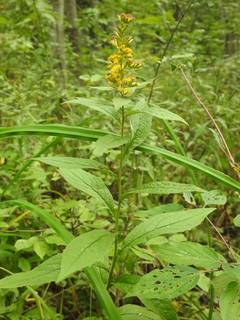
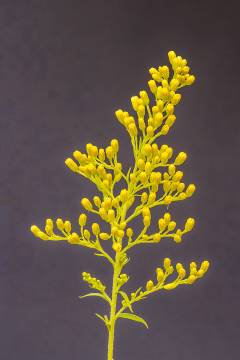
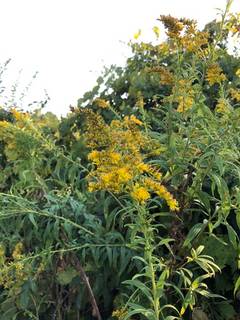
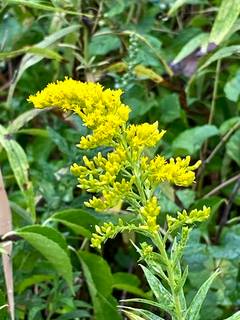
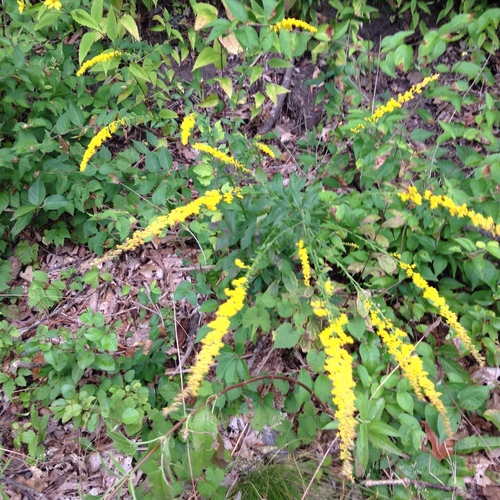
Solidago ulmifolia is an upright herbaceous perennial of the aster family native to open woodlands, forest edges, and clearings of eastern and central North America. It grows 2-4 feet (60-120 cm) tall from a short rhizome, with one to several slender, mostly smooth stems. The alternate leaves are elm-like, 2-5 inches (5-13 cm) long, thin, sharply toothed, and tapering to a point, larger toward the base and reduced upward. From late summer into autumn the stems are topped by an open panicle of small yellow flower heads carried on spreading, arching branches, giving a one-sided, plume-like form. The tiny heads draw bees, wasps, butterflies, and other late-season pollinators, and the seeds feed small birds. It spreads slowly by short rhizomes and self-seeding rather than running, though it can seed into open ground. Unlike goldenrods of full sun, it tolerates part shade and drier woodland soils, which makes it less suited to wet or heavily fertilized borders where it grows leggy and flops. In cultivation it is used in woodland gardens, native borders, pollinator plantings, and naturalized meadow edges.
Native Range
Native to eastern and central North America, from Quebec and Ontario south to Florida and Texas. It grows in open deciduous woodlands, wood margins, savannas, and clearings on well-drained soils.Suggested Uses
Used in woodland gardens, native and pollinator borders, and naturalized meadow edges and savannas. Its late bloom supports bees and butterflies as other flowers fade.How to Identify
Appearance
Size & Dimensions
Height2' - 4'
Width/Spread1' - 2'
Bloom Information
Detailed Descriptions
Foliage Description
greenGrowing Conditions
Sun Requirements
Requires 4-8 hours of direct sunlight daily
• Full Sun: 6+ hours of direct sunlight
• Partial Shade: 3-6 hours of direct sunlight
• Full Shade: Less than 3 hours of direct sunlight
Care & Maintenance
Care Guide
Grow in full sun to part shade in average, well-drained soil; the species tolerates dry, rocky, and woodland conditions better than most goldenrods. Established plants are drought-tolerant and need little water or feeding. Rich, moist, or over-fertilized soils produce floppy, leggy stems. It spreads slowly by short rhizomes and reseeds in open ground, so it stays manageable in a border. Cut stems to the ground in late winter before new growth. Hardy in USDA zones 3-8.Pruning
Cut spent stems to the ground in late winter or early spring before new shoots emerge. Plants can be cut back by half in early summer to reduce height and flopping. Removing seed heads before they ripen limits self-seeding.Pruning Schedule
Prune: February–March
winterearly spring