Solidago, Genus, odora, Species,
- Genus & species
sweet goldenrod
Overview
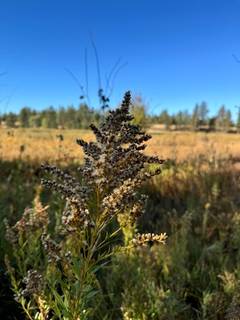
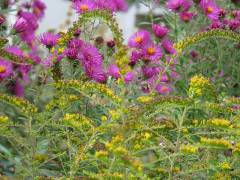
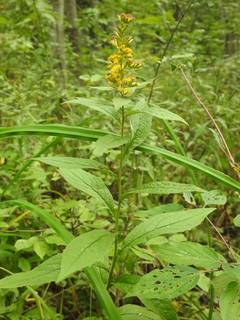
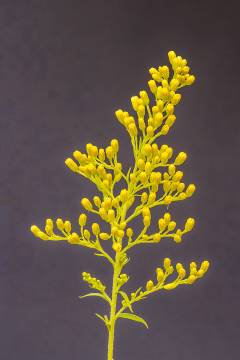
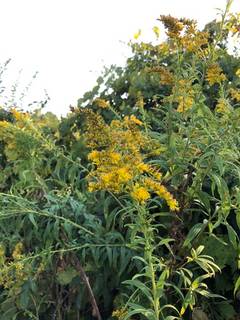
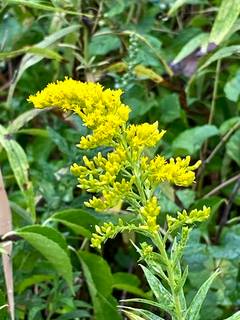
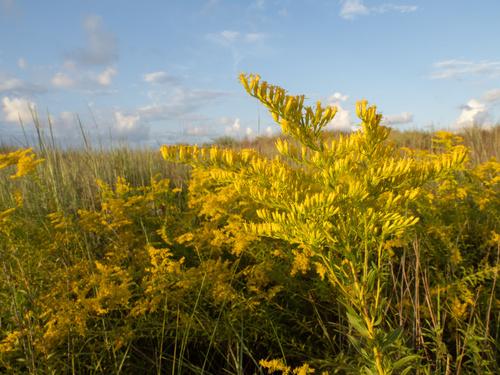
Solidago odora is an upright herbaceous perennial reaching 2-4 feet (60-120 cm) tall and 1-2 feet (30-60 cm) wide, with slender, often arching, unbranched stems rising from short rhizomes. The narrow lance-shaped leaves are 2-4 inches (5-10 cm) long, smooth-edged, dotted with translucent glands, and release an anise or licorice scent when crushed. Small golden-yellow flower heads are packed along the upper sides of arching branches, forming a one-sided, plume-like cluster that opens from midsummer into fall. Flowers age to tan, wind-borne seed tufts. Growth is moderate, and clumps widen slowly by rhizomes without the aggressive spread of some goldenrods. Lower leaves may yellow and drop in dry summers. It tolerates poor, dry, sandy soils where richer-soil perennials falter, but flops in shade or overly fertile ground.
Native Range
Native to eastern North America, from Quebec and Ontario south to Florida and west to Texas. Grows in dry open woods, pine barrens, clearings, and sandy roadsides on well-drained, low-fertility soils.Suggested Uses
Planted in meadow, prairie, native, and pollinator gardens and on dry banks, spaced 18-24 inches (45-60 cm) apart. The late flowers draw bees, butterflies, and other pollinators ahead of winter, and the dried anise-scented leaves are brewed as a herbal tea. Its open, arching habit suits naturalistic plantings more than formal beds.How to Identify
Appearance
Size & Dimensions
Height2' - 4'
Width/Spread1' - 2'
Bloom Information
Detailed Descriptions
Foliage Description
greenGrowing Conditions
Sun Requirements
Requires 6-12 hours of direct sunlight daily
• Full Sun: 6+ hours of direct sunlight
• Partial Shade: 3-6 hours of direct sunlight
• Full Shade: Less than 3 hours of direct sunlight
Care & Maintenance
Care Guide
Grows in full sun on dry, sharp-draining sandy or rocky soils of low fertility and tolerates heat and drought once established. Rich soil and shade cause weak, floppy stems and fewer flowers. Water through the first season to root in, after which little added water is needed. The clump widens slowly by rhizomes and can be divided in spring every 3-4 years to renew it. Goldenrods are wrongly blamed for hay fever, but the heavy, insect-carried pollen is not wind-borne. Powdery mildew and leaf spot may appear in humid, crowded sites.Pruning
Cut stems to the ground in late fall or early spring after they brown. Cutting the clump back by half in early summer produces shorter, sturdier stems that flower without flopping. Spent flower heads can be removed to limit self-seeding.Pruning Schedule
Prune: March & November
early springfall
Container Growing
Suitable for container growing
Minimum container size: 3 gallons