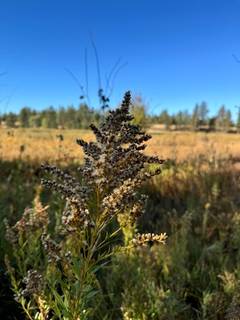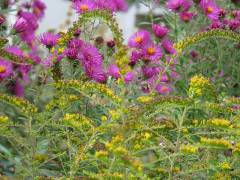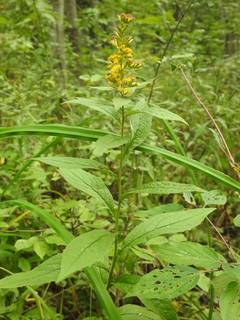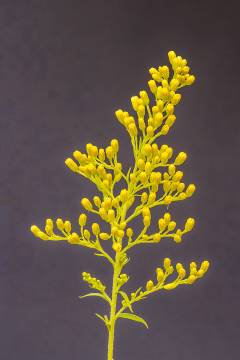
Solidago, Genus, bicolor, Species,
- Genus & species
silverrod
Overview
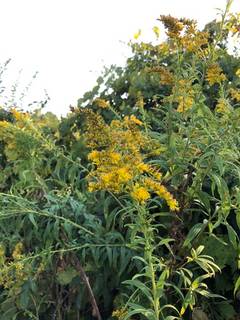
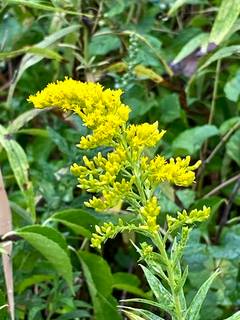
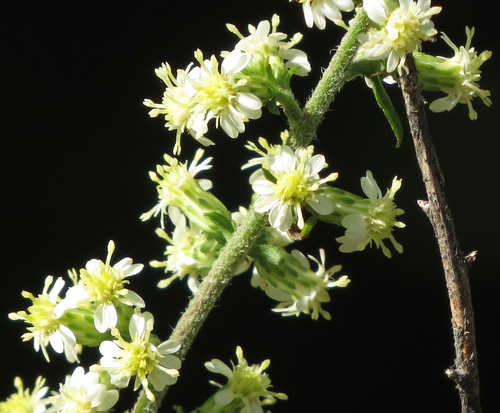
Solidago bicolor is a clump-forming herbaceous perennial in the aster family, reaching 1-3 feet (30-90 cm) tall and 1-1.5 feet (30-45 cm) wide. It separates from most goldenrods by its white to cream ray florets, which surround small yellow disc florets; the common name silverrod refers to this pale coloration. Stems are upright, hairy, and often unbranched, carrying alternate oblong leaves 1-4 inches (2.5-10 cm) long that decrease in size toward the top. Flower heads sit in narrow clusters along the upper stem from late summer into autumn. The plant spreads slowly by short rhizomes and self-seeding, forming loose colonies in dry, open ground, including woodland edges, clearings, and roadside banks. In gardens it can self-sow freely, and seedlings may appear several feet from the parent clump. Foliage may show powdery mildew in humid sites with restricted air movement. Because flowering occurs late in the season, the plant carries nectar and pollen when many other sources have finished. It tolerates drought once established and needs little supplemental water in regions with summer rainfall.
Native Range
Solidago bicolor is native to eastern and central North America, from Nova Scotia and Quebec south to Georgia and west to Wisconsin and Arkansas. It grows in dry open woods, rocky slopes, and clearings on acidic, low-fertility soils.Suggested Uses
Solidago bicolor is used in native plant gardens, dry meadows, rock gardens, and naturalized borders on poor soils. It suits pollinator plantings for its late-season nectar and combines with asters, little bluestem, and other dry-site natives. Its white-cream flowers contrast with the yellow heads of typical goldenrods in mixed plantings.How to Identify
Appearance
Size & Dimensions
Height1' - 3'
Width/Spread1' - 1'6"
Bloom Information
Flowering runs from August to October, peaking in September across much of the range. Small heads open in narrow, elongated clusters along the upper stem rather than in the broad sprays seen in many goldenrods. Blooming lasts roughly 4-6 weeks on a given plant. The late-season flowers carry nectar and pollen for bees and other insects.
Detailed Descriptions
Flower Description
white to creamFoliage Description
greenGrowing Conditions
Sun Requirements
Requires 6-8 hours of direct sunlight daily
• Full Sun: 6+ hours of direct sunlight
• Partial Shade: 3-6 hours of direct sunlight
• Full Shade: Less than 3 hours of direct sunlight
Care & Maintenance
Care Guide
Solidago bicolor grows in full sun to part shade and tolerates dry, rocky, sandy, or otherwise low-fertility soils. Established plants withstand drought and need watering only during extended dry spells in the first season. Rich or heavily fertilized soil produces taller, weaker stems that may flop. Open spacing and air movement reduce powdery mildew on the foliage. The plant spreads slowly by rhizome and self-seeds, so spent flower heads removed before seed set limit volunteer seedlings. Hardy in USDA zones 3 through 8, it dies to the ground each winter and resprouts in spring.Pruning
Stems can be cut to the ground after they die back in late autumn or early winter. Flower clusters removed before seeds ripen reduce self-sowing. A cut of about one-third in early summer lowers the mature height and reduces flopping.Pruning Schedule
Prune: November–December
fallwinter