Solidago, Genus, spp., Multiple species,
- Genus
- Multiple species
goldenrods
Mainly North America, with some species in Eurasia and South America
Overview
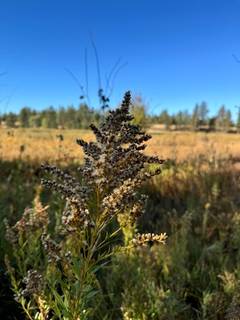
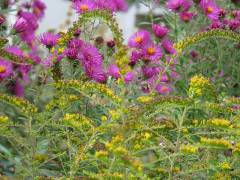
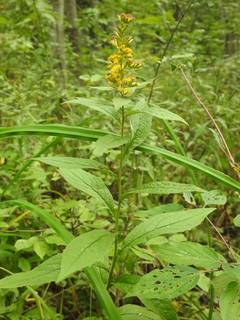
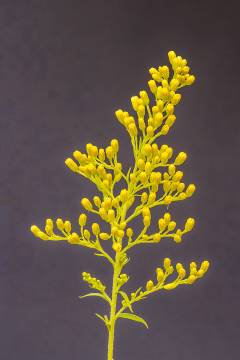
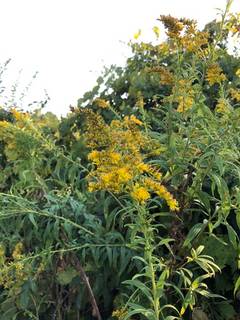
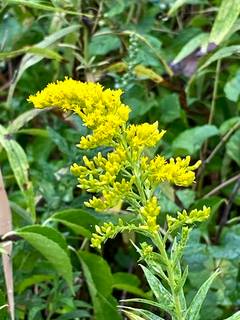
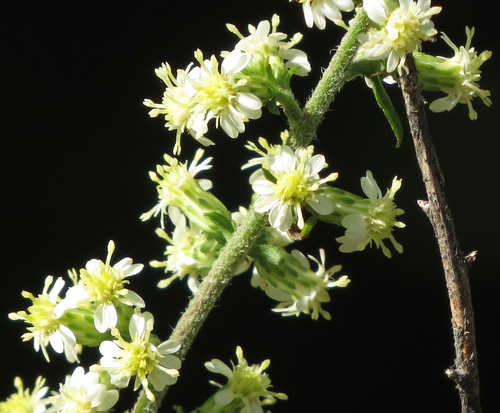
Solidago, the goldenrods, is a genus of about 100-120 species in the daisy family, the great majority native to North America. Most are herbaceous perennials that grow upright from creeping rhizomes, ranging across the genus from about 1 to 7 feet (30 to 210 cm) tall. The stems are usually unbranched below the flower cluster and carry alternate, lance-shaped to narrow leaves with toothed or smooth margins. Tiny yellow flower heads are massed into branched plumes, one-sided sprays, or flat clusters from late summer into autumn, depending on the species. Plants spread by rhizomes and by wind-borne seed, and some species, such as S. canadensis, form large colonies that can crowd out neighbors. The flowers draw many bees, wasps, butterflies, and beetles late in the season, and the seeds feed birds. Foliage dies back to the ground in winter. Goldenrods are only weakly wind-pollinated, so they are not a major cause of hay fever despite blooming alongside ragweed. Individual species differ in height, leaf shape, and the form of the flower cluster.
Native Range
The genus is centered in North America, where most of its species grow in prairies, meadows, open woods, roadsides, and coastal areas from Canada to Mexico. A smaller number of species occur in Eurasia and South America. Across the genus, goldenrods occupy open, sunny habitats in a wide range of soils.Suggested Uses
Goldenrods are grown in meadow and prairie plantings, mixed borders, and pollinator gardens, spaced according to species from about 12 to 36 inches (30 to 90 cm) apart. Clump-forming species suit borders, while strongly rhizomatous ones suit naturalized or wild areas where spread is welcome. The cut stems are used in late-season arrangements.How to Identify
Appearance
Size & Dimensions
Height1' - 7'
Width/Spread1' - 3'
Colors
Bloom Information
Across the genus, bloom runs from late summer into mid autumn, roughly August through October, with early- and late-flowering species extending the range. A stand stays in color for 4-8 weeks as side branches open in sequence. Bloom starts earlier in northern and high-elevation species and later in southern ones.
Detailed Descriptions
Foliage Description
greenGrowing Conditions
Sun Requirements
Requires 6-8 hours of direct sunlight daily
• Full Sun: 6+ hours of direct sunlight
• Partial Shade: 3-6 hours of direct sunlight
• Full Shade: Less than 3 hours of direct sunlight
Care & Maintenance
Care Guide
Most goldenrods grow in full sun in average, well-drained soil and tolerate poor, dry, or rocky ground once established. Across the genus they need little watering except during long droughts, and rich soil produces tall, floppy growth that may need support. Rhizomatous species spread widely, so they are divided every 2-3 years or sited where their spread is acceptable. Powdery mildew and rust appear on some species in humid, crowded conditions but rarely cause serious harm. Cutting stems back by half in early summer produces shorter, bushier plants. Most species are left standing through winter to feed birds and shelter insects.Pruning
Cut stems to the ground in late winter or early spring before new shoots emerge. Across the genus, a hard trim in late spring or early summer lowers height and reduces flopping in tall species. Removing spent flower heads before seed sets limits self-seeding in vigorous species.Pruning Schedule
early springsummer
Container Growing
Suitable for container growing
Minimum container size: 2 gallons