Solanum, Genus, nigrum, Species,
- Genus & species
black nightshade
Overview
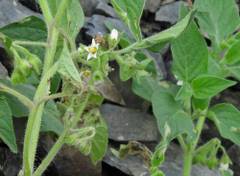
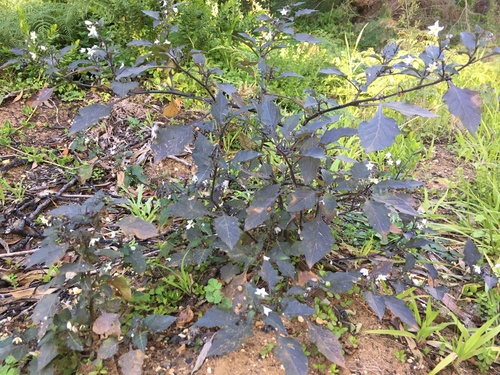
Solanum nigrum is an erect, branching annual in the nightshade family (Solanaceae) reaching 12-36 inches (30-90 cm) tall with a 12-24 inch (30-60 cm) spread. Stems are erect, branching, green to purplish, smooth to sparsely hairy, somewhat angular. Leaves are alternate, ovate to rhombic, 1-4 inches (2.5-10 cm) long, with entire to irregularly toothed or wavy margins, smooth to sparsely hairy, on petioles 0.4-1.2 inches (10-30 mm) long. Flowers are white, star-shaped, 0.3-0.5 inch (8-12 mm) across, with 5 reflexed petals and a protruding cone of 5 yellow stamens — the standard Solanum flower form. Flowers are borne in umbel-like clusters of 3-8 on short lateral peduncles. Fruit is a round berry 0.2-0.4 inch (6-10 mm) in diameter, ripening from green to glossy black. A single plant produces 500-5,000 berries. Contains solanine and solanidine glycoalkaloids; unripe green berries have the highest toxicity. Ripe black berries have lower alkaloid levels, and some populations are consumed as food in parts of Africa and Asia, but Pacific Northwest populations are treated as toxic. Black nightshade ranks among the more widespread summer annual weeds in vegetable gardens and cultivated fields.
Native Range
Solanum nigrum is native to Europe and western Asia, occurring in vegetable gardens, cultivated fields, orchards, and waste ground from sea level to approximately 6,000 feet (1,800 m). Naturalized across all 50 U.S. states, the species ranks among the more widespread summer annual weeds in irrigated vegetable production in the Pacific Northwest.Suggested Uses
Used in Solanaceae identification for the white-flowered erect annual comparison within the four-species Solanum teaching unit. The berry color ripening sequence (green to black) and glycoalkaloid toxicity gradient are taught in plant toxicology. Studied in crop contamination and food safety in processing vegetable production. The buzz pollination mechanism is taught in pollination biology.How to Identify
Appearance
Size & Dimensions
Height1' - 3'
Width/Spread1' - 2'
Bloom Information
Flowers appear June through October. Umbel-like clusters bloom continuously over 8-12 weeks. Buzz-pollinated by bees. Berries ripen 6-8 weeks after pollination. In the Pacific Northwest, the species is a warm-season weed appearing after soil temperatures exceed 60°F (16°C). Green and ripe berries are often present simultaneously.
Detailed Descriptions
Flower Description
White star-shaped flowers 0.3-0.5 inch (8-12 mm) with reflexed petals and a yellow stamen cone in umbel-like clustersFoliage Description
Dark green, ovate to rhombic, alternate, with entire to irregularly toothed or wavy margins; smooth to sparsely hairyGrowing Conditions
Sun Requirements
Requires 4-10 hours of direct sunlight daily
• Full Sun: 6+ hours of direct sunlight
• Partial Shade: 3-6 hours of direct sunlight
• Full Shade: Less than 3 hours of direct sunlight