Image 1 of 3
1 / 3
Plant Reference
Solanum, Genus, lycopersicum, Species, 'Yellow Pear', Cultivar,
- Genus & species
- Cultivar
yellow pear tomato
Species native to western South America (Peru, Ecuador, and the western Andes); 'Yellow Pear' cultivar documented in European and North American garden literature since the 1700s; commercially grown across temperate North America, Europe, and Australia
Overview
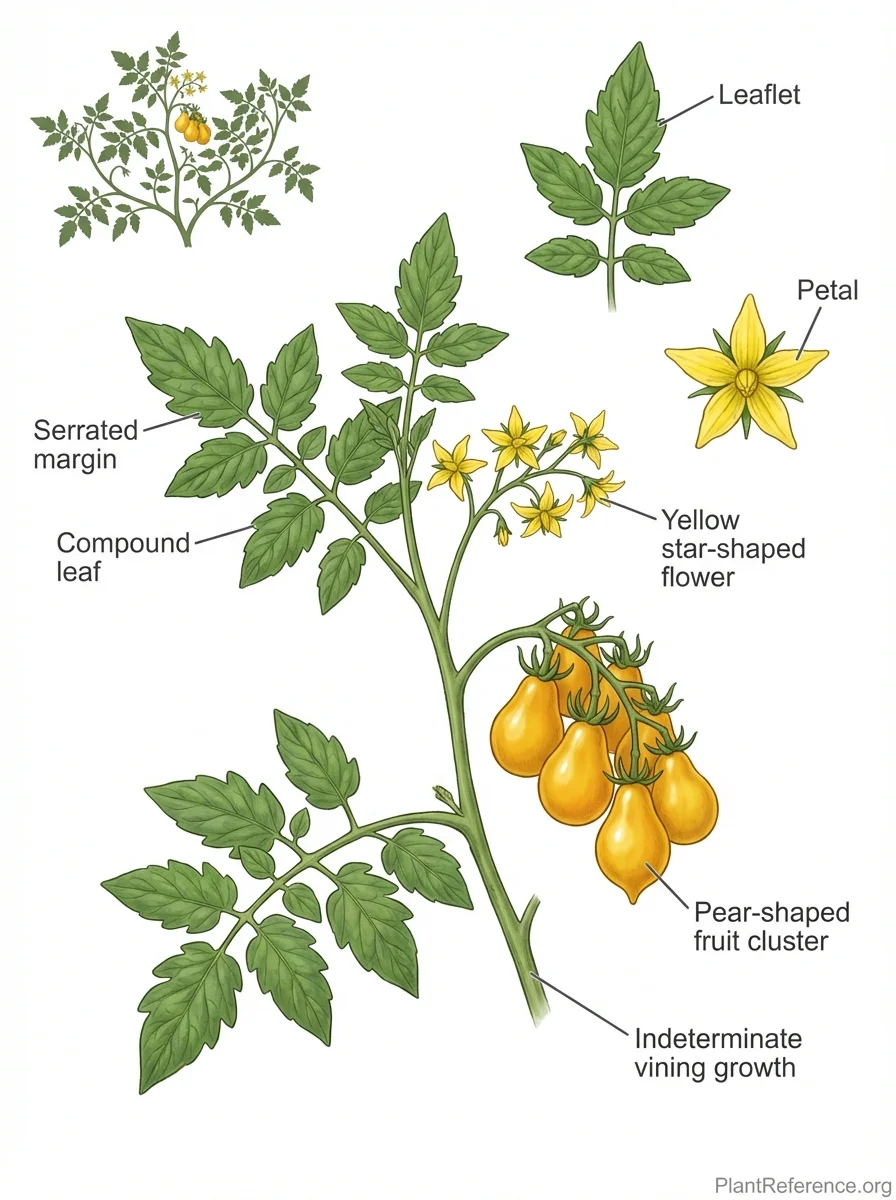
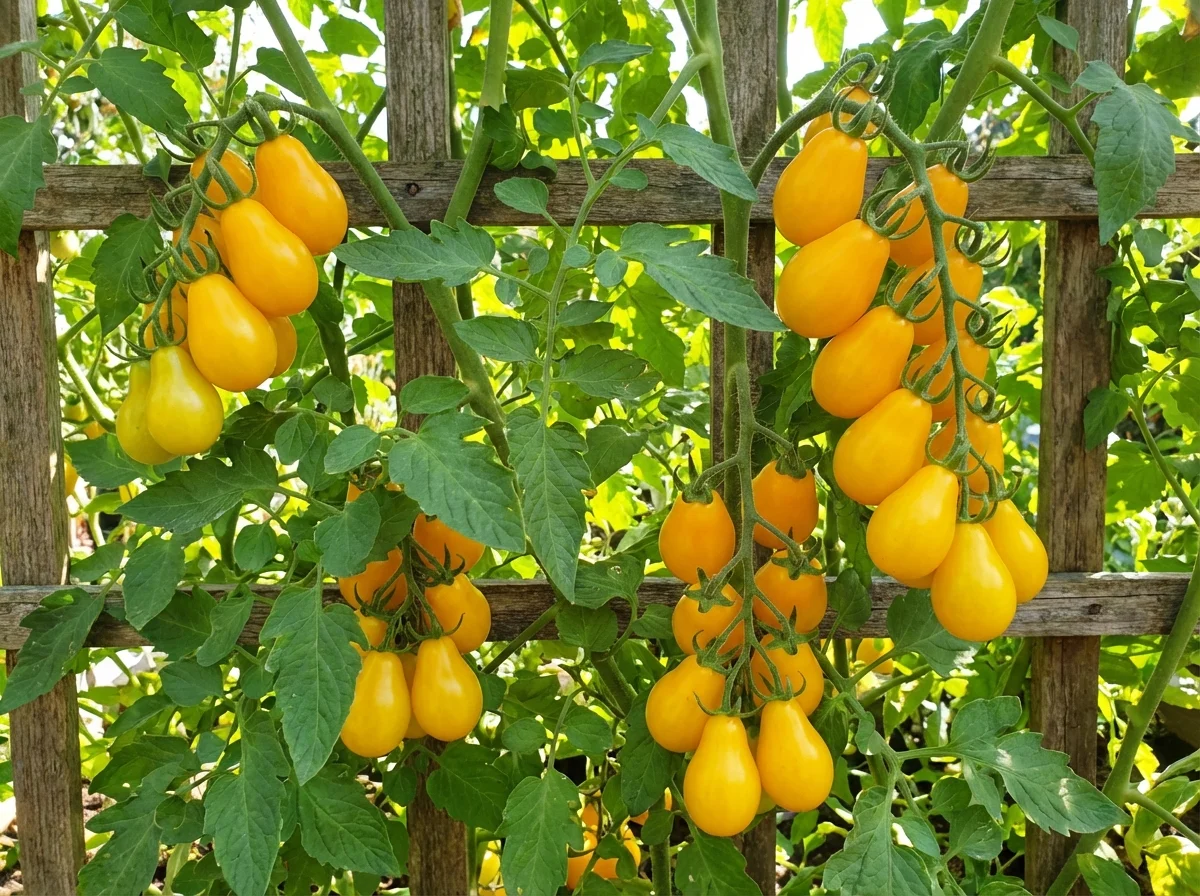
Solanum lycopersicum 'Yellow Pear' is a warm-season annual fruiting vine in the nightshade family (Solanaceae) reaching 6–10 feet (1.8–3 m) tall and 24–36 inches (60–90 cm) wide in a vigorous indeterminate vining habit that requires sturdy staking, caging, or trellising for support across the full growing season. The cultivar is an heirloom tomato documented since the 1700s — among the oldest named tomato cultivars in continuous cultivation — and produces clusters of small pear-shaped bright yellow fruits 1–2 inches (2.5–5 cm) long with mild sweet low-acid flesh. The pear shape and bright yellow color distinguish the cultivar from round red cherry tomatoes and from oval yellow grape tomatoes in the small-fruited tomato class. Plants run prolific, yielding hundreds of small fruits continuously from midsummer through the first hard frost, with each flower cluster developing 6–12 individual pear-shaped fruits. The indeterminate growth habit produces continuous flower and fruit production along the elongating main stem and side branches across the entire growing season, in contrast to determinate cultivars that set the fruit crop in a single concentrated window. Days to maturity run 70–80 from transplant. Plant parts including foliage and unripe fruits contain solanine alkaloids; toxic to pets if ingested. Ripe fruits are non-toxic and safe to eat.
Native Range
The species Solanum lycopersicum originated in western South America (Peru, Ecuador, and the western Andes) where wild ancestor populations of small-fruited cherry-type tomatoes still occur in coastal and Andean foothill habitats. The 'Yellow Pear' cultivar has been documented in European and North American garden literature since the 1700s and is among the oldest named tomato cultivars in continuous cultivation across both continents. The cultivar is grown commercially and in home gardens across temperate North America, Europe, and Australia.Suggested Uses
Grown in vegetable gardens on sturdy 6–10 foot supports for culinary use across fresh eating (the small fruit size and mild low-acid flavor suit children's snacking and fresh garden grazing), salads, slow-roasted preparations (the dense flesh holds shape during slow oven roasting), preserving (whole-pack canning or freezing of the small cluster-borne fruits), and decorative fresh-market presentations where the bright yellow pear-shaped profile contrasts with red cherry tomato cultivars. The cultivar runs vigorous and prolific — a single plant produces hundreds of fruits across the growing season, which can overwhelm small home gardens and small CSA shares without active distribution to neighbors or processing for preservation. The cultivar is susceptible to common tomato foliar diseases and runs less suitable for humid-climate gardens without disease-resistant cultivar substitution or active disease management. The 1700s-era heritage pedigree and the open-pollinated reproductive habit make 'Yellow Pear' a teaching example in heirloom cultivar preservation and in the comparison of pre-modern tomato shapes (pear, plum, elongated) against the round red cherry shape that has dominated 20th-century tomato breeding.How to Identify
Appearance
Size & Dimensions
Height6' - 10'
Width/Spread2' - 3'
Bloom Information
Small yellow star-shaped flowers appear in clusters continuously from early summer through the first hard frost. The cultivar is self-pollinating; bumblebee buzz pollination and gentle physical disturbance (wind, hand-flicking) improve fruit set when greenhouse-grown or where natural pollinator activity runs low. Each flower cluster develops 6–12 pear-shaped fruits over a 3–5 week ripening sequence per cluster. Continuous flowering and fruiting characterize the indeterminate growth habit — new flower clusters form along the elongating main stem and side branches across the entire growing season rather than in a single concentrated window.
Detailed Descriptions
Flower Description
Yellow; small star-shaped; in clusters continuously from early summer through first hard frostFoliage Description
Dark green; pinnately compound; aromatic; on vigorous indeterminate vines requiring 6-10 ft staking or cagingGrowing Conditions
Sun Requirements
Requires 8-12 hours of direct sunlight daily
• Full Sun: 6+ hours of direct sunlight
• Partial Shade: 3-6 hours of direct sunlight
• Full Shade: Less than 3 hours of direct sunlight
Care & Maintenance
Care Guide
Start seed indoors 6–8 weeks before the last frost date in cell trays at soil temperatures of 70–80°F (21–27°C) for germination. Transplant outdoors 1–2 weeks after the last frost date when night air temperatures stay above 50°F (10°C) and soil temperatures reach 60°F (16°C). Grow in full sun with 8 or more hours of direct light in well-drained fertile loam at pH 6.0–6.8. Install sturdy staking, caging, or trellising to a height of 6–10 feet at transplant — the indeterminate vines reach the full height by midsummer and require structural support across the full growing season. The cultivar runs vigorous and benefits from pre-plant compost incorporation and side-dressing with balanced fertilizer every 4–6 weeks across the growing season. Maintain consistent deep watering of 1–2 inches per week to prevent blossom-end rot; mulching with straw or leaf mold conserves soil moisture and reduces soil-to-foliage splash that spreads foliar disease. Days to maturity run 70–80 from transplant. Prune suckers (the side shoots that emerge from leaf axils) for air circulation and to direct plant energy into fruit production rather than excessive vegetative growth. Harvest fruits when fully bright yellow and slightly soft to the touch. The cultivar is susceptible to common tomato foliar diseases (early blight, septoria leaf spot, late blight) — air circulation through pruning and adequate spacing of 24–36 inches between plants reduces disease pressure.Pruning
Remove suckers below the first flower cluster to channel early plant energy into the main stem and the first fruit cluster. Continue removing suckers across the growing season for single-stem training, or allow 2–3 main stems for a more bushy multi-stem habit. Prune lower leaves that touch the soil surface to reduce splash-borne foliar disease transmission. Remove yellowing or diseased lower leaves throughout the growing season to maintain air circulation through the plant canopy.Pruning Schedule
Prune: June–September
summer
Container Growing
Suitable for container growing
Minimum container size: 10 gallons
Toxicity Warning
Toxic to petsBotanical Flashcard