Silene, Genus, vulgaris, Species,
- Genus & species
bladder campion
Europe, North Africa, temperate Asia
Overview
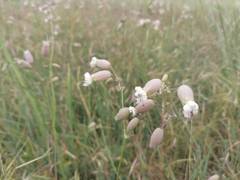
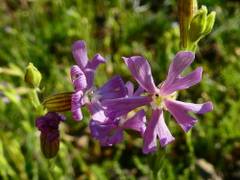
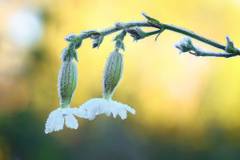
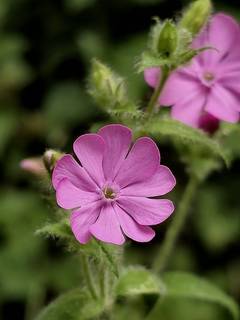
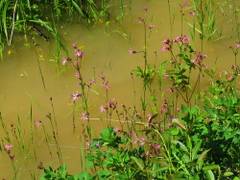
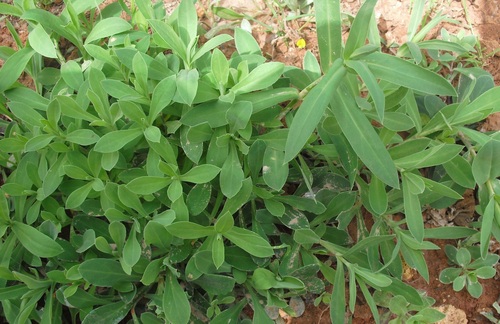
Silene vulgaris is a perennial of the pink family native to Europe and Asia, growing 12-32 inches (30-80 cm) tall in clumps of upright, branching stems. The blue-green leaves are oval to lance-shaped, 1-3 inches (2.5-7.5 cm) long, smooth and slightly waxy. From late spring through summer it bears white flowers about 0.7 inch (1.8 cm) across, each with five deeply notched petals emerging from a strongly inflated, balloon-like calyx netted with pink or green veins. The flowers open in the evening and are lightly fragrant, drawing moths and long-tongued bees. S. vulgaris grows on roadsides, field edges, dry banks, and waste ground on well-drained, often calcareous soils, and tolerates drought and poor fertility. The young shoots and leaves are eaten as a cooked green in parts of southern Europe. It has naturalized widely across North America, where it can spread in disturbed ground and crop fields. The plant self-sows and also spreads by a deep, branching root system.
Native Range
Silene vulgaris is native to Europe, North Africa, and temperate Asia. It grows in dry grassland, roadsides, field margins, and disturbed ground, usually on well-drained, lime-rich soils, and has naturalized across much of North America.Suggested Uses
Silene vulgaris is grown in wildflower meadows, dry banks, gravel gardens, and naturalized plantings on poor soil. Its drought tolerance suits low-water settings. The evening-scented flowers draw moths and bees, and the young shoots are gathered as an edible green in some regions.How to Identify
Appearance
Size & Dimensions
Height1' - 2'8"
Width/Spread1' - 1'6"
Bloom Information
Detailed Descriptions
Foliage Description
blue-greenGrowing Conditions
Sun Requirements
Requires 6-10 hours of direct sunlight daily
• Full Sun: 6+ hours of direct sunlight
• Partial Shade: 3-6 hours of direct sunlight
• Full Shade: Less than 3 hours of direct sunlight