Silene, Genus, latifolia, Species,
- Genus & species
white campion
Europe, North Africa, and western Asia
Overview
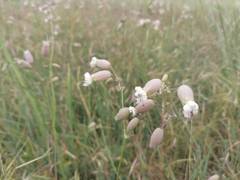
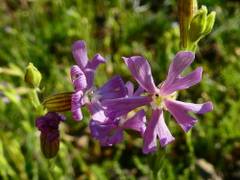
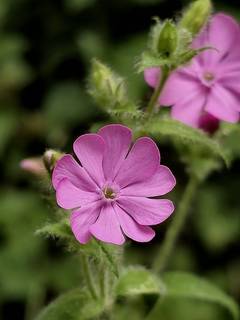
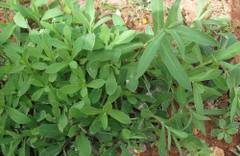
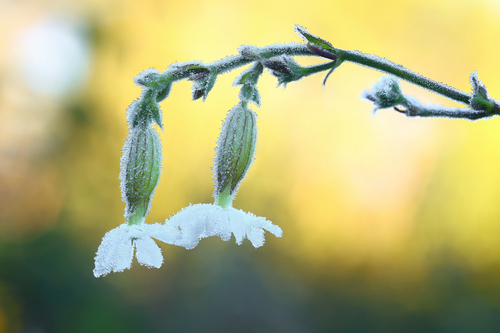
Silene latifolia is a short-lived perennial or biennial in the pink family, growing 1-3 feet (30-90 cm) tall on branched, hairy, sticky stems. The opposite leaves are oval to lance-shaped, 1-4 inches (2.5-10 cm) long, hairy, and stalkless on the upper stem. From late spring through fall it bears white flowers 1-1.2 inches (2.5-3 cm) across, each with five deeply notched petals; the flowers open in the evening and release a clove-like scent that draws night-flying moths. The species is dioecious, with male and female flowers on separate plants, distinguished by the inflated, veined calyx behind each bloom, which is broader and more ribbed on female plants. After pollination the female calyx swells into an urn-shaped capsule that opens by ten small teeth to release many seeds. It grows on roadsides, field edges, waste ground, and cultivated land, spreading by seed. In North America it is naturalized and common as a weed of disturbed ground. It tolerates poor, dry soils and reseeds heavily. The flowers are most open and fragrant at dusk and close by the heat of the following day. The foliage is not known to be toxic.
Native Range
Silene latifolia is native to Europe, North Africa, and western Asia. It has naturalized across North America and other temperate regions, where it grows on roadsides, field edges, and disturbed ground.Suggested Uses
Silene latifolia is grown occasionally in wildflower and evening gardens for its night-fragrant white flowers, though its heavy self-seeding limits its garden use. The evening scent and pale flowers suit plantings meant to be enjoyed at dusk. In most settings it occurs as a volunteer on disturbed and open ground.How to Identify
Appearance
Size & Dimensions
Height1' - 3'
Width/Spread6" - 1'6"
Bloom Information
Flowering runs from late spring through fall, roughly May to October. The white flowers open in the evening and release a clove-like fragrance that draws night-flying moths, then close during the heat of the day. The long season produces a steady supply of seed capsules.
Detailed Descriptions
Foliage Description
greenGrowing Conditions
Sun Requirements
Requires 5-10 hours of direct sunlight daily
• Full Sun: 6+ hours of direct sunlight
• Partial Shade: 3-6 hours of direct sunlight
• Full Shade: Less than 3 hours of direct sunlight
Care & Maintenance
Care Guide
Silene latifolia grows in full sun to partial shade in dry to average, well-drained soils and needs no watering or feeding once established. As a short-lived plant it maintains itself through heavy self-seeding rather than long-lived roots. It germinates in fall and spring and grows quickly on open, disturbed ground. The plants are pulled easily, and removing them before the capsules ripen reduces the next generation. It tolerates poor, dry soils and reseeds freely where the ground is bare. Cutting plants back after flowering can limit seed spread.Pruning
Cutting or deadheading the stems before the seed capsules ripen limits self-seeding. The plants are short-lived and pulled easily once flowering ends. Removing seedlings through the season reduces a stand, since the plant relies on seed.Pruning Schedule
Prune: August–September
summerfall