Silene, Genus, spp., Multiple species,
- Genus
- Multiple species
catchflies
Northern Hemisphere, mainly Mediterranean and central Asia
Overview
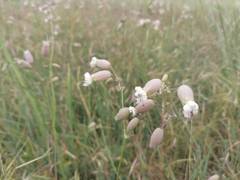
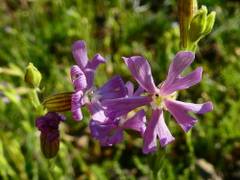
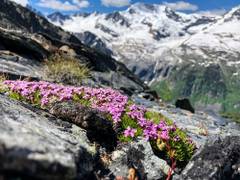
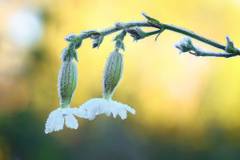
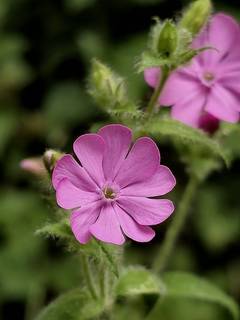
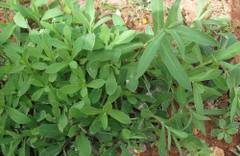
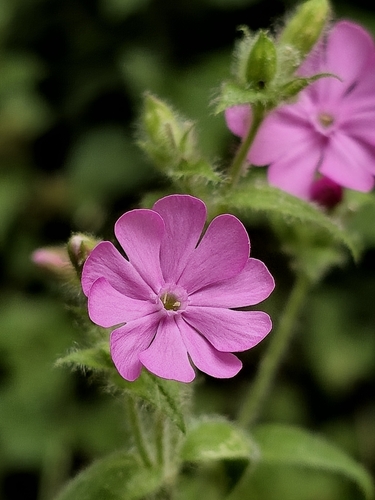
Silene is a genus of roughly 700 to 900 species of annual, biennial, and perennial herbs in the pink family (Caryophyllaceae), distributed mainly across the Northern Hemisphere, with centers of diversity in the Mediterranean, central Asia, and North America. Plants range from cushion-forming alpines 2-4 inches (5-10 cm) tall to upright clumps 12-36 inches (30-90 cm) tall. The leaves are simple, paired, and untoothed, often grey-green, and the stems of some species are sticky below the flowers, trapping crawling insects and giving rise to the catchfly name. Flowers have five petals that are frequently notched or deeply cut, in white, pink, red, and occasionally green or yellow, and sit above a tubular or inflated calyx that is balloon-like in the bladder campions. Bloom runs from spring through summer, and many species open and release scent in the evening for moth pollination. Several species, such as S. vulgaris and S. latifolia, are widespread weeds of fields and roadsides, while alpine and cushion species are grown in rock gardens. Most reseed freely. A few species are dioecious, with male and female flowers on separate plants.
Native Range
Silene species are native across Europe, Asia, North Africa, and North and South America, concentrated in the Northern Hemisphere with strong representation in the Mediterranean Basin and the mountains of central Asia. Several Eurasian species have naturalized as weeds in North America and elsewhere.Suggested Uses
Silene species are grown in rock gardens, alpine troughs, gravel gardens, wildflower meadows, and the front of sunny borders, spaced 8-12 inches (20-30 cm) apart. Night-scented kinds are placed near seating and paths where evening fragrance carries. Cushion species suit walls, troughs, and crevice plantings.How to Identify
Appearance
Size & Dimensions
Height2" - 3'
Width/Spread6" - 1'6"
Bloom Information
Most Silene species flower from late spring through summer, roughly May to August, with alpine species blooming earlier and some annuals continuing into autumn. Night-scented species open more fully and release fragrance in the evening to attract moths. Individual plants bloom over several weeks as new buds open along the stems.
Detailed Descriptions
Flower Description
white, pink, red, or greenFoliage Description
green to grey-greenGrowing Conditions
Sun Requirements
Requires 6-12 hours of direct sunlight daily
• Full Sun: 6+ hours of direct sunlight
• Partial Shade: 3-6 hours of direct sunlight
• Full Shade: Less than 3 hours of direct sunlight
Care & Maintenance
Care Guide
Most species grow in full sun and well-drained soil, including sandy, gravelly, and rocky ground, at a pH from slightly acid to alkaline. Alpine and cushion species need sharp drainage and tolerate wet winter conditions poorly, while meadow and weedy species adapt to ordinary garden soil. Established plants tolerate drought and need little feeding, as rich soil produces lax, floppy growth. Heavy, wet soils cause crown and root rot. Many species are short-lived but maintain themselves by self-seeding. Powdery mildew and rust can affect leaves in humid, crowded conditions.Pruning
Shearing plants back after the first flush of bloom can prompt a second flowering and limits self-seeding in vigorous species. Cushion and alpine types need little cutting beyond removing spent flower stems. Whole stems are cut to the base in autumn or late winter on herbaceous perennials.Container Growing
Suitable for container growing