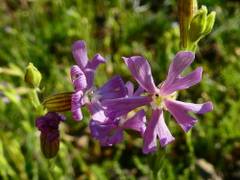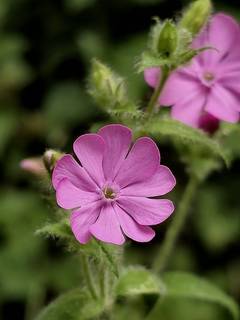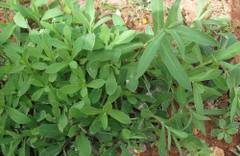
Silene, Genus, inflata, Species,
- Genus & species
bladder campion
Overview
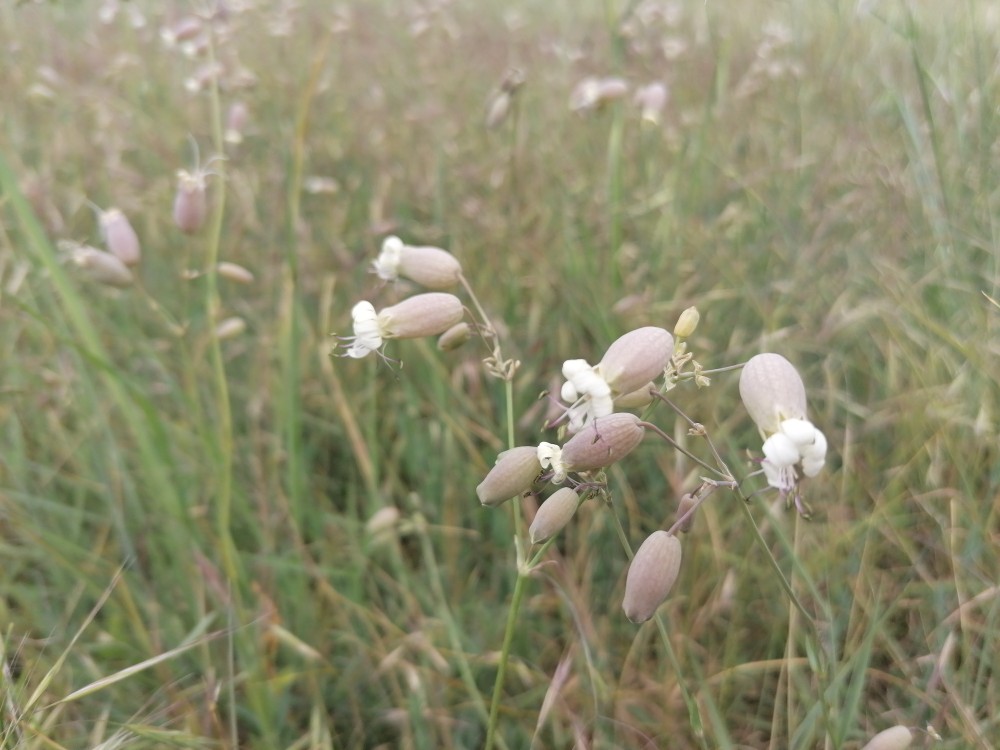
Silene inflata (syn. S. vulgaris) is a herbaceous perennial in the Caryophyllaceae family, growing 12–24 inches (30–60 cm) tall and 12–18 inches (30–45 cm) wide with a bushy, branching habit from a deep taproot. Stems are erect to ascending, smooth, glaucous, often branched from the base. Leaves are opposite, ovate-lanceolate, 1–3 inches (2.5–8 cm) long, sessile, glaucous blue-green, smooth, with an entire margin. The diagnostic feature is the inflated calyx — a papery, balloon-like, veined sac 0.5–0.75 inch (12–18 mm) long with a network of 20 reticulate veins visible when held to light. The calyx encloses the developing capsule and persists after petal fall, producing a soft popping sound when squeezed between the fingers. Petals are white, five in number, deeply bifid (cleft into two lobes), protruding 0.3–0.5 inch (8–12 mm) beyond the calyx mouth. Flowers are arranged in loose, forking cymes. The species is gynodioecious — populations contain both hermaphrodite and female-only individuals. Native across Europe and western Asia, naturalised in North America on roadsides, meadows, and disturbed ground. Young shoots and leaves are edible and consumed as a wild vegetable in Mediterranean countries (known as stridoli in Italy, collejas in Spain). Deep taproot makes established plants drought-tolerant but difficult to transplant.
Native Range
Silene inflata is native across Europe, from the British Isles and Scandinavia south to the Mediterranean and east through western and central Asia. Naturalised widely in temperate North America on roadsides, field margins, and disturbed ground, primarily in the northern states and southern Canada.Suggested Uses
Used in wildflower meadow plantings, gravel gardens, and naturalistic borders on dry, well-drained sites. The inflated calyces add textural interest to dried flower arrangements. Edible young shoots are harvested in spring for culinary use in Mediterranean cuisine. Tolerates road salt and disturbed conditions, suitable for roadside and verge plantings.How to Identify
Appearance
Size & Dimensions
Height1' - 2'
Width/Spread1' - 1'6"
Bloom Information
Flowers open from June through August. The loose, forking cymes produce flowers over a 6–8 week period. Individual flowers are open for 3–5 days and are pollinated primarily by nocturnal moths — the white flowers and slight evening fragrance are adapted for moth pollination. Capsules ripen within the persistent inflated calyx by September.
Detailed Descriptions
Foliage Description
Glaucous blue-greenGrowing Conditions
Sun Requirements
Requires 6-10 hours of direct sunlight daily
• Full Sun: 6+ hours of direct sunlight
• Partial Shade: 3-6 hours of direct sunlight
• Full Shade: Less than 3 hours of direct sunlight
Care & Maintenance
Care Guide
Plant in full sun in well-drained, lean to moderately fertile soil with a pH of 6.0–8.0. Space 12 inches (30 cm) apart. Tolerates poor, gravelly, and calcareous soils. Do not over-fertilise — rich soil promotes lax, floppy growth. Water sparingly once established; the deep taproot confers drought tolerance. Self-seeds readily in open ground — remove spent flower heads to control spread if desired. Direct sow seed in autumn or spring, pressing into the soil surface (light-dependent germination).Pruning
Cut back spent flowering stems to the basal foliage after bloom to prevent self-seeding and encourage a fresh flush of glaucous leaves. In late autumn, remove dead top growth. No other pruning required.Pruning Schedule
Prune: September
fall
Container Growing
Suitable for container growing
Minimum container size: 3 gallons