Silene, Genus, dioica, Species,
- Genus & species
red campion
Overview
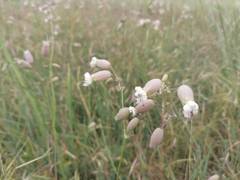
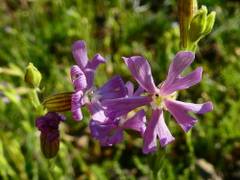
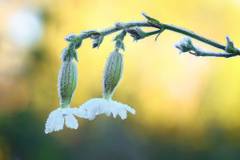
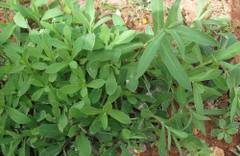
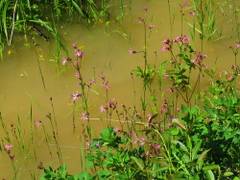
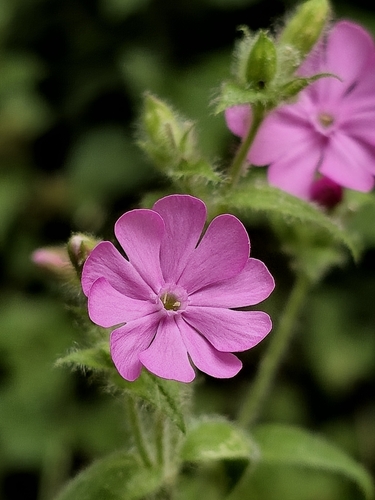
Silene dioica is a short-lived perennial of the pink family, native to Europe, growing 12-36 inches (30-90 cm) tall in loose clumps of upright, hairy stems. The opposite leaves are oval, 1-4 inches (2.5-10 cm) long, soft and hairy. From mid spring into late summer it bears rose-pink to red flowers about 0.8-1 inch (2-2.5 cm) across, each with five deeply notched petals rising from an inflated, sticky calyx. The species is dioecious, meaning male and female flowers grow on separate plants; only female plants set the rounded seed capsules, which open by ten reflexed teeth. The flowers have little scent and open during the day, drawing bees and butterflies. S. dioica grows in hedgerows, woodland edges, stream banks, and roadsides on moist, fertile soils, and self-sows freely. It often hybridizes with the white-flowered S. latifolia where the two grow together, producing pink-flowered intermediates. Individual plants are short-lived, but colonies persist through steady self-seeding.
Native Range
Silene dioica is native to Europe, from the British Isles and Scandinavia south to the Mediterranean and east into western Asia. It grows in damp woodland, hedge banks, shaded verges, and mountain meadows, and has naturalized in parts of North America.Suggested Uses
Silene dioica is grown in cottage gardens, wildflower meadows, and shaded borders, and in naturalized plantings at woodland edges. Its long bloom and self-seeding habit suit informal, low-input plantings. The flowers draw bees, butterflies, and day-flying moths.How to Identify
Appearance
Size & Dimensions
Height1' - 3'
Width/Spread1' - 1'6"
Bloom Information
Detailed Descriptions
Flower Description
rose-pink to redFoliage Description
greenGrowing Conditions
Sun Requirements
Requires 3-6 hours of direct sunlight daily
• Full Sun: 6+ hours of direct sunlight
• Partial Shade: 3-6 hours of direct sunlight
• Full Shade: Less than 3 hours of direct sunlight
Care & Maintenance
Care Guide
Grow Silene dioica in part shade to full sun in moist, fertile soil that does not dry out for long. It tolerates a broad pH range and grows well at woodland edges where light is broken. Plants are short-lived, often lasting only two or three years, but they renew themselves through generous self-seeding. Clearing some seed heads limits spread where it is not wanted, while leaving them allows colonies to persist. The species is largely free of serious pests, though it can carry a smut fungus that distorts the flowers. Division in autumn or spring refreshes older clumps.Pruning
No structural pruning is needed. Cutting plants back after the first flush of bloom can prompt a lighter second flowering. Spent stems are removed in late autumn, and seed heads cleared earlier where self-seeding is unwanted.Container Growing
Suitable for container growing
Minimum container size: 2 gallons