Silene, Genus, nocturna, Species,
- Genus & species
night-flowering catchfly
Native to the Mediterranean basin, from the Iberian Peninsula and North Africa east through southern France, Italy, Greece, Turkey, and into the Levant where the species occurs on sandy and rocky ground, in cultivated fields, on roadsides, and in coastal habitats at low elevations; in the native range the species is a winter annual, germinating in autumn, overwintering as a rosette, flowering in spring, and completing the life cycle by early summer; in cooler climates the species behaves as a spring annual; naturalized in parts of California and other Mediterranean-climate regions where the rainfall pattern matches the native habitat
SunFull Sun
Overview
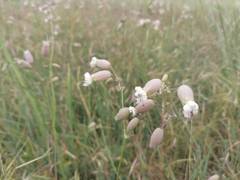
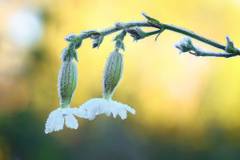
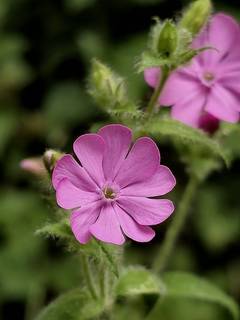
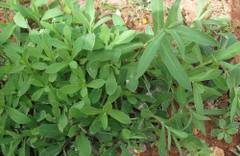
Silene nocturna is an annual herb in the pink family (Caryophyllaceae) growing 8-20 inches (20-50 cm) tall with an erect to ascending branching habit. Stems are slender, sticky-hairy (viscid), with the stickiness trapping small insects on the stem surface — the basis for the common name 'catchfly', though the plant is not carnivorous. Basal leaves are spatulate, 1-2.5 inches (2.5-6 cm) long; stem leaves are narrower, lanceolate, opposite, sessile. Flowers are 0.4-0.6 inch (10-15 mm) across with five white to pale pink petals, each cleft into two lobes (bifid), borne in a one-sided (secund) raceme of 3-10 flowers. Flowers open at dusk and remain open through the night, closing by mid-morning — a strategy for nocturnal moth pollination. The calyx is tubular, 0.4-0.5 inch (10-12 mm) long, 10-veined, sticky-hairy, becoming inflated around the developing capsule. The species is native to the Mediterranean basin, where it occurs as a winter annual: germinating in autumn, overwintering as a rosette, flowering in spring, and completing the life cycle by early summer. In cooler climates, the species behaves as a spring annual. Naturalized in parts of California and other Mediterranean-climate regions. Self-seeds readily in open disturbed ground.
Native Range
Silene nocturna is native to the Mediterranean basin, from the Iberian Peninsula and North Africa east through southern France, Italy, Greece, Turkey, and into the Levant. The species occurs on sandy and rocky ground, cultivated fields, roadsides, and coastal habitats at low elevations.Suggested Uses
Sown in wildflower meadow mixes, annual borders, and dry sandy garden areas. The nocturnal flowering habit makes the species a curiosity plant for evening gardens — sited near outdoor seating areas where the flowers can be observed at dusk. Interplanted with day-blooming annuals for round-the-clock flower interest. Self-sows in open disturbed ground.How to Identify
Appearance
Size & Dimensions
Height8" - 1'8"
Width/Spread4" - 8"
Bloom Information
Flowers open from May through June (spring-sown) or March through May (autumn-sown in mild climates). Each flower opens at dusk and closes by mid-morning, lasting 1-2 nights. The secund raceme of 3-10 flowers opens sequentially over 2-3 weeks. Pollinated by nocturnal moths, particularly small geometrid and noctuid moths attracted to the pale flowers and the slight night-fragrance.
Detailed Descriptions
Flower Description
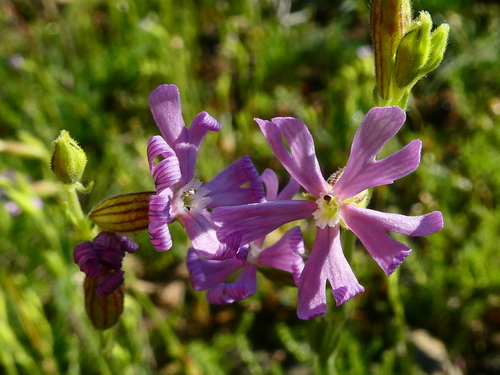
White to pale pink five-petaled flowers 0.4-0.6 inch (10-15 mm) across with each petal cleft into two lobes (bifid); flowers open at dusk and remain open through the night, closing by mid-morning — a strategy for nocturnal moth pollinationFoliage Description
Medium green spatulate basal leaves 1-2.5 inches (2.5-6 cm) long; stem leaves are narrower, lanceolate, opposite, and sessileGrowing Conditions
Sun Requirements
Requires 6-10 hours of direct sunlight daily
• Full Sun: 6+ hours of direct sunlight
• Partial Shade: 3-6 hours of direct sunlight
• Full Shade: Less than 3 hours of direct sunlight
Care & Maintenance
Care Guide
Direct sow seed on the soil surface in early spring (March-April) or in autumn in mild climates (zones 8-10). Seeds are tiny — mix with silica sand or vermiculite for even distribution. Press into the soil surface; do not cover, since light aids germination. Germination takes 10-14 days at 55-65°F (13-18°C). Thin to 4-6 inches (10-15 cm) apart. Plant in full sun in lean well-drained sandy to loamy soil at pH 6.0-7.5. No fertilization is needed since the species thrives in poor dry soil. Water sparingly; drought-tolerant once established. The sticky stems may trap small insects, which is a natural characteristic of the species rather than a cause for concern.Pruning
No pruning is required. The species completes the life cycle in one season. Remove spent plants after seed has dispersed, or leave to self-sow in informal settings. Pull plants before seed set if self-seeding into adjacent garden areas is not desired.Container Growing
Suitable for container growing
Minimum container size: 1 gallons
Toxicity
Non-toxicPlanting Guide
Planting Methods & Timing
Planting Method
direct sow
Direct Sow Timing
Early spring or autumn in mild climates
Days to Maturity
60–80 days
Plant Spacing
5 inches
Companion Planting
Good Companions