Senecio, Genus, odoratus, Species,
- Genus & species
scented groundsel
Overview
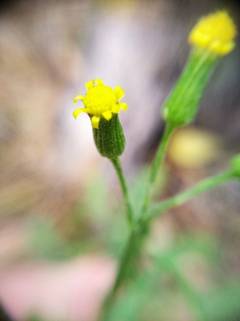
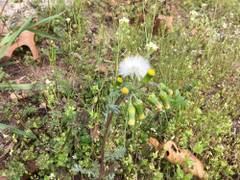
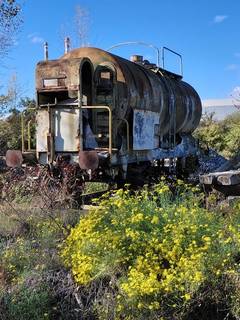
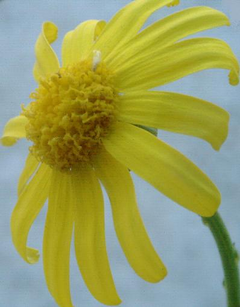
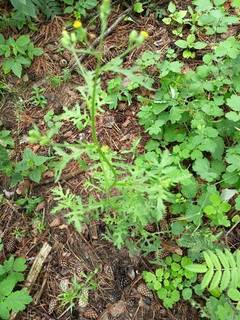
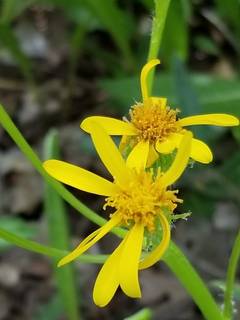
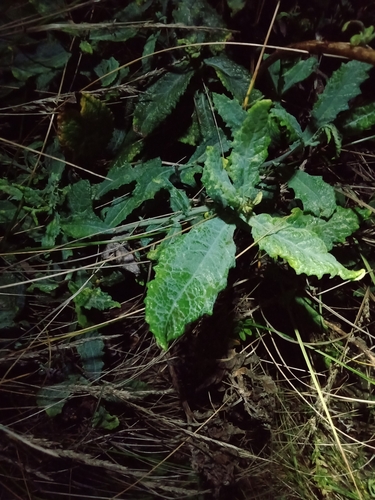
Senecio odoratus is an evergreen subshrub growing 1.5-5 feet (0.5-1.5 m) tall and 2-3 feet (0.6-0.9 m) wide, with an upright, somewhat open framework of soft, brittle stems. The leaves are fleshy, lance-shaped to oblong, 2-5 inches (5-12 cm) long, grey-green to blue-green, toothed along the margins, and aromatic when crushed. From late winter through summer the plant carries flat-topped clusters of small yellow flowerheads, each head 0.2-0.3 inch (5-8 mm) across and lacking the spreading ray florets of typical daisies. The flowers give off a sweet scent and are followed by fluffy seed heads of white pappus that disperse on the wind. Senecio odoratus grows in coastal scrub, mallee, and dry sclerophyll woodland on sandy, stony, and limestone soils, and tolerates drought, salt-laden wind, and poor fertility. It is short-lived, often persisting only 3-5 years, and self-seeds freely. Like other members of the genus it contains pyrrolizidine alkaloids that are toxic to grazing stock and people if eaten. In gardens it is grown as a fast filler in dry, coastal, and native plantings, where its scented flowers draw butterflies and other insects.
Native Range
Senecio odoratus is native to southern Australia, occurring across South Australia, Victoria, New South Wales, Tasmania, and southern Western Australia. It grows in coastal scrub, mallee, and dry woodland on sandy, stony, and calcareous soils.Suggested Uses
S. odoratus is grown as a quick filler in coastal, dry, and native gardens and for erosion control on sandy banks. Its scented flowers feed butterflies and other pollinators. The short life span and toxic foliage limit its use in grazed or family-lawn settings.How to Identify
Appearance
Size & Dimensions
Height1'6" - 5'
Width/Spread2' - 3'
Bloom Information
Yellow flowerheads open from late winter through summer, mainly August to January, in dense flat-topped clusters. The scented blooms draw butterflies, bees, and hoverflies. Wind-dispersed seed sets quickly, and seedlings appear around parent plants.
Detailed Descriptions
Foliage Description
Grey-green to blue-greenGrowing Conditions
Sun Requirements
Requires 6-10 hours of direct sunlight daily
• Full Sun: 6+ hours of direct sunlight
• Partial Shade: 3-6 hours of direct sunlight
• Full Shade: Less than 3 hours of direct sunlight
Care & Maintenance
Care Guide
Grow S. odoratus in full sun on free-draining sandy, stony, or limestone soil. The species tolerates drought, coastal salt, and poor fertility once established, but rots in wet or heavy ground. It suits USDA zones 9-11 and withstands light frost to about 27F (-3C). Water sparingly through the first summer, then rely on rainfall in most climates. All parts contain pyrrolizidine alkaloids that are toxic to grazing stock and people if eaten.Pruning
Trim S. odoratus lightly after flowering to remove spent flower clusters and keep the plant bushy, as it becomes leggy with age. Cutting back hard into old wood is risky because the soft stems reshoot unreliably. Removing seed heads before they open reduces self-seeding.Pruning Schedule
Prune: February–March
summerfall
Container Growing
Suitable for container growing
Minimum container size: 3 gallons