Senecio, Genus, flaccidus, Species,
- Genus & species
threadleaf groundsel
Southwestern United States and northern Mexico
Overview
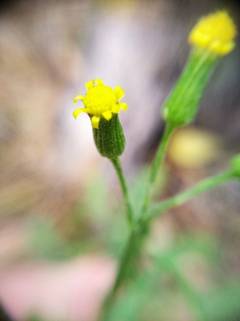
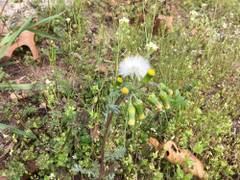
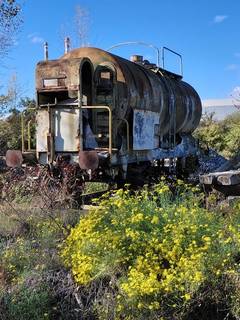
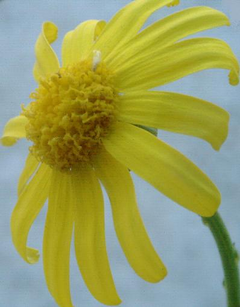
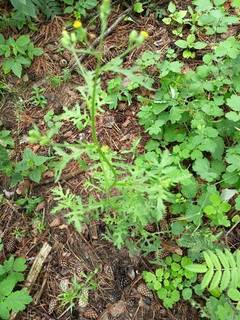
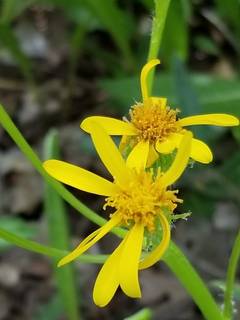
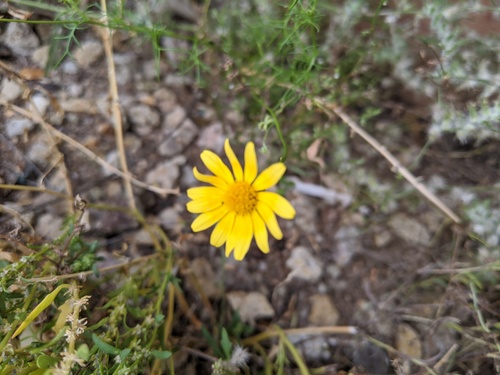
Senecio flaccidus is a bushy, short-lived perennial or subshrub 1-4 feet (30-120 cm) tall and 1-3 feet (30-90 cm) wide, with many slender stems from a woody base. Leaves are thread-like, 1-4 inches (2.5-10 cm) long and divided into narrow filament-like segments, gray-green and often slightly woolly. Yellow flower heads about 1 inch (2.5 cm) across, each with 8-13 ray florets around a yellow center, appear in loose clusters at the stem tips. Flowering occurs over a long season, mainly spring through fall, and in mild areas nearly year-round. The seeds are small and carry white bristles that aid wind dispersal. The whole plant contains pyrrolizidine alkaloids that are poisonous to livestock and to people if eaten, with cumulative liver damage. Growth is fast, and plants colonize disturbed roadsides and washes, then are often short-lived. Foliage thins in hard frost and regrows in spring.
Native Range
Native to the southwestern United States and northern Mexico, from California and Nevada east to Texas. Grows in desert scrub, grassland, roadsides, sandy washes, and disturbed ground from near sea level to about 7,000 feet (2,100 m).Suggested Uses
Grown in desert, xeriscape, and roadside revegetation plantings, spaced 24-36 inches (60-90 cm) apart. The flowers are visited by bees and butterflies through a long season. The toxic foliage makes it unsuited to pastures and areas grazed by livestock.How to Identify
Appearance
Size & Dimensions
Height1' - 4'
Width/Spread1' - 3'
Bloom Information
Detailed Descriptions
Foliage Description
gray-greenGrowing Conditions
Sun Requirements
Requires 6-12 hours of direct sunlight daily
• Full Sun: 6+ hours of direct sunlight
• Partial Shade: 3-6 hours of direct sunlight
• Full Shade: Less than 3 hours of direct sunlight
Care & Maintenance
Care Guide
Grows in full sun in sandy, gravelly, or rocky, well-drained soil. Water is needed only to establish; mature plants tolerate drought and decline in wet or heavy soil. It grows on poor, alkaline desert soils without feeding. The whole plant contains pyrrolizidine alkaloids that cause cumulative liver damage in grazing animals and in people if eaten. Root rot develops in soil that stays wet. Plants are short-lived but renew readily from self-sown seed.Pruning
Cut back stems by one-third to one-half in late winter to keep a denser form and remove frost-killed growth. Shearing after the main bloom can prompt a second flush of flowers. Old plants that become woody and sparse are usually replaced rather than pruned hard.Pruning Schedule
Prune: February
winter