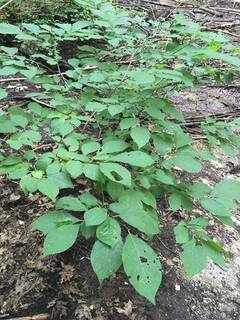
© Wowbobwow12 at the English-language Wikipedia, some rights reserved (CC-BY-SA) · Wikimedia Commons
Sassafras, Genus,
- Genus
sassafras
Native to eastern North America — Maine to Florida, west to Iowa and Texas — growing in old fields, forest edges, and roadsides; a component of eastern deciduous forest succession on disturbed sites
Overview
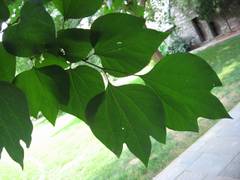
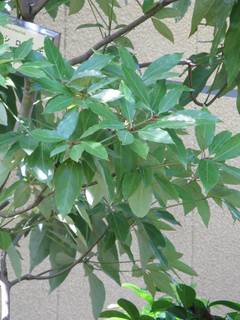
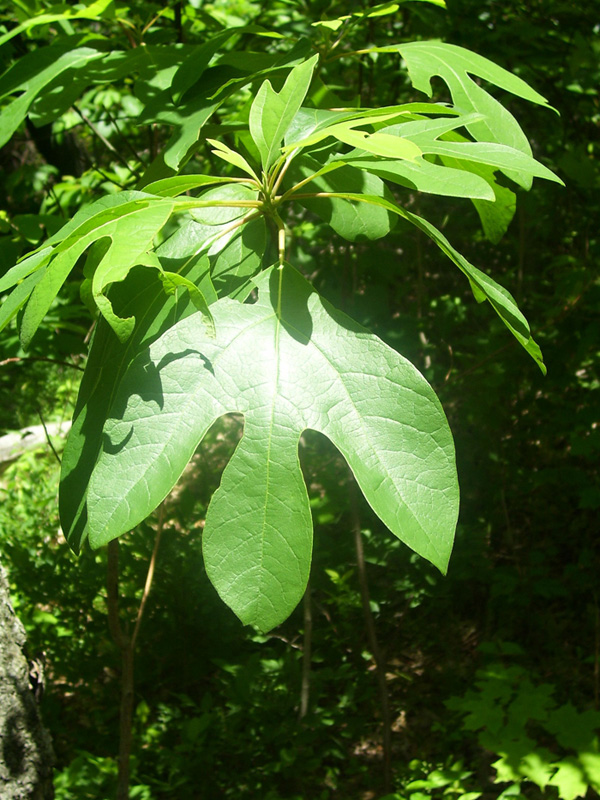
Sassafras albidum is a deciduous tree reaching 30-60 feet (9-18 m) tall with a spread of 25-40 feet (7.5-12 m) and an upright, often multi-stemmed habit. The species carries polymorphic foliage — three distinct leaf shapes appear on the same tree: unlobed (elliptic), mitten-shaped with one side lobe, and three-lobed — all 3-6 inches (8-15 cm) long and all aromatic with a root-beer scent when crushed. The scent comes from safrole, the original flavoring for root beer before the FDA banned it in 1960 as a carcinogen; bark, roots, and leaves all contain the compound, and consumption of any plant part is not advised. Greenish-yellow flower clusters open before the leaves in April. The species is dioecious: female trees produce dark blue drupes 0.4 inch (10 mm) wide on bright red pedicels in autumn, consumed by migrating birds. Autumn foliage turns vivid orange, scarlet, and gold — a fall color display that ranks with the strongest in eastern North American trees. Growth rate is moderate to fast. Hardy to USDA zone 4. Spreads by root suckers and can form thickets on favorable sites. Difficult to transplant at larger sizes because of the deep taproot — small container-grown specimens establish most reliably. Host tree of the spicebush swallowtail butterfly (Papilio troilus).
Native Range
Sassafras albidum is native to eastern North America — Maine to Florida, west to Iowa and Texas — growing in old fields, forest edges, and roadsides.Suggested Uses
Used as a specimen and naturalized tree in zones 4-9, planted small for reliable establishment. The three-shape polymorphic foliage, root-beer scent, vivid orange-scarlet-gold autumn color, and blue-on-red fruit on female trees give multi-season interest from spring through winter. The spicebush swallowtail host-plant role supports butterfly populations. Suckering habit suits naturalistic and meadow-edge plantings where a grove can form over time; the habit rules out the species for small formal gardens or lawn positions where suckers would require constant removal. Native to eastern North America — sits comfortably in native-plant restoration work and eastern woodland-edge plantings.How to Identify
Appearance
Size & Dimensions
Height30' - 60'
Width/Spread25' - 40'
Bloom Information
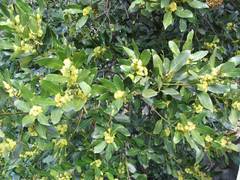
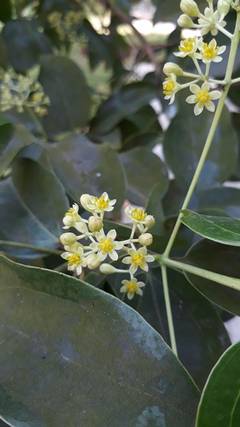
Greenish-yellow flower clusters of small flowers 0.25 inch (6 mm) wide opening before the leaves in April, lasting 1-2 weeks. Dioecious — female trees produce dark blue drupes 0.4 inch (10 mm) wide on bright red pedicels in late summer to autumn. The polymorphic foliage and the vivid autumn color rank as the primary seasonal features rather than the small spring flowers.
Detailed Descriptions
Flower Description
Greenish-yellow clusters of small flowers 0.25 inch (6 mm) wide opening before the leaves in early spring; dioecious — separate male and female trees; female trees produce dark blue drupes 0.4 inch (10 mm) wide on bright red pedicels in autumnFoliage Description
Bright green summer foliage; polymorphic — three leaf shapes appear on the same tree: unlobed (elliptic), mitten-shaped with one side lobe, and three-lobed; leaves 3-6 inches (8-15 cm) long; aromatic with root-beer scent when crushed; autumn color in orange, scarlet, and goldGrowing Conditions
Sun Requirements
Requires 4-10 hours of direct sunlight daily
• Full Sun: 6+ hours of direct sunlight
• Partial Shade: 3-6 hours of direct sunlight
• Full Shade: Less than 3 hours of direct sunlight
Care & Maintenance
Care Guide
Grows in full sun for the densest crown in acidic well-drained soil at pH 5.0-6.5. Hardy to USDA zone 4. Small container-grown specimens establish most reliably — the deep taproot makes transplanting at larger sizes difficult and often fatal. Root suckers form readily on favorable sites and can create thickets; regular removal with a spade maintains a single-trunk or grove form depending on the planting intent. All plant parts contain safrole, which the FDA classified as a carcinogen in 1960 and banned for consumption; the bark, root, and leaf tissue is not a suitable material for teas or homemade flavorings. Host tree of the spicebush swallowtail butterfly (Papilio troilus) — expect caterpillar foliage feeding as part of the tree's wildlife-support role.Pruning
Prune in late winter (February-March). Maintain a single leader by removing competing lower branches if a single-trunk tree form is wanted; without pruning the species develops a multi-stemmed or clumping form. Remove root suckers with a spade through the growing season to prevent thicket formation. Remove dead and crossing branches as part of routine structural pruning.Pruning Schedule
Prune: February–March
early spring