Neolitsea, Genus, sericea, Species,
- Genus & species
white-back neolitsia
E Asia (Japan, Korea, E China, Taiwan; warm-temperate evergreen forests; coastal and lowland habitats)
Overview
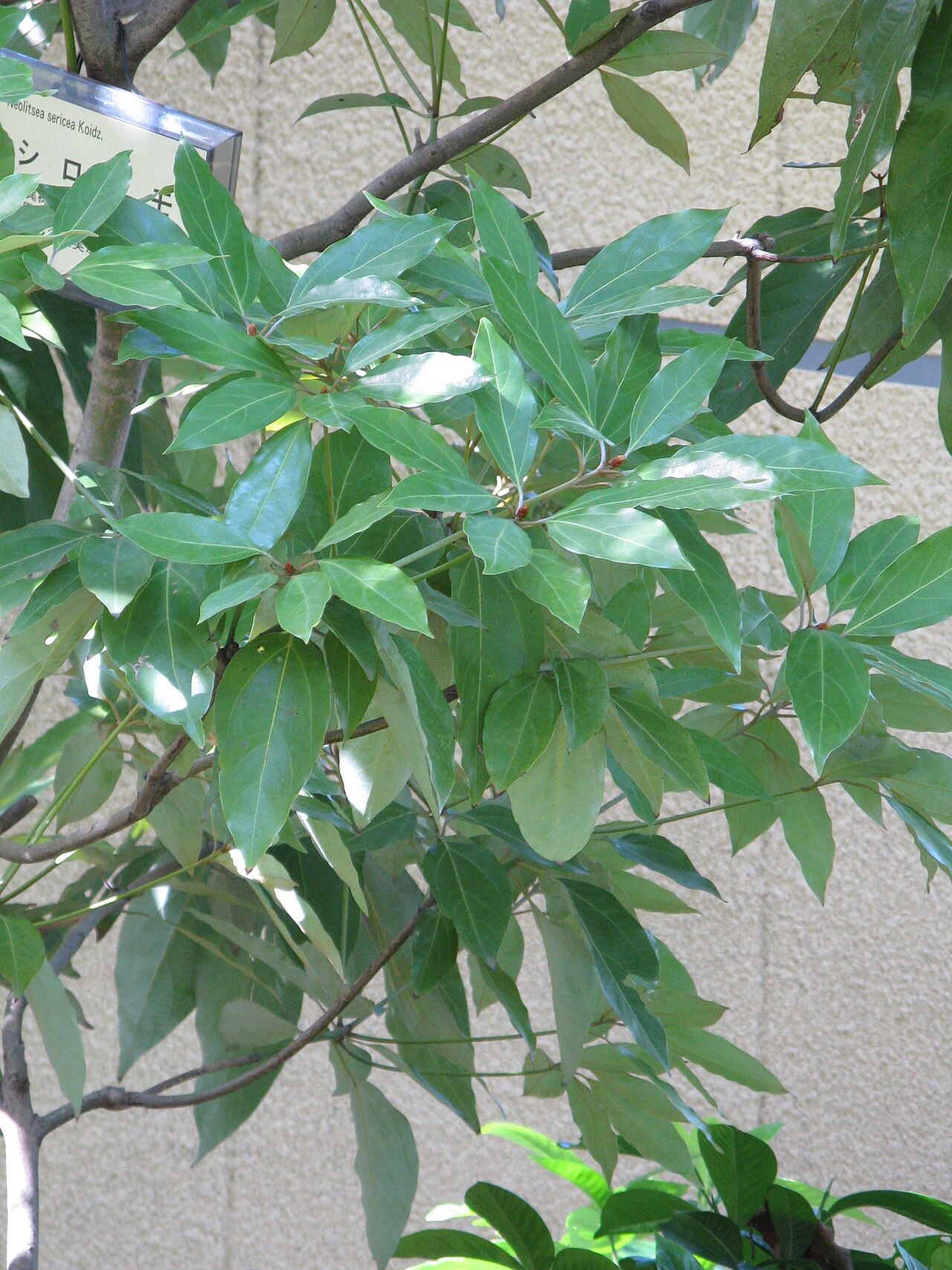
Neolitsea sericea is an evergreen tree or large shrub reaching 15–30 feet (4.5–9 m) tall with a spread of 10–20 feet (3–6 m) and a broadly conical to rounded crown. Native to eastern Asia (Japan, Korea, eastern China, and Taiwan), this member of the Lauraceae family carries alternate simple entire leaves 3–6 inches (8–15 cm) long, elliptic to ovate in shape, leathery in texture, dark green on the upper surface and conspicuously silvery-white to pale green on the lower surface—the contrasting leaf backs flash prominently whenever the foliage is wind-stirred, and the species' primary ornamental character runs through this two-toned wind-animated display. New growth emerges covered in golden-brown silky pubescence that runs conspicuous across the spring flush period. Flowers open small and yellowish-green, clustered in axillary umbels in autumn (October through November)—the autumn flowering window runs rare among temperate flowering trees and makes the species horticulturally atypical within its family and region. Small round black fruit 0.3–0.4 inch (8–10 mm) ripens in spring on female trees; the species runs dioecious with male and female flowers on separate plants. Growth rate runs moderate. Hardy to zone 8. Commercial availability runs limited in Western horticulture.
Native Range
Neolitsea sericea is native to eastern Asia across Japan, Korea, eastern China, and Taiwan, growing in warm-temperate evergreen forests, especially in coastal and lowland habitats. The species functions as a canopy and understory component in its native broadleaf evergreen forests and tolerates the maritime climate conditions of its coastal native range.Suggested Uses
Planted as a specimen evergreen tree or screening plant at 10–15 foot (3–4.5 m) spacing in zone-8-and-warmer gardens. Silver-white leaf undersides supply a two-toned wind-animated display not available from most evergreen trees in temperate cultivation. Golden-brown silky new growth adds a seasonal spring ornamental feature. Coastal conditions and maritime climates suit the species because of the species' native coastal lowland range. Limited zone-8 cold hardiness restricts the species to warmer climate zones. Commercial availability runs limited in Western horticulture, and sourcing runs through specialist nurseries rather than general trade. Cold climates below zone 8 and exposed inland sites with cold drying winter winds are poor fits for the species.How to Identify
Appearance
Size & Dimensions
Height15' - 30'
Width/Spread10' - 20'
Bloom Information
Small yellowish-green flowers open in axillary umbels in October through November—an autumn bloom window that runs rare among temperate flowering trees. The species is dioecious, with male and female flowers carried on separate individual trees, so fruit production requires a nearby male pollinator. Small round black fruit 0.3–0.4 inch (8–10 mm) ripens in spring on female trees that have been pollinated. Flowers themselves run inconspicuous and the species' ornamental value centers on foliage rather than floral display.
Detailed Descriptions
Flower Description
Yellowish-green; small axillary umbels; October-November (autumn bloom); inconspicuous; black fruit 0.3-0.4 inch in spring on female treesFoliage Description
Dark green above, conspicuous silvery-white underside; elliptic leathery 3-6 inches; new growth golden-brown silky pubescenceGrowing Conditions
Sun Requirements
Requires 4-10 hours of direct sunlight daily
• Full Sun: 6+ hours of direct sunlight
• Partial Shade: 3-6 hours of direct sunlight
• Full Shade: Less than 3 hours of direct sunlight
Care & Maintenance
Care Guide
Full sun to partial shade in moist well-drained acidic to neutral soil (pH 5.0–7.0) matches the species' cultivation needs. Hardy to zone 8 (10°F / −12°C). Cold drying winds damage foliage in exposed winter positions, so sheltered sites inside zone 8 supply the strongest chance of clean evergreen leaf retention. Coastal conditions and maritime climates suit the species because these conditions match the species' native range. Growth rate runs moderate across the establishment period. Commercial availability runs limited in Western horticulture, and the species is found primarily in specialist nurseries and botanic-garden collections rather than in general-purpose trade. Pest and disease pressure runs low in cultivation.Pruning
Pruning runs minimal across the species' care cycle. Dead or damaged branches are removed in late winter or early spring. The species trains to a single-trunk tree with selective low-branch removal during the first 5–10 years, or the multi-stem large-shrub form is retained where a screening planting is wanted. Response to light shaping pruning is clean and predictable.Pruning Schedule
Prune: February–March
early spring
