Image 1 of 14
1 / 14
Plant Reference
Umbellularia, Genus, californica, Species,
- Genus & species
California bay
Southwestern Oregon and California — Coast Ranges, Sierra Nevada foothills, and Transverse Ranges; mixed evergreen forests, riparian corridors, and canyon slopes
Overview
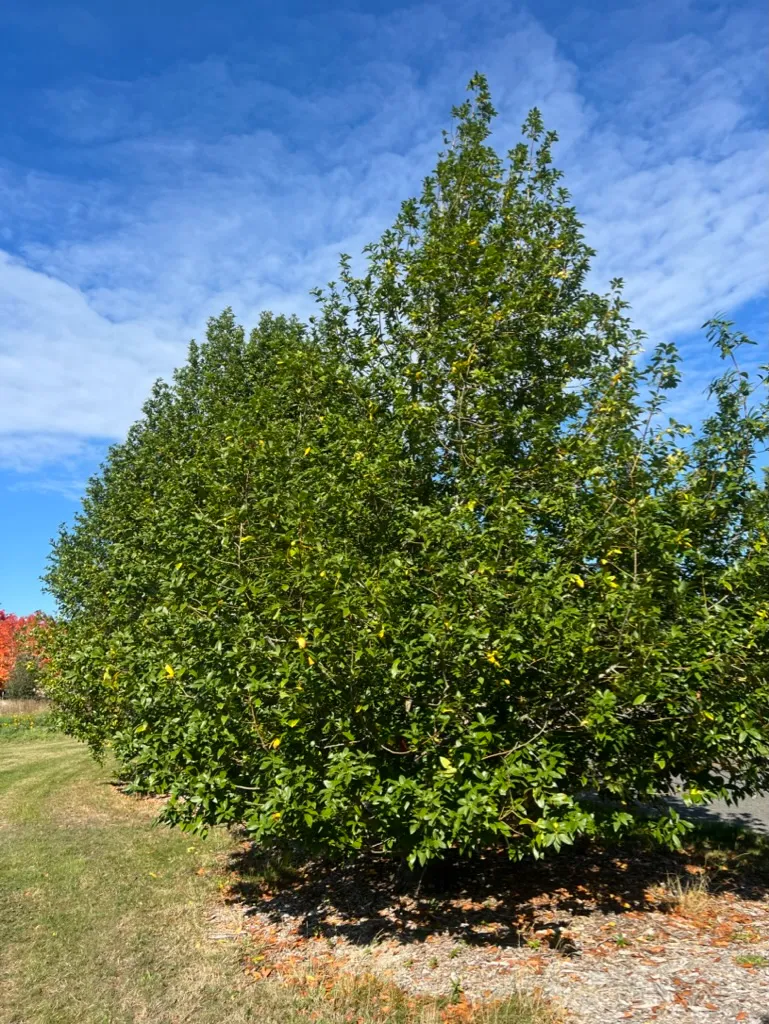
Umbellularia californica is California bay (Oregon myrtle), an upright evergreen tree growing 40-80 feet (12-24 m) tall and 30-50 feet (9-15 m) wide. Yellowish-green flowers in rounded umbels 1-2 inches (2.5-5 cm) in December-March (10 weeks). Purplish-black olive-like drupes 1 inch (2.5 cm) in fall. Glossy medium to dark green lance-shaped leathery leaves 2-5 inches (5-13 cm). In Lauraceae. A monotypic genus (the only species in Umbellularia). The foliage contains umbellulone — an extremely strong volatile compound that causes instant severe headache when inhaled at close range (do not crush leaves near the face). Can substitute for bay leaf in cooking at half the quantity. Native to southwestern Oregon and California. The massive size (40-80 feet / 12-24 m) requires a very large site. A symptomless carrier of sudden oak death (Phytophthora ramorum). The wood (myrtlewood) is commercially valued. Long-lived (200-500+ years). Drought-tolerant once established. Non-toxic (edible — but the volatile oil causes headache). Deer-resistant. Zones 7-10. Full sun. Growth rate is moderate.
Native Range
Native to southwestern Oregon and California — Coast Ranges, Sierra Nevada foothills, and Transverse Ranges. Found in mixed evergreen forests, riparian corridors, and canyon slopes.Suggested Uses
Grown as a large native evergreen shade tree, windbreak, or specimen on very large sites, spaced 30-50 feet (9-15 m). Myrtlewood timber. Headache-causing volatile foliage. Sudden oak death carrier. Non-toxic (culinary). Zones 7-10.How to Identify
Appearance
Size & Dimensions
Height40' - 80'
Width/Spread30' - 50'
Bloom Information
Detailed Descriptions
Flower Description
Yellowish-green, small, 0.3 inch (8 mm), in rounded umbels 1-2 inches (2.5-5 cm); December-March; followed by olive-like purplish-black drupes 1 inch (2.5 cm) ripening in fallFoliage Description
Glossy medium to dark green, lance-shaped, 2-5 inches (5-13 cm), leathery; extremely strongly aromatic when crushed — the volatile compound umbellulone can cause instant severe headache (hence the common name 'headache tree'); can substitute for Laurus nobilis bay leaf in cooking (use half the quantity — much stronger); evergreen year-roundGrowing Conditions
Sun Requirements
Requires 4-10 hours of direct sunlight daily
• Full Sun: 6+ hours of direct sunlight
• Partial Shade: 3-6 hours of direct sunlight
• Full Shade: Less than 3 hours of direct sunlight
Care & Maintenance
Care Guide
Full sun to partial shade (4-10 hours). Well-drained soil pH 5.5-7.5. Drought-tolerant once established. Massive size (40-80 feet / 12-24 m) — requires very large site. Foliage causes headache when crushed near face (umbellulone). Symptomless carrier of sudden oak death. Non-toxic (culinary at half bay leaf quantity). Deer-resistant. Zones 7-10.Pruning
Prune in early spring (January-March) to shape or remove lower limbs. Tolerates hard pruning. The dense canopy requires minimal maintenance on large sites.Pruning Schedule
Prune: January–March
early spring