Lindera, Genus, obtusiloba, Species,
- Genus & species
Japanese spicebush
E Asia (Japan, Korea, central-E China; moist mountain forests, woodland margins; 1000-6500 ft / 300-2000 m)
Overview
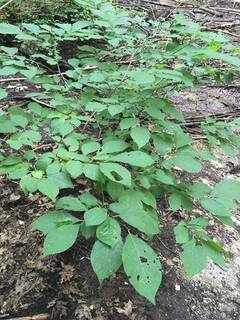
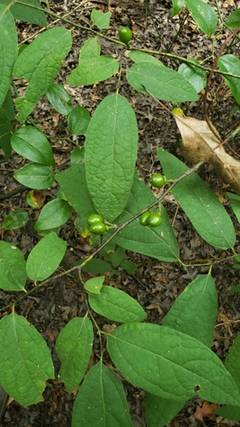
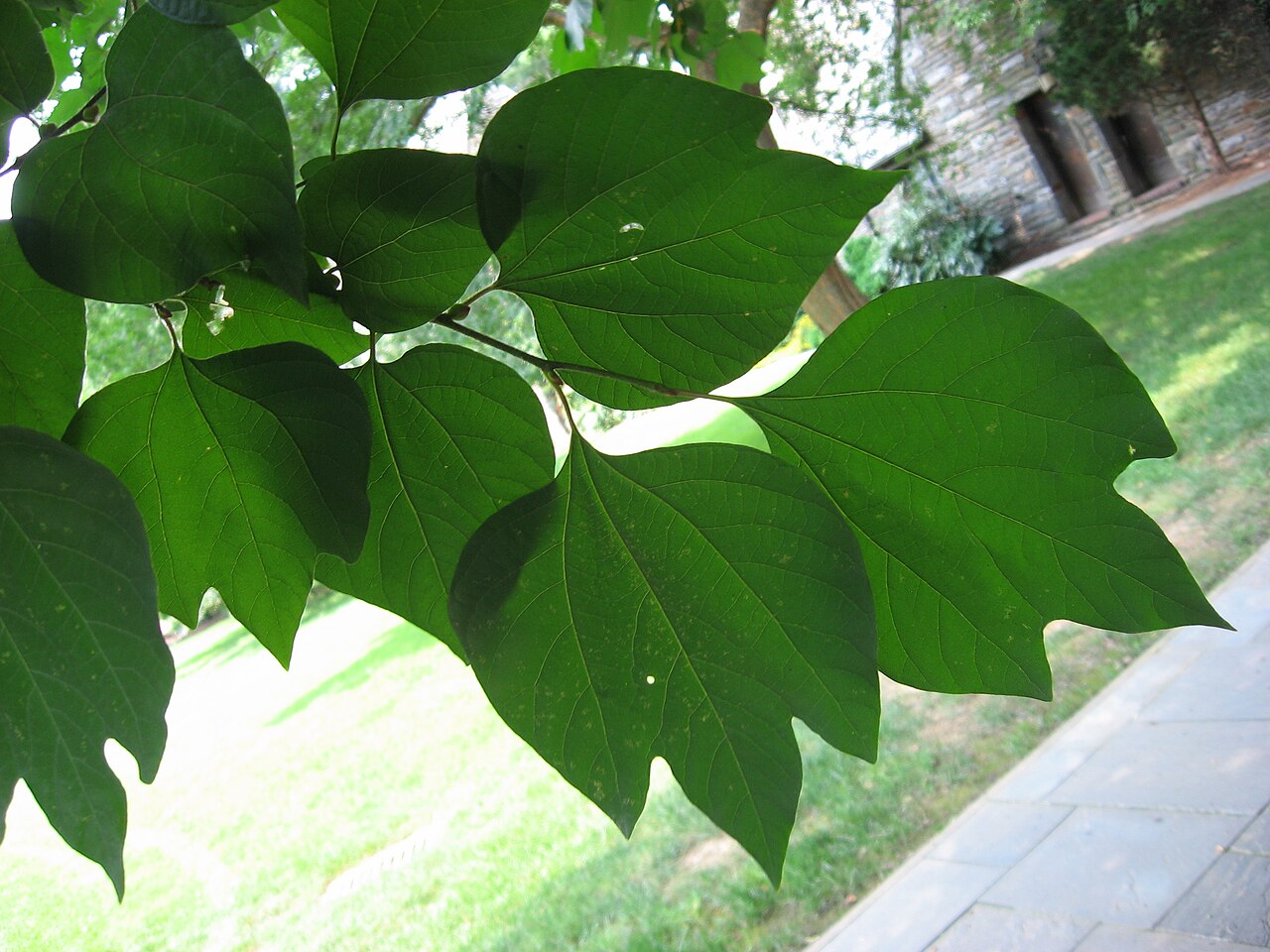
Lindera obtusiloba is a deciduous multi-stemmed large shrub or small tree reaching 10–20 feet (3–6 m) tall with a spread of 10–15 feet (3–4.5 m). This East Asian species carries a pronounced foliage character through the season: leaves run 3–5 inches (8–13 cm) long, broadly ovate with three shallow lobes that give the leaf the silhouette of a mitten, dark green on the upper surface and pale beneath. Leaves are aromatic when crushed, releasing a spicy camphor-like scent characteristic of the Lauraceae family. In autumn, leaves shift to clear butter-yellow to golden-yellow before drop, which carries the species' primary ornamental season in the autumn garden. Small yellow cluster-forming flowers open on bare wood in March through April before leaf emergence, supplying an early-spring display on the naked branches. The species is dioecious—male and female flowers occur on separate plants—and male plants bear denser more visible flower clusters. Female plants produce small glossy red-to-black drupes 0.3 inches (8 mm) in autumn when a male pollinator is present within bee-flight range. Mature stems develop gray bark. Growth rate is moderate. Hardy to zone 5.
Native Range
Lindera obtusiloba is native to East Asia—Japan, Korea, and central-to-eastern China—growing in moist mountain forests and woodland margins at 1,000–6,500 feet (300–2,000 m) elevation. The species fills an understory or forest-edge role in the native forests, which translates in garden cultivation to tolerance of partial shade and preference for humus-rich woodland soils.Suggested Uses
Planted as a specimen shrub, understory companion, or woodland-garden component at 10–12 foot (3–3.6 m) spacing in zone-5-and-warmer gardens. Three-lobed mitten-shaped aromatic foliage carries a rare leaf form among large shrubs, and the three-season interest sequence (early-spring yellow flowers on bare wood, summer foliage, autumn golden color) supplies sustained ornamental return across the growing season. Partial-shade tolerance extends the species into woodland-garden positions under high canopy where many flowering shrubs fail. Dioecious reproduction requires both sexes for fruit production, which gardens grown for autumn berry display must accommodate through paired planting. Slow first-year establishment delays the species' mature effect by several seasons. Dry sites, alkaline soils, and exposed windy positions are poor fits for the species.How to Identify
Appearance
Size & Dimensions
Height10' - 20'
Width/Spread10' - 15'
Bloom Information
Small yellow flowers 0.2 inches (5 mm) across open in dense sessile clusters directly on bare wood from March through April before leaf emergence. The species is dioecious, and male flowers appear in denser more visually prominent clusters than the female flowers. Active bloom duration is 2–3 weeks through early spring. Female plants with a nearby male pollinator produce glossy red-to-black drupes 0.3 inches (8 mm) in autumn that supply a secondary ornamental feature alongside the autumn foliage display.
Detailed Descriptions
Flower Description
Yellow small flowers in dense sessile clusters on bare wood before leaves; male clusters denserFoliage Description
Dark green above, pale beneath; broadly ovate three-lobed mitten-shaped 3-5 inches; aromatic when crushed; golden-yellow autumn colorGrowing Conditions
Sun Requirements
Requires 3-7 hours of direct sunlight daily
• Full Sun: 6+ hours of direct sunlight
• Partial Shade: 3-6 hours of direct sunlight
• Full Shade: Less than 3 hours of direct sunlight
Care & Maintenance
Care Guide
Partial shade to full sun in moist acidic to neutral humus-rich well-drained soil (pH 5.0–7.0) matches the species' cultivation needs. Hardy to zone 5 (−20°F / −29°C). The species handles shade well and fills woodland-garden understory positions where many flowering shrubs struggle with insufficient light. Consistent soil moisture runs through the active growing season; prolonged summer drought causes premature leaf drop and reduces autumn color intensity. Dioecious reproduction means both male and female plants are needed within pollinator range for fruit set—gardens grown for the fruit display must include at least one male pollinator within about 100 feet of the female plants. First-year establishment runs slow, and the species reaches mature scale only after 5–8 growing seasons. No significant pest or disease problems occur in well-sited plantings.Pruning
Pruning runs minimal—the naturally multi-stemmed form is the species' ornamental habit and develops through unassisted growth. Dead, crossing, or damaged branches are removed in late winter while the plant is dormant. Selective thinning of interior stems exposes the gray bark and branch structure on mature specimens and can enhance the winter silhouette. Limbing up the lowest branches converts the natural multi-stemmed shrub into a small-tree form for positions where a single trunk is wanted.Pruning Schedule
Prune: February–March
winter