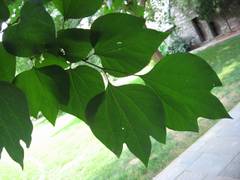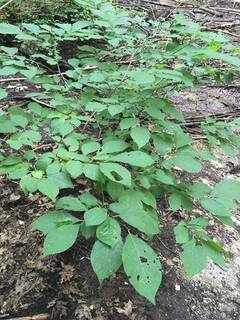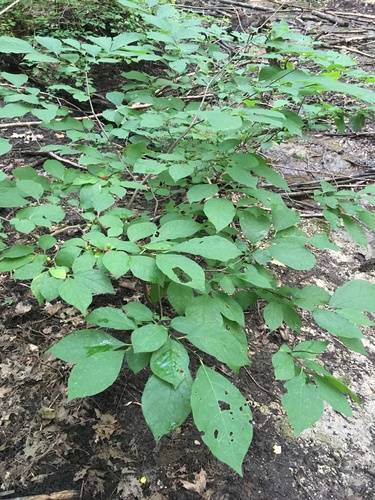
Lindera, Genus, spp., Multiple species,
- Genus
- Multiple species
spicebushes
East and Southeast Asia; eastern North America
Overview
Lindera is a genus of roughly 80 to 100 species of aromatic deciduous and evergreen shrubs and small trees in the laurel family, Lauraceae. The genus is centered in East and Southeast Asia, with a few species in eastern North America, the most familiar being L. benzoin, the northern spicebush. Plants range from 3 ft (1 m) shrubs to small trees near 20 ft (6 m), with slender branches and alternate, simple leaves that release a spicy scent when crushed. The plants are dioecious, carrying male and female flowers on separate individuals, so both are needed for fruit. Small clusters of pale yellow to greenish flowers open in early spring along the bare twigs before the leaves emerge. On female plants these are followed by glossy red, ellipsoid drupes about 0.4 in (1 cm) long, each holding a single seed. Deciduous species turn clear yellow in autumn, while evergreen Asian species hold dark leaves year-round. Lindera grows in moist, humus-rich woodland soils and tolerates shade, but most species fail in dry, alkaline, or compacted ground. Because fruit forms only on pollinated female plants, a single isolated specimen carries flowers but sets no berries.
Native Range
Lindera is native to East and Southeast Asia, where most species occur in China, Japan, Korea, and the Himalayas, with two species native to eastern North America. Plants grow as understory shrubs in moist deciduous and mixed woodland, along streams, and on shaded slopes.Suggested Uses
Lindera is grown in woodland gardens, shaded shrub borders, and native and wildlife plantings, where L. benzoin serves as a larval host for the spicebush swallowtail butterfly. The red fruit of female plants feeds migrating birds. The aromatic foliage and early flowers are used in naturalistic shade plantings.How to Identify
Appearance
Size & Dimensions
Height3' - 20'
Width/Spread3' - 12'
Bloom Information
Lindera flowers in early spring, generally March to April, before the leaves expand, the small yellow clusters lining the bare branches. Male plants carry showier flowers than the females. Fruit on female plants ripens red from late summer into autumn.
Detailed Descriptions
Flower Description
pale yellow to greenishFoliage Description
greenGrowing Conditions
Sun Requirements
Requires 2-8 hours of direct sunlight daily
• Full Sun: 6+ hours of direct sunlight
• Partial Shade: 3-6 hours of direct sunlight
• Full Shade: Less than 3 hours of direct sunlight