Rumex, Genus, cristatus, Species,
- Genus & species
Greek dock
Overview
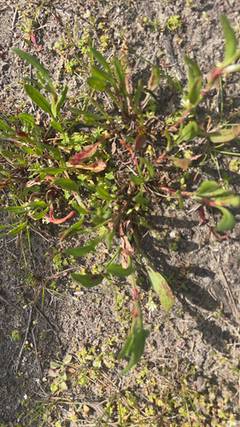
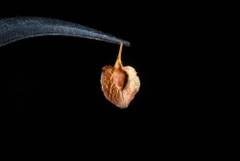
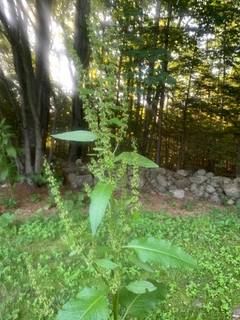
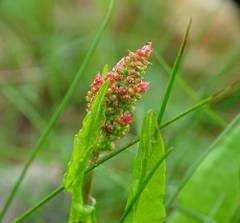
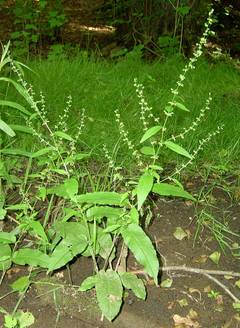
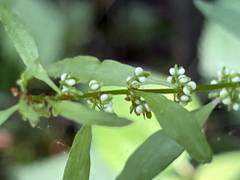
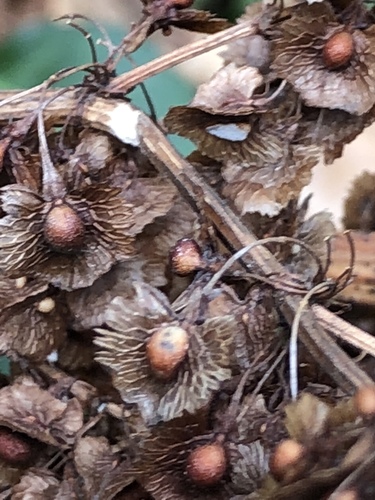
Rumex cristatus is a robust perennial reaching 3-6.5 feet (0.9-2 m) tall, with a stout taproot and erect, ridged, branching stems. Basal leaves are large, broadly oval to triangular with a heart-shaped or flattened base, 8-16 inches (20-40 cm) long, with wavy margins; stem leaves are smaller and narrower upward. From early to midsummer the stems carry large, branched, pyramidal clusters of many small greenish flowers that turn reddish-brown as the fruit ripens. Each fruit is enclosed by three rounded, net-veined valves about 0.2-0.3 inch (5-8 mm) long, one of which bears a swollen wart-like tubercle. A single plant can produce thousands of seeds. The plant dies back in autumn and regrows from the rootstock in spring. It grows on roadsides, riverbanks, waste ground, and damp disturbed soils, and has spread well beyond its native range as a naturalized weed of open ground.
Native Range
Native to the eastern Mediterranean and the Balkans, including Greece, the Aegean region, and western Turkey. Grows on riverbanks, ditches, roadsides, field margins, and damp waste ground. Naturalized across much of western and central Europe and in parts of North America, mainly along rivers, roads, and disturbed ground.Suggested Uses
Not grown ornamentally; it occurs as a naturalized weed of riverbanks, roadsides, and disturbed ground. The tall dried fruiting stems are sometimes cut for dried arrangements. On managed land it is controlled rather than retained because of its heavy seeding and deep taproot.How to Identify
Appearance
Size & Dimensions
Height3' - 6'6"
Width/Spread1'6" - 3'
Bloom Information
Detailed Descriptions
Flower Description
greenish ripening reddish-brownFoliage Description
greenGrowing Conditions
Sun Requirements
Requires 4-12 hours of direct sunlight daily
• Full Sun: 6+ hours of direct sunlight
• Partial Shade: 3-6 hours of direct sunlight
• Full Shade: Less than 3 hours of direct sunlight
Care & Maintenance
Care Guide
Grows in full sun to light shade on most soils, including heavy, damp, and disturbed ground, and tolerates periodic flooding along riverbanks. Establishes readily from seed and forms a deep taproot that makes established plants hard to remove. Tolerates drought once rooted but grows tallest on moist, fertile soils. In gardens and managed land it is cut or dug out before seed sets, because each plant sheds very large numbers of long-lived seeds. Regrowth follows from the taproot if the crown is not fully removed. No feeding is needed on fertile ground.Pruning
Flowering stems are cut before the fruit ripens to limit the large seed output. Cutting alone does not kill the plant, which regrows from the taproot, so the root is dug out for full removal. Stems left in place shed seed widely.Pruning Schedule
Prune: June–July
summer