Overview
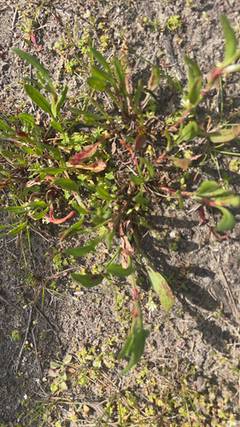
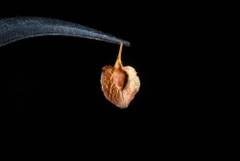
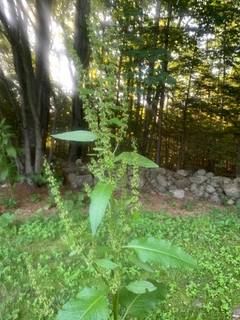
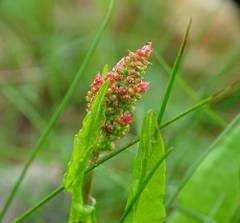
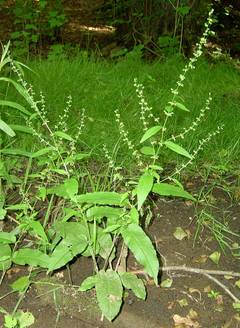
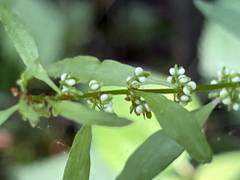
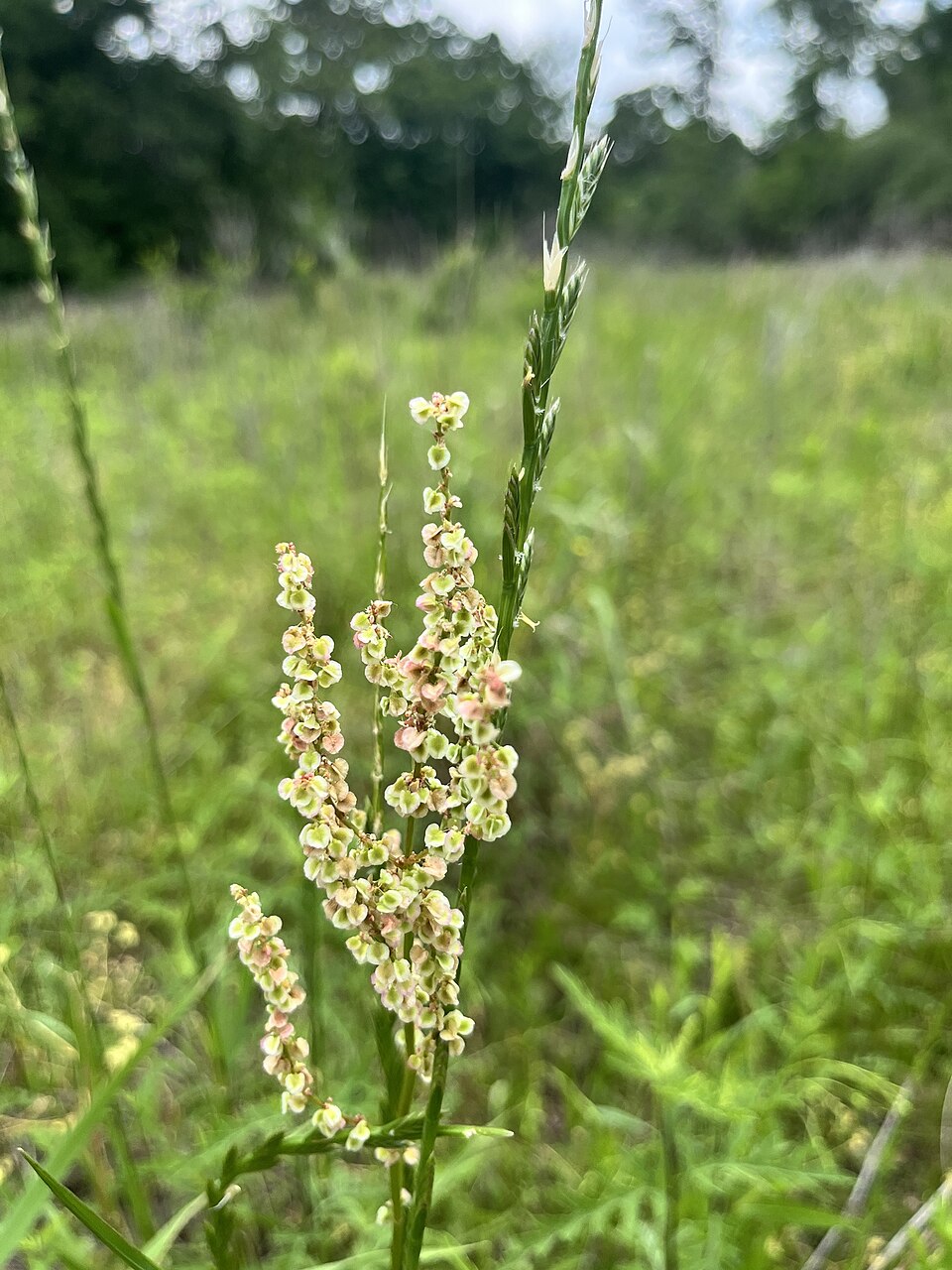
Rumex hastatulus is a slender annual or short-lived perennial growing 8-30 inches (20-75 cm) tall from a taproot. The lower leaves are 1-4 inches (2.5-10 cm) long with two outward-pointing basal lobes (hastate), while upper leaves are narrower and nearly lobeless. Plants are dioecious, with separate male and female individuals; from March to June they carry slender branched clusters of tiny flowers that turn pink to red as the winged seeds mature, casting a reddish haze over sandy fields. The female plants develop heart-shaped winged fruit that give the common name heartwing dock. Rumex hastatulus grows in sandy soils of fields, roadsides, pinelands, and disturbed open ground across the southeastern and south-central United States. It germinates in autumn, flowers and seeds in spring, and often dies back as summer heat arrives. The foliage has a sour, lemony taste from oxalic acid, which can harm grazing livestock in large quantities. It tolerates poor, dry, acidic soil where many plants fail to establish.
Native Range
Rumex hastatulus is native to the southeastern and south-central United States, from Massachusetts south to Florida and west to Texas and Kansas. It grows in sandy fields, pinelands, roadsides, and disturbed open ground.Suggested Uses
Rumex hastatulus is used in native meadow plantings, restoration of sandy disturbed sites, and naturalistic gardens, spaced 6-12 inches (15-30 cm) apart. The red spring seed heads add seasonal color to dry, open ground. It also serves as a larval host plant for several copper butterflies.How to Identify
Appearance
Size & Dimensions
Height8" - 2'6"
Width/Spread6" - 1'
Bloom Information
Flowers appear from March to June, small and wind-pollinated rather than showy. As seeds ripen, female plants flush pink to red and color open fields. Plants set seed quickly and often fade by early summer.
Detailed Descriptions
Flower Description
pink to redFoliage Description
greenGrowing Conditions
Sun Requirements
Requires 6-12 hours of direct sunlight daily
• Full Sun: 6+ hours of direct sunlight
• Partial Shade: 3-6 hours of direct sunlight
• Full Shade: Less than 3 hours of direct sunlight
Water & Climate
Water Needs
Drought Tolerance
Drought tolerant when established
Care & Maintenance
Care Guide
Rumex hastatulus grows in full sun and dry, sandy, acidic soil, including poor and disturbed ground. It germinates with autumn moisture, grows through winter in mild areas, and flowers in spring before summer heat. Water is seldom needed in its native range. The plant self-sows readily and can colonize bare sandy areas quickly. No fertilizer is needed, and rich soil is not necessary for it to grow. It tolerates drought and low fertility better than most leafy plants.Pruning
No pruning is needed. Plants are pulled or mown after seed set if spread is unwanted. Seed heads are left in place where natural reseeding is acceptable.Toxicity Warning
Toxic to petsPlanting Guide
Planting Methods & Timing
Planting Method
direct sow
Direct Sow Timing
Autumn in mild-winter areas
Days to Maturity
90–150 days
Plant Spacing
8 inches
Companion Planting
Good Companions