Rosa, Genus, laevigata, Species,
- Genus & species
Cherokee rose
Southern and central China, Taiwan, Laos, and northern Vietnam
Overview
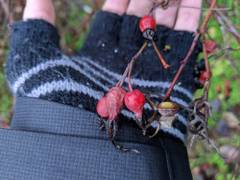
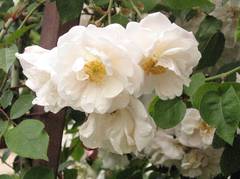
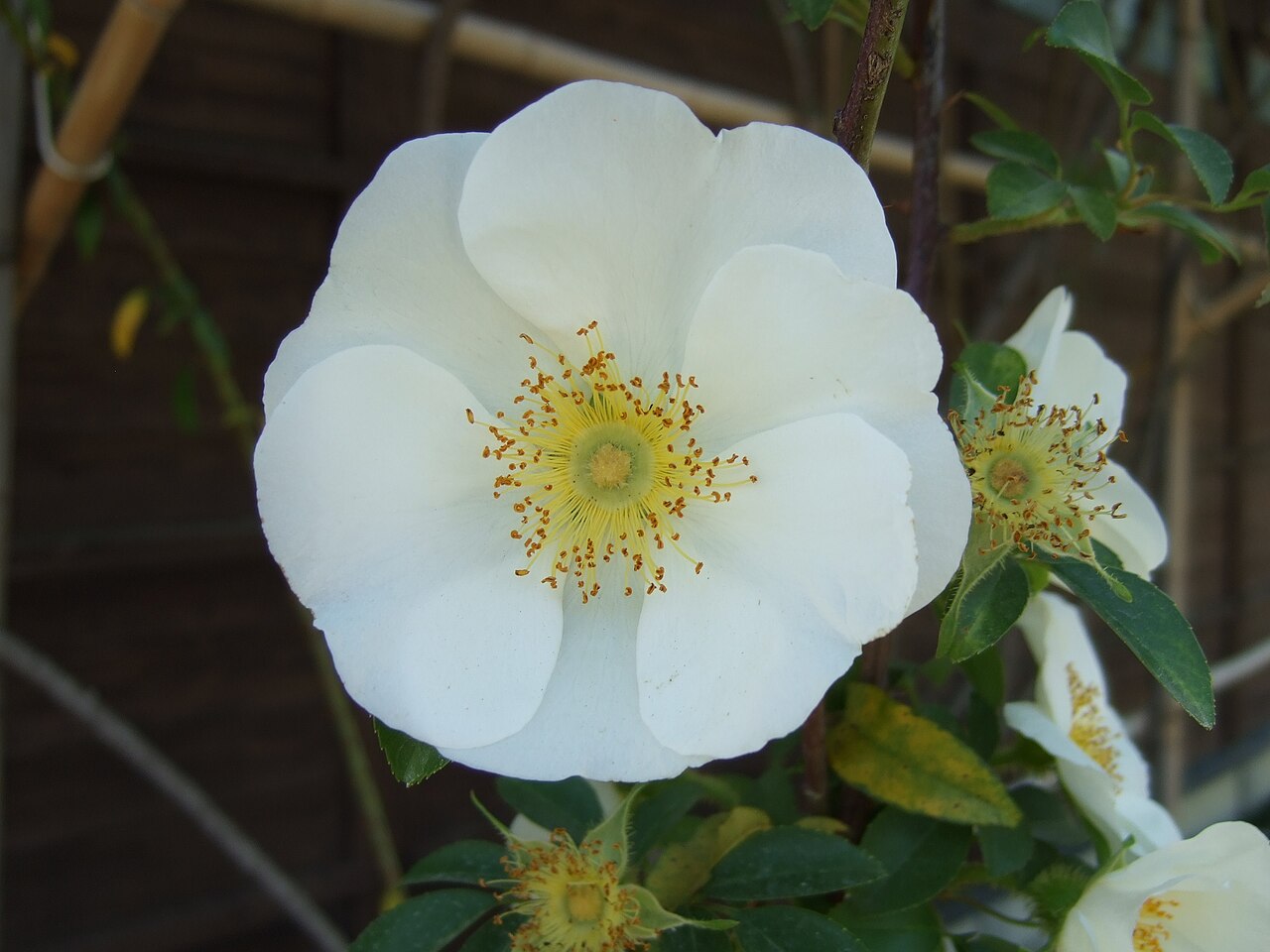
Rosa laevigata is a semi-evergreen scrambling rose with arching canes 10-20 feet (3-6 m) long and a spread of 6-15 feet (1.8-4.5 m), climbing through shrubs and over fences by hooking rather than twining. Canes are stout, green to red-brown, and armed with stout hooked prickles 0.2-0.4 inch (5-10 mm) long spaced along their length. Leaves are compound with 3 leaflets, occasionally 5, each 1-3.5 inches (2.5-9 cm) long, glossy dark green above and hairless, and persist through winter in USDA zones 8-10 while dropping partially in zone 7. Flowers are single, 2.5-4 inches (6-10 cm) across, with 5 broad white petals surrounding a boss of yellow stamens, borne singly on short lateral shoots and carrying a light sweet scent. Flowering occurs once a year over 3-4 weeks in spring, with no repeat bloom later in the season. Hips are 1-1.5 inches (2.5-4 cm) long, orange-red, pear-shaped, and covered in stiff bristles, ripening from September and persisting into winter. The plant roots where canes touch the ground and spreads from suckers, and it is listed as an invasive species across much of the southeastern United States, where it forms dense thickets in pastures and along woodland edges.
Native Range
Rosa laevigata is native to southern and central China, Taiwan, Laos, and northern Vietnam, growing in scrub, thickets, and on hillsides below 5,200 feet (1,600 m). It was introduced to North America by the late 18th century and naturalized widely across the southeastern United States, from Texas to Virginia. It has been the state flower of Georgia since 1916, despite being an introduced species there.Suggested Uses
Grown on sturdy fences, pergolas, and bank plantings in USDA zones 7-10 where 10-20 feet (3-6 m) of cane can be accommodated, and used as a barrier hedge on account of its hooked prickles. Hips are eaten by birds and small mammals through winter, and the flowers are worked by bees in spring. It is planted well outside the southeastern United States range where it has naturalized, since escaped stands displace native ground layer vegetation.How to Identify
Appearance
Size & Dimensions
Height10' - 20'
Width/Spread6' - 15'
Bloom Information
Flowering runs from late March to May depending on latitude, with the main display lasting 3-4 weeks. It flowers once per season on wood produced the previous year, so no repeat flush follows in summer or autumn. Individual flowers last 2-3 days and drop their petals cleanly. Late frost below 28F (-2C) during bud swell removes that year display without harming the canes.
Detailed Descriptions
Flower Description
White with yellow stamensFoliage Description
Glossy dark greenGrowing Conditions
Sun Requirements
Requires 6-10 hours of direct sunlight daily
• Full Sun: 6+ hours of direct sunlight
• Partial Shade: 3-6 hours of direct sunlight
• Full Shade: Less than 3 hours of direct sunlight
Care & Maintenance
Care Guide
Growth and flowering are heaviest in full sun with 6 or more hours of direct light, though the plant persists and climbs in part shade with a reduced flower count. Soil requirements are broad across loam, clay, and sand at a pH of 5.5-7.0, with free drainage the main condition. Established plants tolerate summer drought and grow on rainfall alone in USDA zones 7-10; first-season plants need about 1 inch (2.5 cm) of water weekly. Fertilizer is rarely needed, and nitrogen feeding drives cane extension of 8-12 feet (2.4-3.7 m) in a season. Canes that arch to the ground root at the tip and produce new plants 3-6 feet (1-1.8 m) from the parent, and root suckers appear at a similar distance, so plantings expand without intervention. In the southeastern United States it is regulated or listed as a noxious weed in several states, and stands regrow from root fragments after cutting.Pruning
R. laevigata flowers on wood formed the previous season, so cutting canes back immediately after flowering ends, usually in late May or June, preserves the shoots that will carry the following spring bloom. Removing the oldest canes at ground level every 2-3 years limits the build-up of dead material in the centre of the thicket. Cutting rooted tips and suckers at their origin during the growing season keeps the plant within its allotted area. Winter or early spring pruning removes the flower buds for that year.Pruning Schedule
Prune: May–June
late springsummer