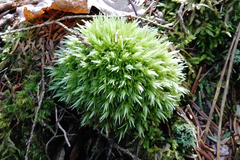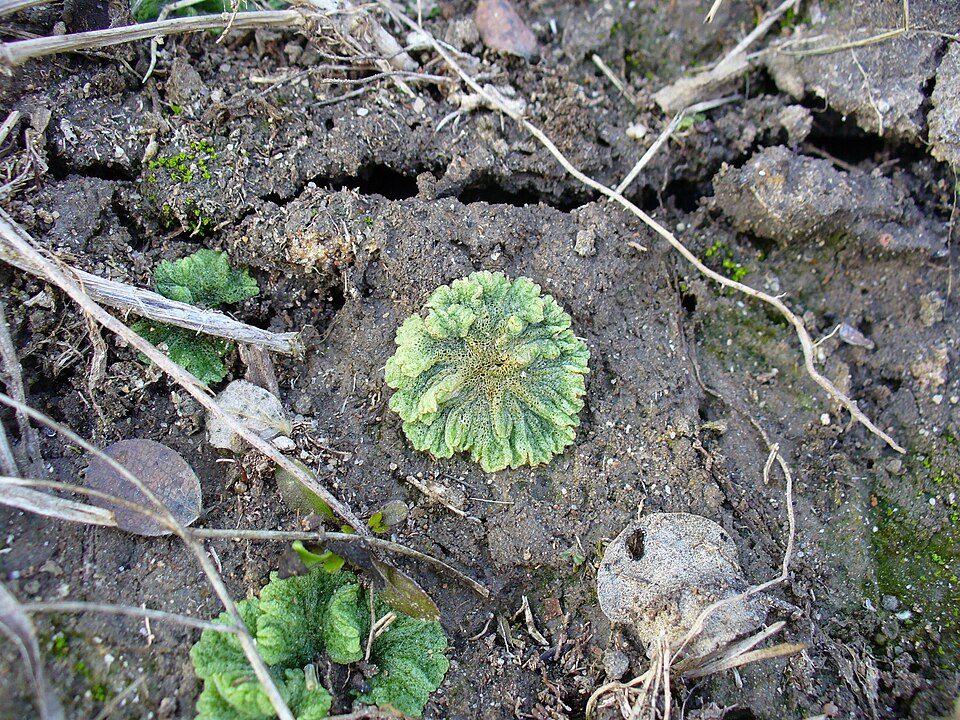
Riccia, Genus, spp., Multiple species,
- Genus
- Multiple species
crystalworts
SunFull Sun – Part Shade
WaterHigh
Overview
Riccia is a large, cosmopolitan genus of thalloid liverworts in the family Ricciaceae, with well over 100 species growing on damp soil, mud, rock, and, in a few species, on or below water. Plants lack stems and leaves; instead each forms a flat, forking green thallus that branches in a Y pattern and often arranges into rounded rosettes 0.4-1.5 inches (1-4 cm) across on bare ground. Each thallus lobe is 1-4 mm wide with a central groove along the upper surface and thread-like rhizoids anchoring the lower surface to the substrate. Colour ranges from bright green to gray-green, sometimes flushed reddish in strong light or drought. The aquatic species R. fluitans, sold as crystalwort, forms tangled floating or submerged masses with no rhizoids and is widely used in aquariums. Reproduction is by spores formed inside the thallus and by fragmentation. Terrestrial species often appear after rain on pond margins, fallow fields, and paths, then shrink or die back as the soil dries. As non-vascular plants, they have no true roots and take up water across the whole surface.
Native Range
Riccia is cosmopolitan, found on every continent except the deep polar interiors, and is well represented in temperate, Mediterranean, and tropical regions. Species grow on seasonally damp soil, mud, rock, and fresh water. The aquatic R. fluitans occurs across Europe, Asia, the Americas, and Africa.Suggested Uses
Aquatic R. fluitans, sold as crystalwort, is used in aquariums as a floating cover or a tied-down carpet that shelters fry and small invertebrates. Terrestrial species are studied in soil and bryophyte ecology. Both forms add to the ground and water layers of naturalistic plantings.How to Identify
Appearance
Colors
Foliage Colors
Fall Foliage Colors
Bloom Information
Liverworts do not flower. Riccia reproduces by spores formed within the thallus and released as the tissue decays, mainly after damp periods, along with vegetative fragmentation. Terrestrial species are most visible in cool, wet seasons.
Detailed Descriptions
Foliage Description
bright green to gray-greenGrowing Conditions
Sun Requirements
Requires 2-8 hours of direct sunlight daily
• Full Sun: 6+ hours of direct sunlight
• Partial Shade: 3-6 hours of direct sunlight
• Full Shade: Less than 3 hours of direct sunlight
Soil Requirements
Drainagewet