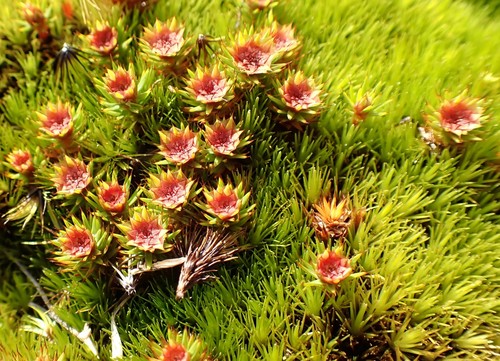
Polytrichum, Genus, juniperinum, Species,
- Genus & species
juniper haircap moss
Cosmopolitan; worldwide on acidic open ground
Overview
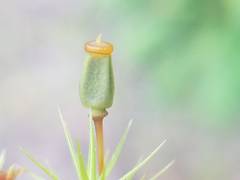
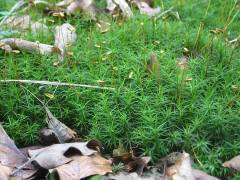
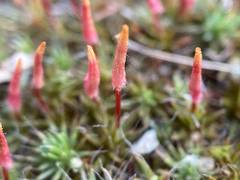
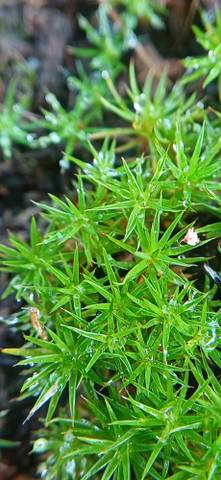
Polytrichum juniperinum is a small to medium acrocarpous moss in the family Polytrichaceae, forming loose tufts and patches 1-4 inches (2.5-10 cm) tall on unbranched reddish stems. The stiff, lance-shaped leaves are 4-8 mm long and tipped with a sharp reddish-brown awn; their margins fold inward over the upper surface, covering the photosynthetic lamellae and helping the plant conserve water. Dry leaves press close to the stem, while moist leaves spread outward, and the foliage has a blue-green to glaucous cast. The moss is dioecious; male stems end in a reddish, flower-like rosette, and female stems produce a four-angled spore capsule on a long reddish seta, covered when young by a pale, hairy calyptra. Polytrichum juniperinum grows in open, dry, acidic ground such as heathland, sandy banks, rock outcrops, and burned or disturbed sites, often in full sun. Colonies stabilise bare mineral soil. Limitations include slow growth and a need for acidic, low-nutrient conditions, with poor performance on rich or limy soil.
Native Range
Polytrichum juniperinum is cosmopolitan, occurring on every continent including Antarctica. In North America it ranges from the Arctic south through Canada and across much of the United States. It grows on dry, acidic, open ground such as heaths, sandy soil, rock ledges, and recently burned or cleared sites.Suggested Uses
Polytrichum juniperinum is grown in moss gardens, rock and gravel gardens, and green-roof plantings on acidic substrates, and for stabilising bare, sandy, acidic ground. It is also used in terrariums and miniature landscapes that suit dry, sunny moss.How to Identify
Appearance
Size & Dimensions
Height1" - 4"
Colors
Foliage Colors
Fall Foliage Colors
Bloom Information
Polytrichum juniperinum reproduces by spores rather than flowers. Sperm from the male rosettes fertilise female plants in spring, and four-angled spore capsules ripen on long reddish setae through summer. The capsules shed spores once the lid and hairy calyptra fall, mainly in late summer and autumn.
Detailed Descriptions
Foliage Description
Blue-green with reddish tipsGrowing Conditions
Sun Requirements
Requires 3-10 hours of direct sunlight daily
• Full Sun: 6+ hours of direct sunlight
• Partial Shade: 3-6 hours of direct sunlight
• Full Shade: Less than 3 hours of direct sunlight
Care & Maintenance
Care Guide
Polytrichum juniperinum grows on dry to moderately moist, acidic, low-nutrient soil with a pH near 4.0-5.5 in open positions from part to full sun. It tolerates drought better than most mosses, curling its leaves in dry spells and reviving when moisture returns. Sandy, gravelly, or peaty mineral soil suits it, while rich or limy ground does not. It needs no feeding and is harmed by fertiliser and competing weeds. Colonies spread slowly and resent disturbance and foot traffic. Established patches need little attention beyond keeping vascular weeds clear.Pruning
Polytrichum juniperinum needs no pruning. Browned or damaged patches can be lifted away by hand to let fresh growth spread. Established tufts are divided into small pads to start new colonies, done in cool, damp weather.Container Growing
Suitable for container growing