Polytrichum, Genus, spp., Multiple species,
- Genus
- Multiple species
haircap mosses
Cosmopolitan; all continents including Antarctica
Overview
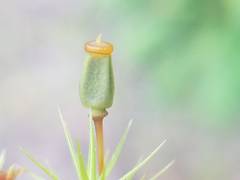
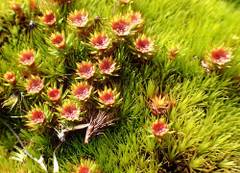
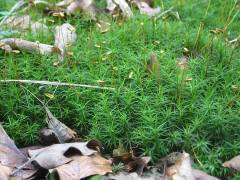
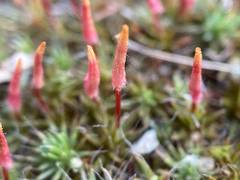
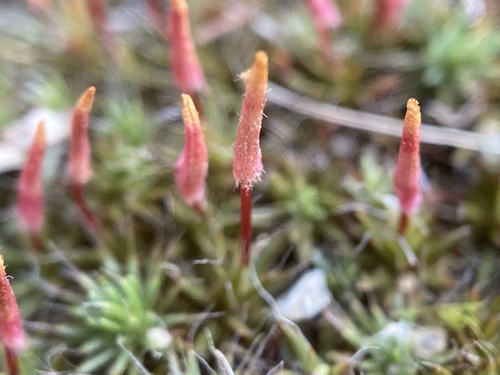
Polytrichum is a genus of about 70 species of comparatively tall mosses in the family Polytrichaceae, known as the haircap mosses. Erect, unbranched stems rise 0.8 to 16 inches (2 to 40 cm) from a creeping underground rhizoid system, with P. commune reaching the upper size range for mosses. The stiff, lance-shaped leaves are 0.2 to 0.5 inch (5 to 12 mm) long with toothed margins and a set of vertical green plates, called lamellae, along the upper surface that aid water retention. Plants are dioicous, with male and female structures on separate stems; male plants form a rosette of orange-tinged leaves at the tip. After fertilization the female stem produces a long reddish seta 1 to 4 inches (2.5 to 10 cm) tall topped by a four-angled spore capsule, sheathed in youth by a dense hairy cap, the calyptra, that gives the group its common name. Polytrichum colonizes acidic, nutrient-poor substrates including heathland, bog margins, conifer woodland, road cuts, and burned ground across every continent, including Antarctica. The genus tolerates desiccation, freezing, and full sun, conditions that exclude many other mosses. Foliage is dark green to glaucous, bronzing during drought or cold. Colonies spread into firm, turf-like mats that bind loose mineral soil.
Native Range
Polytrichum is cosmopolitan, occurring on every continent including Antarctica and on many oceanic islands. It grows on acidic soils of heaths, bogs, moorland, coniferous forest floors, and disturbed sites such as road banks and recently burned ground.Suggested Uses
Polytrichum is used in moss gardens, shaded rock work, and naturalistic plantings on acidic ground where turf grasses establish poorly. The firm mats stabilize sandy banks and the floors of conifer woodlands. Sections are pressed onto bare soil 6 to 12 inches (15 to 30 cm) apart to knit into continuous cover.How to Identify
Appearance
Size & Dimensions
Height1" - 1'4"
Width/Spread6" - 2'
Bloom Information
As a moss, Polytrichum produces spores rather than flowers. Spore capsules mature through late spring and summer, turning from green to brown before shedding spores in dry weather. The four-angled capsule sits on a stalk 1 to 4 inches (2.5 to 10 cm) tall and releases spores over several weeks. Male splash cups discharge sperm during wet spring conditions.
Detailed Descriptions
Foliage Description
dark green to glaucous, bronzing in drought or coldGrowing Conditions
Sun Requirements
Requires 2-8 hours of direct sunlight daily
• Full Sun: 6+ hours of direct sunlight
• Partial Shade: 3-6 hours of direct sunlight
• Full Shade: Less than 3 hours of direct sunlight
Care & Maintenance
Care Guide
Polytrichum grows in full sun to partial shade on acidic substrates with a pH of 4.0 to 6.0, including peat, sand, and lean mineral soils. It requires consistently moist conditions to establish but tolerates seasonal drought once colonies form, curling its leaves to limit water loss. The genus needs no fertilizer and declines on rich or limy soils. In moss-garden cultivation, colonies are kept clear of fallen leaves and competing vascular plants. Hardiness extends across USDA zones 3 to 9, with foliage persisting through winter. Established mats withstand foot traffic and light grazing.Pruning
Polytrichum is not pruned. Colonies are maintained by clearing fallen tree leaves and debris that would smother the mat and by removing encroaching grasses and seedlings. Sections can be lifted and re-pressed onto bare acidic soil to expand a planting.Container Growing
Suitable for container growing
Minimum container size: 1 gallons