Rehmannia, Genus, glutinosa, Species,
- Genus & species
Chinese foxglove
Overview
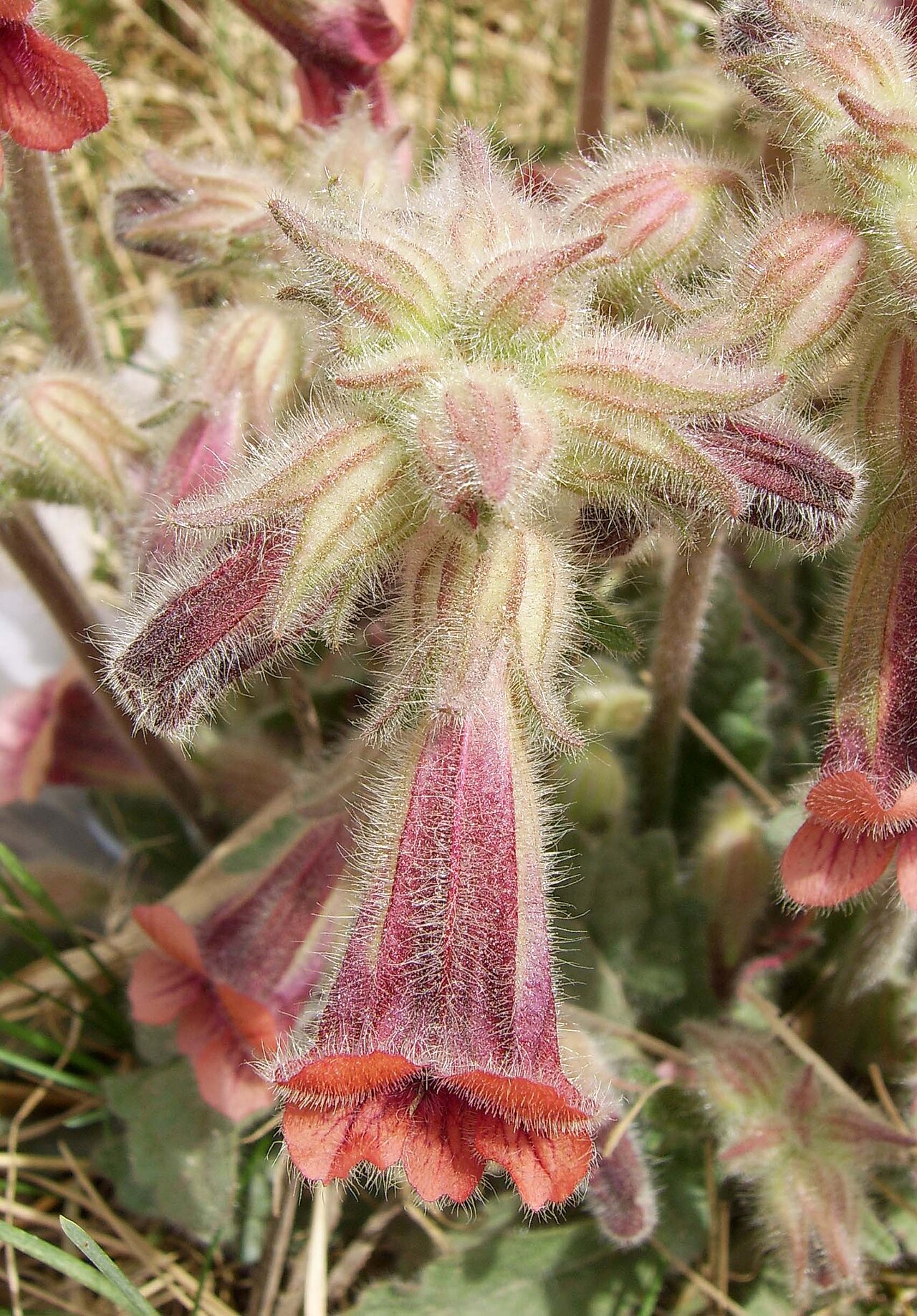
Rehmannia glutinosa is a clump-forming herbaceous perennial 6–16 inches (15–40 cm) tall and 12–18 inches (30–45 cm) wide, growing from a thick, fleshy, yellow rhizome. Basal rosettes of obovate to elliptic leaves, 1.2–4 inches (3–10 cm) long, have crinkled, coarsely toothed margins, sunken veins, and glandular hairs; leaves are green above and purple-tinged beneath. Tubular, two-lipped flowers 1.2–1.8 inches (3–4.5 cm) long open in one-sided racemes in April–June, purple-red outside and yellow with purple spots within. Capsules are ovoid, 0.4–0.6 inch (1–1.5 cm) long. Foliage dies back in winter. Plants spread slowly by rhizomes to form clumps. Growth is slow, and rhizomes are harvested after 1 year in medicinal production. Plants need sharp drainage, and rhizomes rot in wet winter soil.
Native Range
Native to northern and central China, including Hebei, Henan, Shanxi, Shandong, Shaanxi, and Liaoning. Grows on sandy slopes, rocky hillsides, and roadsides at elevations up to 3,300 feet (1,000 m).Suggested Uses
Grown in rock gardens, raised beds, and herb gardens at 12-inch (30 cm) spacing. The dried and processed rhizome is used in traditional Chinese medicine as di huang. Sharp drainage requirements limit use in wet or heavy soils.How to Identify
Appearance
Size & Dimensions
Height6" - 1'4"
Width/Spread1' - 1'6"
Bloom Information
Detailed Descriptions
Flower Description
Purple-red outside, yellow with purple spots insideFoliage Description
Green above, purple-tinged beneathGrowing Conditions
Sun Requirements
Requires 4-8 hours of direct sunlight daily
• Full Sun: 6+ hours of direct sunlight
• Partial Shade: 3-6 hours of direct sunlight
• Full Shade: Less than 3 hours of direct sunlight
Care & Maintenance
Care Guide
Plants grow in full sun to part shade in sandy or loamy soil at pH 6.0–7.5 with sharp drainage. Water weekly during the first growing season; established plants tolerate dry spells of 2–3 weeks. Wet soil in winter causes rhizome rot. Aphids and leaf spot occur in humid summers, and continuous cropping on the same site increases disease, so medicinal production rotates sites every 3–4 years. Clumps are divided in early spring every 3–4 years.Pruning
No routine pruning is needed. Dead foliage is cut to the ground in late autumn after it yellows. Spent flower stalks can be removed after bloom to limit seed set.Pruning Schedule
Prune: November
fall
Container Growing
Suitable for container growing
Minimum container size: 2 gallons