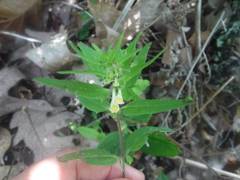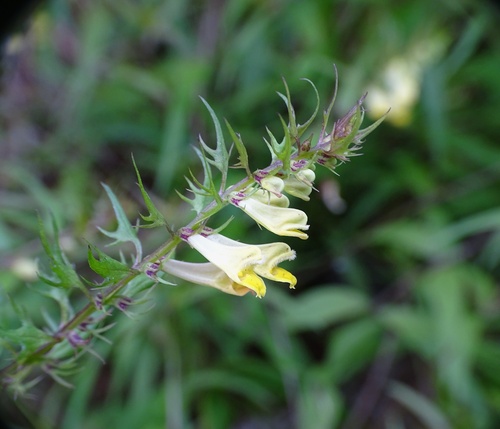
Melampyrum, Genus, pratense, Species,
- Genus & species
common cow-wheat
SunPart Shade – Full Shade
WaterMedium
Overview
Common cow-wheat is a slender, branching annual in the broomrape family, growing 4-14 inches (10-35 cm) tall on thin, wiry stems. It is a hemiparasite: it makes its own food by photosynthesis but also taps the roots of nearby grasses, heathers, and trees for water and minerals through underground attachments. The narrow, lance-shaped leaves are paired and untoothed, dull green and stalkless along the stem. From early summer into autumn it bears pairs of tubular, two-lipped flowers about 0.4-0.7 inch (10-18 mm) long, pale yellow to golden with a closed mouth, held to one side in the leaf axils. Melampyrum pratense sets large seeds that resemble grains of wheat and are carried off and sown by ants, which gives the plant its common name. Because it depends on host plants and on ant dispersal, it is difficult to grow in ordinary garden soil and is rarely cultivated, appearing instead in woodlands, heaths, and acid grassland. The seeds are toxic to people and livestock if eaten in quantity.
Native Range
Native to Europe and temperate Asia, from the British Isles and Scandinavia east across the continent. Melampyrum pratense grows in deciduous and coniferous woodland, on heaths, and in acid grassland, usually among the host plants it draws on.Suggested Uses
Grown mainly in woodland and naturalistic plantings, heath gardens, and conservation or restoration projects on acid soils. It fits among grasses, heathers, and light woodland where its hosts grow. It is seldom used in formal borders because of its parasitic needs.How to Identify
Appearance
Size & Dimensions
Height4" - 1'2"
Width/Spread4" - 10"
Bloom Information
Blooms from June to September, with pale yellow flowers opening a few at a time up the stems. Bumblebees are the main pollinators, reaching the nectar at the base of the long tube. Large wheat-like seeds ripen through late summer and are gathered by ants.
Detailed Descriptions
Flower Description
pale yellow to goldenFoliage Description
dull greenGrowing Conditions
Sun Requirements
Tolerates up to 4 hours of direct sunlight daily
• Full Sun: 6+ hours of direct sunlight
• Partial Shade: 3-6 hours of direct sunlight
• Full Shade: Less than 3 hours of direct sunlight
Water & Climate
Water Needs
Care & Maintenance
Care Guide
Grows in part shade to full shade in moist but well-drained, acidic soil with a pH from 4.5 to 6.5, among grasses, heathers, or trees that can serve as hosts. As a root hemiparasite it rarely thrives without nearby host plants, which makes it hard to establish in a tidy bed. Seed is sown fresh in autumn near suitable hosts, since it is short-lived and germinates poorly when stored. The plant needs no feeding and in fact draws nutrients from its hosts rather than the soil. It completes its life in a single season and returns only from self-sown or ant-sown seed. Cool, humus-rich woodland conditions suit it far better than open, cultivated ground.Pruning
No pruning is needed for this small woodland annual. Plants are left to set and shed seed, since the colony depends on fresh seed each year. Spent stems break down on their own among the leaf litter.Toxicity Warning
Toxic to pets and humansPlanting Guide
Planting Methods & Timing
Planting Method
direct sow
Direct Sow Timing
autumn, fresh seed near host plants
Plant Spacing
6 inches