Melampyrum, Genus, lineare, Species,
- Genus & species
narrowleaf cow wheat
SunFull Sun – Part Shade
WaterLow
Overview
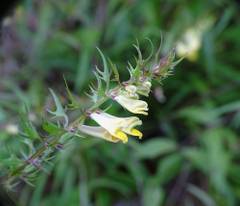
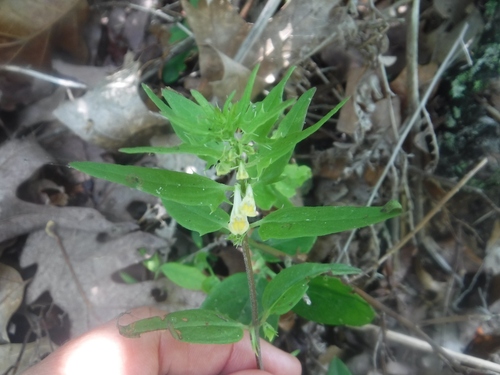
Melampyrum lineare is an annual hemiparasitic herb of the broomrape family, reaching 4-16 inches (10-40 cm) tall on slender, branching stems. It draws part of its water and nutrients from the roots of neighboring plants, including grasses, sedges, and woody species, while still producing its own chlorophyll in narrow, linear to lance-shaped leaves 0.8-2.4 inches (2-6 cm) long. Tubular flowers appear singly in the upper leaf axils from June to August, each 0.3-0.5 inch (8-12 mm) long, white to pale yellow with a deeper yellow throat and a nearly closed, two-lipped mouth. Leaflike bracts beneath the upper flowers are often tipped with slender marginal teeth. The fruit is a small flattened capsule holding a few large seeds, each carrying an oil-rich appendage that ants collect and disperse. Because it depends on host roots, M. lineare establishes only within existing plant communities and does not persist as isolated individuals. It grows in dry, open woods, pine barrens, rocky clearings, and acidic sandy soils across boreal and eastern North America. Population size varies from year to year with host availability and ground disturbance. The narrow leaves and small pale flowers separate it from broader-leaved members of the genus, though seedlings are easily overlooked among grasses.
Native Range
Native to North America, ranging across boreal Canada and the eastern and north-central United States. It occurs from Newfoundland and Quebec west toward British Columbia, and south through the Great Lakes region and Appalachians to Georgia. Typical habitats are dry coniferous and mixed woodlands, pine barrens, and acidic rocky or sandy clearings.Suggested Uses
Melampyrum lineare is used in native plant restoration and conservation plantings within pine barren, dry woodland, and acidic clearing communities. Its oil-bearing seeds feed ants and some ground-foraging birds, and the flowers draw bumblebees. It is not suited to formal beds or container culture because of its dependence on host roots.How to Identify
Appearance
Size & Dimensions
Height4" - 1'4"
Width/Spread4" - 8"
Bloom Information
Flowering runs from June through August, with peak bloom in midsummer. Each plant opens a succession of small tubular flowers in the upper leaf axils over several weeks. Cool, moist seasons with vigorous host plants tend to extend the flowering window, while drought shortens it.
Detailed Descriptions
Flower Description
white to pale yellow with a yellow throatFoliage Description
greenGrowing Conditions
Sun Requirements
Requires 4-8 hours of direct sunlight daily
• Full Sun: 6+ hours of direct sunlight
• Partial Shade: 3-6 hours of direct sunlight
• Full Shade: Less than 3 hours of direct sunlight
Water & Climate
Water Needs
Care & Maintenance
Care Guide
Melampyrum lineare is seldom brought into cultivation because it needs living host roots to complete its life cycle. In restoration work it is sown directly into established stands of grasses, sedges, or low shrubs on acidic, sandy to rocky soil with sharp drainage. It grows in full sun to part shade and tolerates low fertility and seasonal dryness once hosts are present. Fresh seed sown in autumn and exposed to winter cold germinates the following spring, while stored seed loses viability within a year. As an annual, it sets seed and dies within a single season, so continued presence depends on a returning seed bank. Added water and fertilizer give little benefit and can favor competing vegetation instead.Pruning
No pruning is needed for this small annual. Plants complete their cycle and die back on their own after seed set in late summer. Standing stems can be left in place to release seed into the surrounding community.Toxicity: Not assessed
UnknownPlanting Guide
Planting Methods & Timing
Planting Method
direct sow
Direct Sow Timing
autumn, using fresh seed that requires winter cold to germinate