Rhinanthus, Genus, minor, Species,
- Genus & species
yellow rattle
Europe, northern and western Asia, North America
Overview
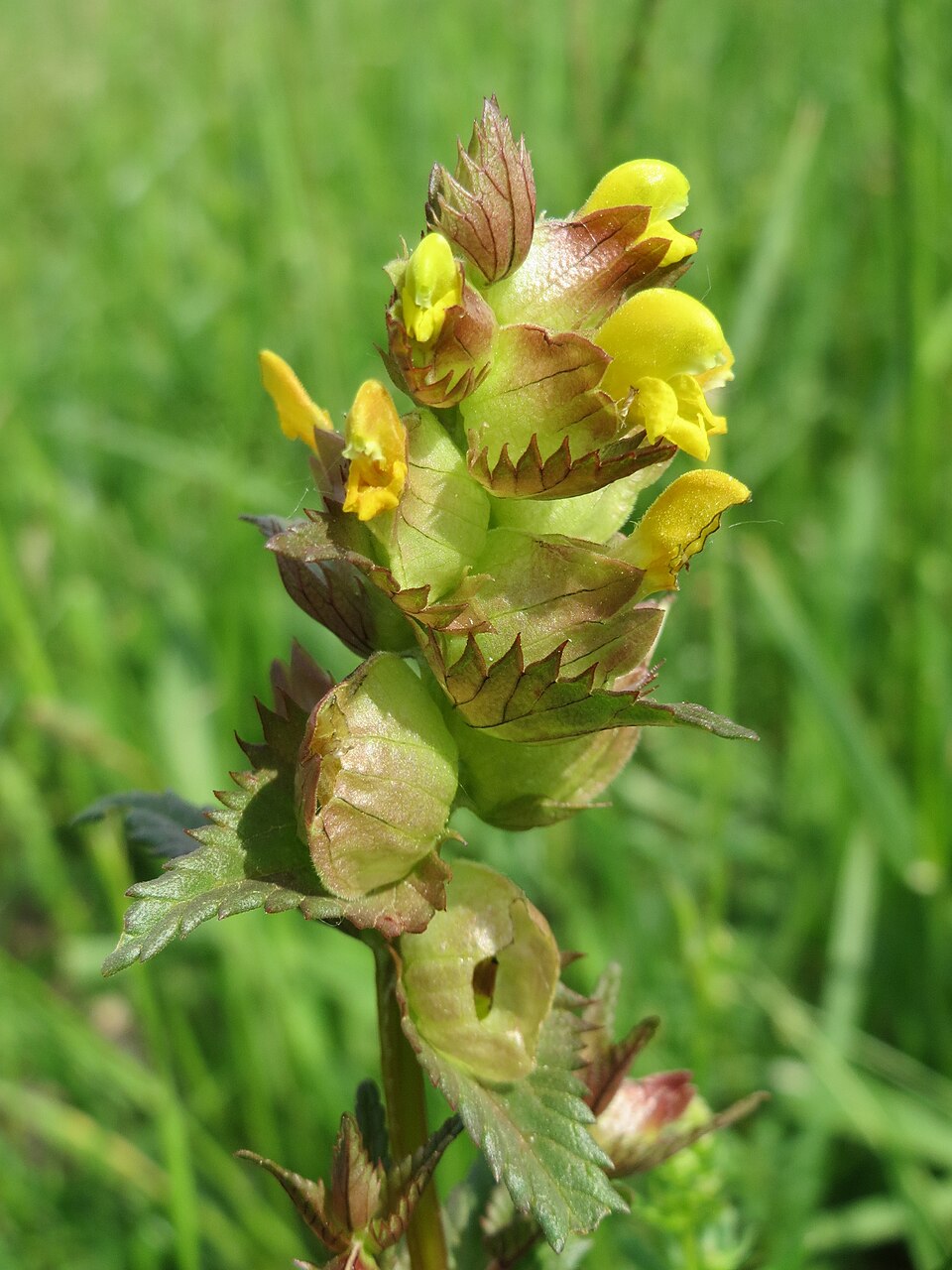
Rhinanthus minor is an annual hemiparasitic wildflower 10-50 cm (4-20 in) tall, with an erect, often black-streaked stem and opposite, stalkless, toothed leaves 1-4 cm (0.4-1.6 in) long. Two-lipped yellow flowers 12-15 mm (0.5-0.6 in) long sit in leafy spikes, the upper lip hooded and tipped with two short violet or white teeth. Each flower is backed by a flattened, inflated calyx that turns papery brown as the seeds ripen, and the loose seeds rattle inside it in the wind, which gives the plant its common name. Its roots form haustoria that tap the roots of nearby grasses and legumes for water and minerals, suppressing grass vigour and opening space for other meadow species. Because it draws on host plants, stands vary in size with the surrounding sward and collapse where grasses are absent. The whole plant completes its life cycle in one season, dying back after seed is shed in midsummer. Seed needs a cold winter period to germinate and is short-lived, so populations depend on fresh seed set each year.
Native Range
Rhinanthus minor is native across Europe and into western and northern Asia, and it also occurs in cool parts of North America. It grows in unimproved grassland, hay meadows, dunes, and on roadside verges, mostly on low-fertility soils.Suggested Uses
Sown in wildflower meadows and conservation grassland to reduce grass dominance and raise floral diversity. Used in meadow restoration as a natural check on vigorous grasses. Suited to low-fertility, sunny sites and of little use in borders or containers.How to Identify
Appearance
Size & Dimensions
Height4" - 1'8"
Width/Spread4" - 6"
Bloom Information
Detailed Descriptions
Flower Description
Yellow with violet or white teethFoliage Description
GreenGrowing Conditions
Sun Requirements
Requires 6-12 hours of direct sunlight daily
• Full Sun: 6+ hours of direct sunlight
• Partial Shade: 3-6 hours of direct sunlight
• Full Shade: Less than 3 hours of direct sunlight
Water & Climate
Water Needs
Care & Maintenance
Care Guide
Grow Rhinanthus minor by sowing fresh seed in autumn directly into short, open grassland, as the seed needs winter cold to break dormancy and does not store well. It grows in full sun on low-fertility soils and weakens on rich or heavily fertilised ground where grasses outcompete it. Living grass hosts must be present, since the seedlings parasitise grass roots within weeks of germinating. Cut and remove the surrounding sward in late summer after the plant has shed seed to keep fertility low. No watering or feeding is needed once established. Stands fluctuate from year to year with weather and host vigour.Pruning
No pruning is required for this annual. Mow or cut the meadow in late summer once seed has dropped, removing the cuttings to reduce soil fertility. Leave some seed heads standing to reseed the stand.Toxicity: Not assessed
UnknownPlanting Guide
Planting Methods & Timing
Planting Method
direct sow
Direct Sow Timing
Autumn, sown fresh onto bare ground within established grassland
Plant Spacing
4 inches
Companion Planting
Good Companions
