Rhinanthus, Genus, spp., Multiple species,
- Genus
- Multiple species
rattles
Overview
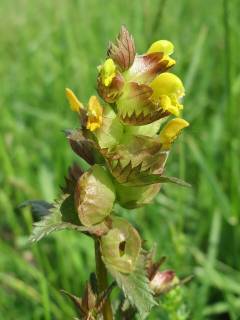
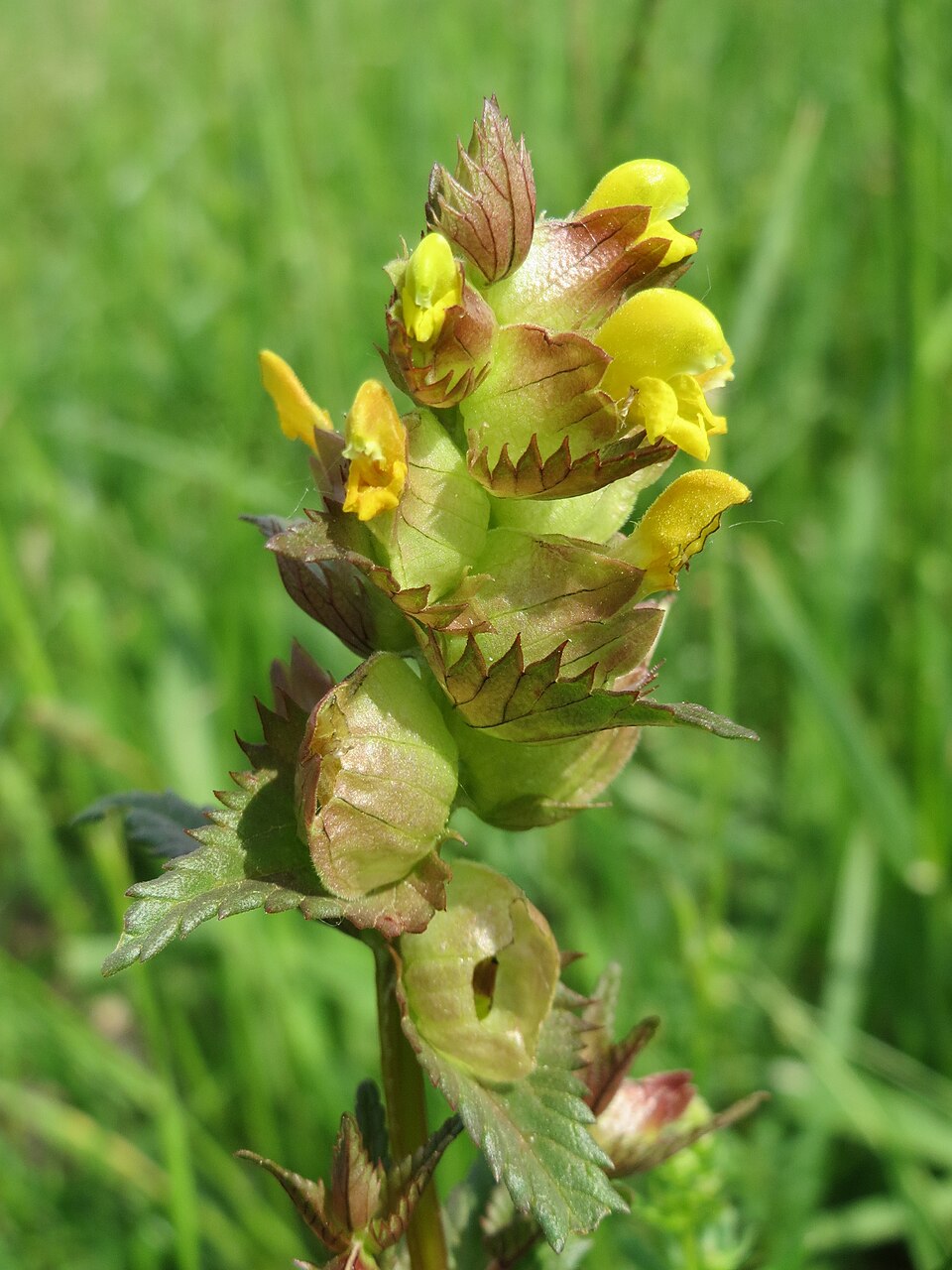
Rhinanthus is a genus of annual, hemiparasitic herbs in the broomrape family, native to the Northern Hemisphere and known as rattles. Plants are upright, 4-32 inches (10-80 cm) tall, with square stems often marked with black streaks and opposite, stalkless, lance-shaped leaves 0.5-2 inches (1-5 cm) long with toothed margins. Being hemiparasites, they have green leaves and photosynthesize but also tap the roots of neighboring grasses and herbs for water and nutrients, which reduces the vigor of those host plants. The two-lipped tubular flowers, 0.5-1 inch (1-2.5 cm) long, are yellow, sometimes with violet teeth on the upper lip, set in leafy spikes. After flowering, the calyx inflates into a flattened, papery, bladder-like capsule in which the ripe seeds come loose and rattle in the wind, the source of the common name. Plants germinate in late winter, flower in late spring and summer, set seed, and die by midsummer. Across the genus, roughly 30 to 45 species grow in meadows, grassland, and open habitats. Because they weaken grasses, R. minor and related species are sown in grassland restoration to open up dense turf for wildflowers.
Native Range
The genus Rhinanthus is native across the temperate Northern Hemisphere, throughout Europe and Asia and into North America. Plants grow in hay meadows, grassland, fens, dunes, and open disturbed ground, usually on low-fertility soils where they can parasitize surrounding grasses. R. minor is widespread in Europe and northern North America and is the species most used in meadow management.Suggested Uses
Sown in wildflower meadows and grassland restoration to weaken vigorous grasses and create gaps for other wildflowers, broadcast at low rates onto open turf in autumn. Used by conservation managers and gardeners converting lawns to meadow. The dried, rattling seed heads are also of interest in late-summer meadows.How to Identify
Appearance
Size & Dimensions
Height4" - 2'8"
Width/Spread4" - 10"
Bloom Information
Blooms in late spring and summer, generally May through July, varying with region and sowing time. Each plant flowers over several weeks before the seed capsules form and dry. As an annual, the genus completes flowering and seeding in a single season and dies by midsummer. Bloom is earlier in mild lowland meadows and later at higher elevations.
Detailed Descriptions
Flower Description
yellow, sometimes with violet teethFoliage Description
green, stems often black-streakedGrowing Conditions
Sun Requirements
Requires 6-12 hours of direct sunlight daily
• Full Sun: 6+ hours of direct sunlight
• Partial Shade: 3-6 hours of direct sunlight
• Full Shade: Less than 3 hours of direct sunlight
Water & Climate
Water Needs
Care & Maintenance
Care Guide
Grows in full sun in low- to moderate-fertility grassland, where it depends on living grass and herb roots to parasitize; it grows poorly without suitable hosts. Fresh seed needs a period of winter cold to germinate and is sown in autumn into short, open turf. Rich soils and heavy grass growth reduce establishment, so the genus is used on lean ground. No feeding or watering is given in meadow settings. Plants self-sow where seed is allowed to ripen and drop before the meadow is cut. Mowing or hay-cutting is timed for after seed fall to keep a population going.Pruning
No pruning is carried out on these annual meadow plants. In grassland management, the meadow is left uncut until the seed capsules have ripened and shed, usually mid- to late summer, then mown. Cutting too early removes the seed and reduces the stand the following year.Toxicity: Not assessed
UnknownPlanting Guide
Planting Methods & Timing
Planting Method
direct sow
Direct Sow Timing
Autumn, onto short open turf; needs winter cold to germinate
Days to Maturity
120–180 days
Plant Spacing
4 inches