Pyrus, Genus, communis, Species,
- Genus & species
Common pear
Central and eastern Europe, western Asia
Overview
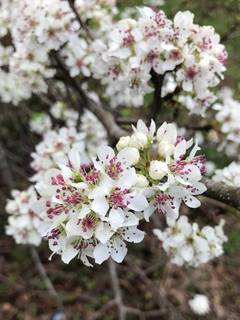
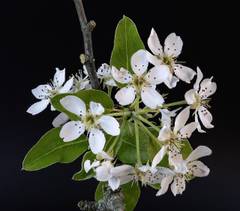
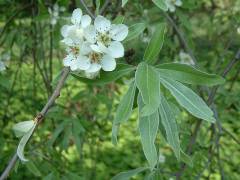
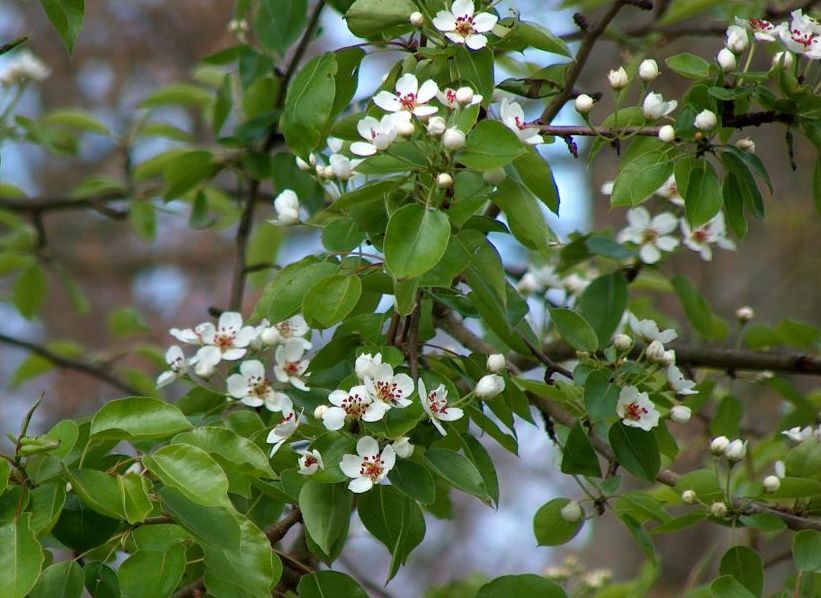
Pyrus communis is a deciduous fruit tree in the rose family (Rosaceae), growing 30–50 feet (9–15 m) tall and 20–30 feet (6–9 m) wide in unpruned standard form. The crown is pyramidal when young and becomes broadly oval with age, with gray-brown bark that develops scaly plates. Leaves are ovate to elliptic, 2–4 inches (5–10 cm) long, with finely serrated margins and a glossy dark green upper surface. White flowers 1–1.5 inches (2.5–4 cm) across, with five petals and red-purple anthers, open in clusters of 5–9 in April as the leaves emerge. Fruits are pear-shaped to rounded, 2–4 inches (5–10 cm) long, and ripen from August to October with green, yellow, red, or brown skin depending on cultivar. Fall foliage ranges from yellow to red-orange. Most cultivars require a second compatible cultivar within 100 feet (30 m) for fruit set. Trees are susceptible to fire blight, a bacterial disease that kills shoots and blossoms in warm, wet spring weather, and to pear psylla and codling moth. Fruit set can be lost to frost during bloom.
Native Range
Pyrus communis is native to central and eastern Europe and western Asia, where it grows in deciduous forests and woodland margins. It has been cultivated in Europe and western Asia for more than 3,000 years and has naturalized in parts of North America, Australia, and New Zealand.Suggested Uses
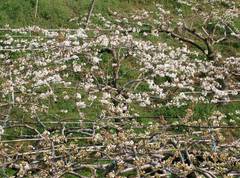
Grown for fresh and cooked fruit, canning, drying, and perry production in orchards and home gardens, with standard trees spaced 20–25 feet (6–7.5 m) apart and dwarf trees 8–12 feet (2.4–3.7 m) apart. Spring blossoms are used in residential and parkland plantings, and wood is used for turnery and instrument making.How to Identify
Appearance
Size & Dimensions
Height30' - 50'
Width/Spread20' - 30'
Bloom Information
Flowers open in April, about 1–2 weeks before apple (Malus domestica) in most regions, and remain 7–10 days. Clusters of 5–9 white flowers, each 1–1.5 inches (2.5–4 cm) across, open together at the spur tips. Frost below 28°F (−2°C) during bloom damages open flowers and reduces fruit set.
Detailed Descriptions
Foliage Description
Glossy dark green, yellow to red-orange in autumnGrowing Conditions
Sun Requirements
Requires 6-10 hours of direct sunlight daily
• Full Sun: 6+ hours of direct sunlight
• Partial Shade: 3-6 hours of direct sunlight
• Full Shade: Less than 3 hours of direct sunlight
Care & Maintenance
Care Guide
Grows in full sun in deep, well-drained loam with a pH of 6.0–7.0. Hardy in USDA zones 4–9, with chilling requirements of 600–1,000 hours below 45°F (7°C). Young trees receive 1 inch (2.5 cm) of water per week, and established trees tolerate short dry periods. Cross-pollination with a second compatible cultivar within 100 feet (30 m) is required by most cultivars for fruit set. Fire blight infects blossoms and shoots during warm, wet spring weather, and infected shoots are cut 8–12 inches (20–30 cm) below visible damage. Excess nitrogen promotes fast, soft shoots that are more susceptible to fire blight.Pruning
Pruning takes place in late winter, February–March, while trees are dormant. Young trees are trained to a central or modified central leader with 3–4 scaffold branches spaced 6–8 inches (15–20 cm) apart vertically. Mature trees are thinned to open the canopy, and shoots growing straight upward are removed to limit fire blight-prone vigorous growth.Pruning Schedule
Prune: February–March
winterearly spring
Container Growing
Suitable for container growing
Minimum container size: 15 gallons