Pyrus, Genus, salicifolia, Species, 'Pendula', Cultivar,
- Genus & species
- Cultivar
weeping silver pear
Caucasus, Turkey, N Iran (dry rocky hillsides, open scrub; weeping cultivar; silvery willow-like leaves; olive-tree effect)
Overview
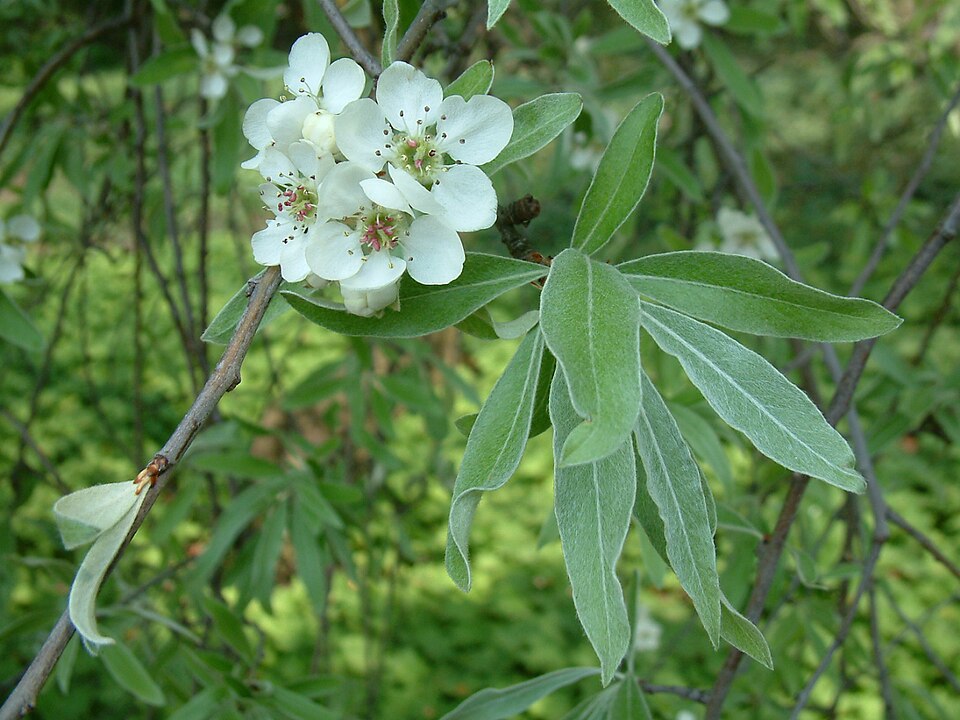
Pyrus salicifolia 'Pendula' is a deciduous tree reaching 15-25 feet (4.6-7.6 m) tall with a spread of 12-20 feet (3.7-6 m) and a broadly weeping, mounding crown with pendant branches sweeping to the ground. The narrow, willow-like (salicifolia = willow-leaved) leaves 1.5-3.5 inches (4-9 cm) long emerge heavily coated in silvery-white pubescence (woolly hairs), maturing to gray-green above while remaining silvery-felted beneath. Small clusters of white flowers 0.5-0.8 inch (13-20 mm) wide appear in April-May, followed by small 0.5-1 inch (13-25 mm) hard, inedible green-brown pears. Growth rate is slow to moderate. Hardy to zone 4. The combination of silvery weeping foliage and a cascading habit creates a texture similar to an olive tree. Canopy can become dense and congested without periodic thinning.
Native Range
Pyrus salicifolia is native to the Caucasus, Turkey, and northern Iran—in dry, rocky hillsides and open scrub. 'Pendula' is the weeping cultivar.Suggested Uses
Planted as a specimen tree at 12-15 foot (3.7-4.6 m) spacing. Silvery weeping foliage creates olive-tree effect. Drought tolerant. Canopy becomes dense—needs periodic thinning. Small inedible fruit. Fire blight susceptible. Not suitable for tight spaces where canopy congestion cannot be managed.How to Identify
Appearance
Size & Dimensions
Height15' - 25'
Width/Spread12' - 20'
Bloom Information
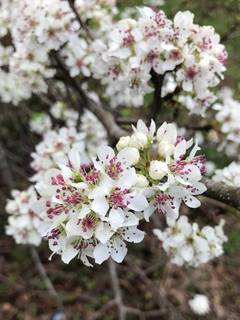
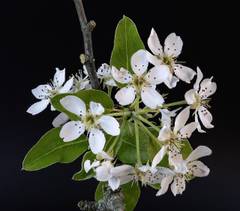
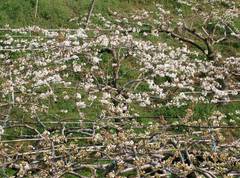
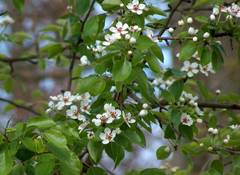
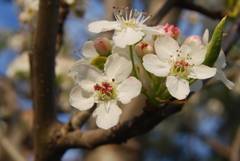
Small clusters of white flowers 0.5-0.8 inch (13-20 mm), April-May. Bloom duration 2 weeks. Small hard inedible green-brown pears 0.5-1 inch follow. The silvery weeping foliage is the primary feature.
Detailed Descriptions
Flower Description
White; small clusters 0.5-0.8 inch; Apr-May; small hard inedible green-brown pears followFoliage Description
Silvery-white emerging (woolly pubescence); matures to gray-green above, silvery-felted beneath; narrow willow-like 1.5-3.5 inchesGrowing Conditions
Sun Requirements
Requires 6-10 hours of direct sunlight daily
• Full Sun: 6+ hours of direct sunlight
• Partial Shade: 3-6 hours of direct sunlight
• Full Shade: Less than 3 hours of direct sunlight
Care & Maintenance
Care Guide
Plant in full sun in well-drained soil (pH 6.0-7.5). Hardy to zone 4. Tolerates drought once established—dry-site adapted (Caucasus native). Fire blight susceptible but less so than many Pyrus. The dense weeping canopy requires periodic thinning to maintain form and air circulation.Pruning
Thin interior branches in late winter to improve air circulation and prevent canopy congestion. Remove any upright water sprouts. Raise the canopy skirt if ground clearance is needed. The weeping form requires more active management than upright pears.Pruning Schedule
Prune: January–February
winter