Pyrus, Genus, calleryana, Species, 'Chanticleer', Cultivar,
- Genus & species
- Cultivar
Callery pear 'Chanticleer'
China, Vietnam (species); garden selection in the United States
Overview
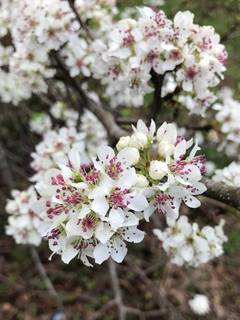
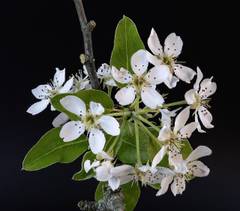
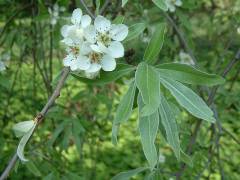
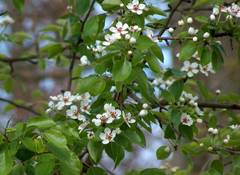
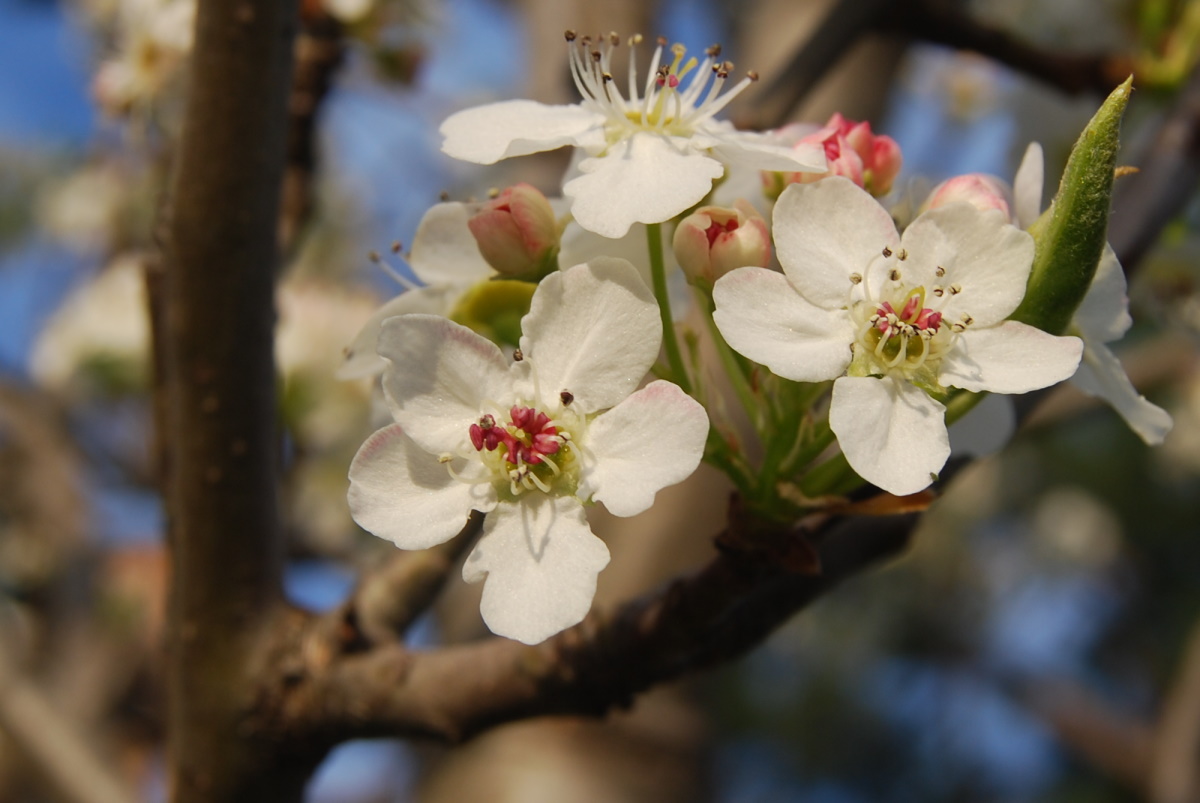
Pyrus calleryana 'Chanticleer' is a deciduous ornamental tree in the rose family (Rosaceae) with a narrow, pyramidal crown that reaches 30–40 feet (9–12 m) tall and 15–16 feet (4.5–4.9 m) wide. Leaves are ovate, 2–3 inches (5–7.5 cm) long, glossy dark green above, with finely toothed margins and a wavy edge. White five-petaled flowers, 0.75 inch (19 mm) across, open in clusters before the leaves in late March to April and carry an odor often described as fishy or musty. Fruits are round, 0.5 inch (12 mm) across, russet-brown, and ripen in fall; they are eaten and spread by birds. Fall color ranges from orange to red to purple and develops in late October to November. The bark is gray-brown and smooth when young, becoming furrowed with age. Branches have ascending angles that are prone to splitting in ice and wind storms at 15–25 years. Plants are hardy in USDA zones 5–8. Pyrus calleryana is listed as invasive in several states, including Ohio and South Carolina, where sale of the species and its cultivars is restricted.
Native Range
Pyrus calleryana is native to China and Vietnam, where it grows in woodland, thickets, and valleys at low to mid elevations. The cultivar 'Chanticleer' was selected in the United States in the 1960s and introduced widely from the 1980s as 'Cleveland Select'.Suggested Uses
Used as a street tree and in narrow residential lots, spaced 15–20 feet (4.5–6 m) apart, and in rows along parking lots and drives. Tolerates road salt and urban soil compaction. Sale is restricted in Ohio and South Carolina, where the species is regulated as invasive.How to Identify
Appearance
Size & Dimensions
Height30' - 40'
Width/Spread15' - 16'
Bloom Information
Flowers open from late March to mid-April in zones 6–7, before leaves expand, and the display lasts 7–10 days. Clusters of 5–10 flowers cover the branches. Bloom starts 1–2 weeks later in zone 5.
Detailed Descriptions
Foliage Description
Glossy dark greenGrowing Conditions
Sun Requirements
Requires 6-10 hours of direct sunlight daily
• Full Sun: 6+ hours of direct sunlight
• Partial Shade: 3-6 hours of direct sunlight
• Full Shade: Less than 3 hours of direct sunlight
Care & Maintenance
Care Guide
Trees grow in full sun in nearly any soil, including clay, with a pH of 5.5–7.5, and tolerate urban conditions, compacted soil, and drought once established. Hardiness covers USDA zones 5–8. Water is applied at 1 inch (25 mm) per week for the first two years. Branch angles are narrow, and limbs split in ice and wind storms, so trees are often lost at 15–25 years. Fire blight affects flowers and shoots in humid springs. Seedlings of P. calleryana establish in disturbed land and meadows, and the species is regulated as invasive in several states.Pruning
Structural pruning is done in late winter while the tree is dormant, spacing main branches at least 6 inches (15 cm) apart vertically to reduce splitting. Crossing and rubbing branches are removed at the branch collar. Fire blight shoots are cut 8–12 inches (20–30 cm) below visible infection in dry weather.Pruning Schedule
Prune: January–March
winterearly spring